
Lieferung heute & morgen

Qualitätsgarantie

Willkommens-Angebote freischalten: KOSTENLOSE Lieferung | Bis zu 80 % RABATT | Kostenlose 30-Tage-JoyPlus-Testphase
App herunterladen
A 2-slice toaster takes up little space and is ideal for singles, couples, small households and families with modest breakfast needs. The choice ranges from a simple two-slice toaster to a stainless steel model with defrost, reheat and bagel functions. However, product specifications are only useful if they actually suit your daily routine.
A high number of browning levels sounds impressive at first. What really matters, though, is whether the controls are easy to understand and whether different types of bread have enough room. A narrow slot can become a problem with thicker slices, bagels or toast rolls. For standard toast, six to seven settings are often sufficient, while heavy users may benefit from finer adjustment.
A toaster with a defrost function is handy if you regularly take bread from the freezer. The reheat function is useful for warming up already toasted slices without browning them further. If you mostly use fresh bread, you may not need these programmes. On the other hand, a toaster with a roll warmer is a good idea if you regularly warm up rolls, croissants or baguettes.
Crumbs collect inside the appliance and can make cleaning difficult. A removable crumb tray makes regular maintenance much easier. However, it doesn’t replace safe use: the toaster should be placed on a stable, dry, heat-resistant surface, away from curtains and wall cabinets. Metal objects must never be inserted into the slots, especially when the appliance is plugged in.
For standard bread, normal slots are usually sufficient. If you want to prepare bagels, thick slices of bread or toast rolls, look for extra-wide slots. According to the product description, the ProfiCook PC TA 1279 has 40 mm wide toast slots. Several KitchenAid models are also described as having extra-wide slots for thicker bread and bagels.
An automatic centring function positions the slices in the middle of the heating elements. This can help achieve more even toasting with slices of different thicknesses. The actual browning also depends on the type of bread, moisture content, slice thickness and the selected setting.
A toaster with an adjustable browning control should have a clearly readable scale and controls that are easy to reach. The models mentioned in the product data, for example, offer six, seven or eight settings. The wattage of the selected appliances ranges from roughly 750 to 1,150 watts. A higher power rating alone is not proof of better browning; it simply describes the electrical power consumption.
For use in a UK household, the appliance should be suitable for the local mains supply. Check details such as 220–240 volts and the manufacturer’s technical instructions before buying. When it comes to running costs, the daily usage time matters just as much as the power rating.
A toaster with a roll warmer can warm rolls outside the slots. The attachment should be removable so the appliance is easier to store and clean after use. For a toaster designed for bagels and rolls, wide slots and a suitable bagel function are also helpful.
A crumb tray should slide out easily without too much effort. A cord wrap or built-in cable tidy helps keep your worktop neat. The housing must never be immersed in water; always unplug the appliance and let it cool down completely before cleaning.
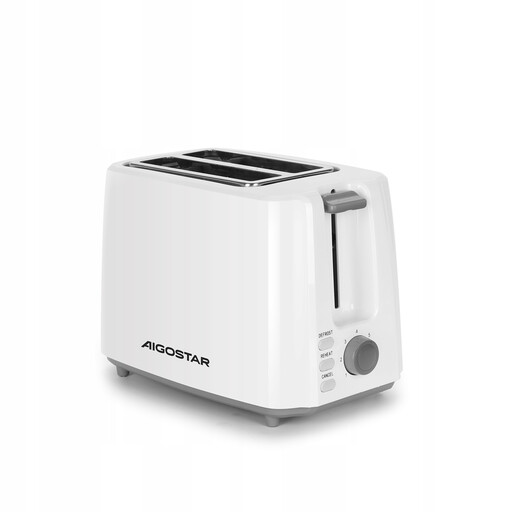
Why this product suits the profile: This model offers two slots, seven browning levels, an automatic eject function and a removable crumb tray for everyday use.
The clearly stated 2-slice capacity and crumb tray avoid unnecessary extra features and difficult cleaning.
750 watts, seven browning levels and a compact size according to the product data.
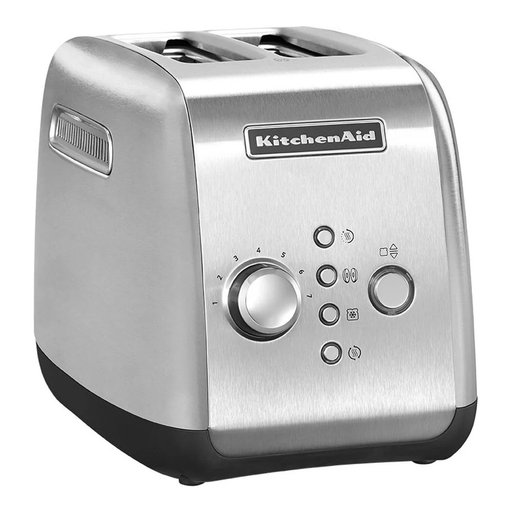
Why this product suits the profile: This stainless steel model combines seven browning levels with extra-wide slots, plus bagel, defrost and keep-warm functions.
The product data specifies concrete slot widths, seven levels and defined special programmes rather than vague performance claims.
1100 watts, metal housing, seven levels and automatic lift function according to the manufacturer’s specifications.
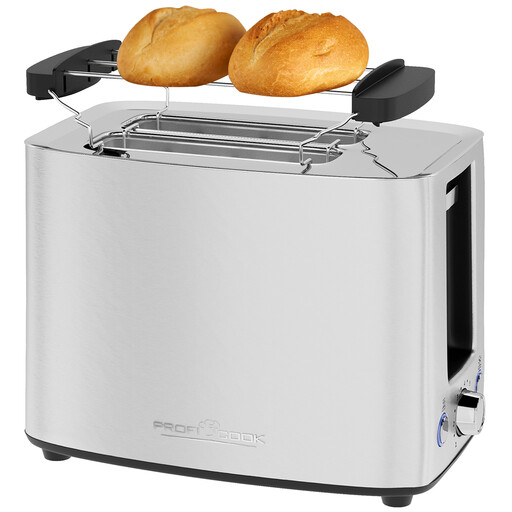
Why this product suits the profile: This appliance is aimed at households that regularly prepare different baked goods and are looking for a toaster with a roll warmer.
The 40 mm slots and removable roll warmer are concrete specifications for thick slices, bagels and rolls.
Defrost and reheat function, variable browning control, centring function and crumb tray according to the product description.
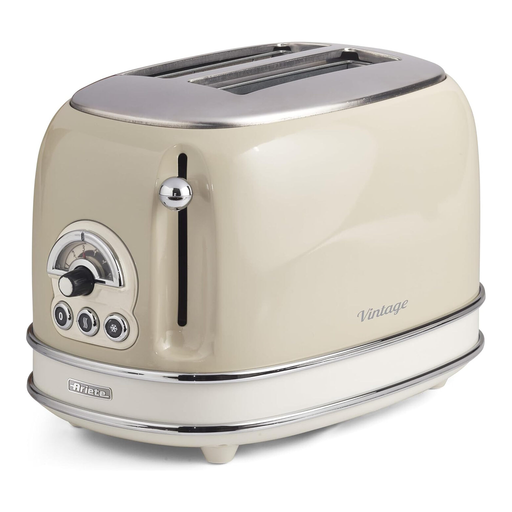
Why this product suits the profile: The cream metal housing in retro style combines six browning levels with defrost and reheat functions.
Alongside the appearance, the crumb tray, automatic centring and cord storage are clearly specified.
Two slices, six settings, 810 watts and automatic eject function according to the product data.
We have put together a complete, regularly updated list of products that fully meet these strict selection criteria and the safety regulations in force in the EU.
The consumption depends on the power rating and the running time. An appliance with 800 watts running for five minutes uses roughly 0.067 kWh. The actual cost depends on your individual electricity tariff, how long you use it and how often you make toast. The wattage alone doesn’t tell you the total monthly cost.
It’s not possible to give a reliable lifespan based solely on the wattage or housing material. Regularly removing crumbs, storing the appliance in a dry place and using it as intended can help maintain its everyday performance. If you notice unusual smells, smoke, a damaged cable or any malfunction, unplug the appliance immediately and stop using it.
For bagels, extra-wide slots and a bagel function are useful. For rolls, croissants or baguettes, a toaster with a roll warmer is more suitable, as the baked goods are warmed outside the slots. Defrost and reheat functions can also be handy if you frequently use frozen or already toasted baked goods.