
Lieferung heute & morgen

Qualitätsgarantie

Willkommens-Angebote freischalten: KOSTENLOSE Lieferung | Bis zu 80 % RABATT | Kostenlose 30-Tage-JoyPlus-Testphase
App herunterladen
A 2-step folding step stool is useful when high kitchen cupboards, shelves, curtains or lights only need to be reached occasionally. Unlike a permanently installed step stool, a folding household ladder can be stored away compactly after use. However, colour and price should not be the only factors you consider when buying one. The construction, locking mechanism and step surfaces determine whether the product is genuinely suitable for everyday use.
The statement “up to 150 kg” initially describes only the maximum load limit of the product in question. It does not replace checking the base, frame and locking mechanism. A step stool with a 150 kg capacity should be placed on a level, dry surface and fully opened. It is also important to check whether the construction is secured against accidentally folding while you climb onto it.
Narrow steps can make climbing up and down more difficult. Particularly when using a step stool in the kitchen or when putting items away in cupboards, non-slip steps with a sufficiently large surface area are a sensible choice. A ridged or coated surface can improve grip, but it is no substitute for dry, sturdy footwear and a clean, solid surface.
The dimensions when open show how much room the step stool requires during use. For storage, however, the folded dimensions are what matter. A shallow depth is helpful if you want to store the folding step stool behind a door, in a narrow cupboard or under a bed. Its own weight is also important if you frequently move it between the kitchen, cellar and workshop.
A metal step stool made from steel is generally designed using a different construction method from an especially lightweight aluminium step stool. The specific manufacturer’s information on the material, maximum load and intended use is what matters. The maximum load capacity must not be exceeded. This includes the total weight of the person climbing onto it, including any items they are carrying.
The models featured here each have a stated maximum load of 150 kg. For domestic use, it is also worth noting that these products are intended for occasional household tasks and are not automatically suitable for continuous commercial use.
Before every use, make sure the locking mechanism is fully engaged. Models with an audible or tactile locking mechanism and non-slip rubber feet are practical choices. The feet must be fully in contact with the floor; carpet edges, wet tiles and uneven surfaces can affect stability.
A kitchen ladder or sturdy folding step stool should also never be used above the highest approved step. If a support rail is fitted, it is intended for holding on to and is not automatically designed to be used as a step.
Pay attention to three measurements:
The EN 14183 step stool marking can provide an additional point of reference when making your choice. However, when comparing products, you should check whether the particular item actually mentions this standard in its product details. It is stated explicitly for some models, but not for others.
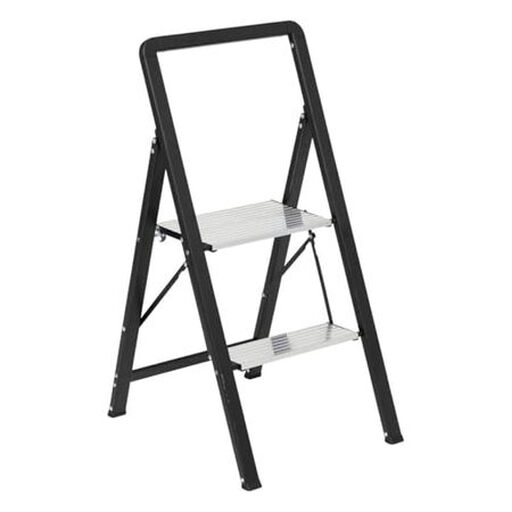
Why this product suits this profile: The aluminium frame, 2.9 kg weight and folding design make it suitable for households where the step stool needs to be moved regularly and stored compactly.
The product details specify a secure locking mechanism, slip-resistant steps and slip-resistant feet. This clearly identifies key points to check before buying.
Aluminium construction, 2.9 kg own weight, 150 kg maximum load capacity and support rail.
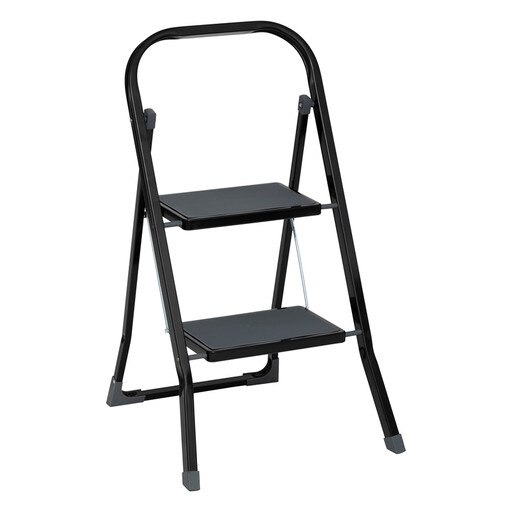
Why this product suits this profile: This model is aimed at adults who look for specified safety features and a robust construction in a metal step stool.
The details specify a locking mechanism, safety bars, a slip-resistant coating and TUV and EN-14183 certification. The maximum load is stated as 150 kg.
Steel frame, 4.19 kg own weight, slip-resistant surface and stated TUV and EN-14183 certification.
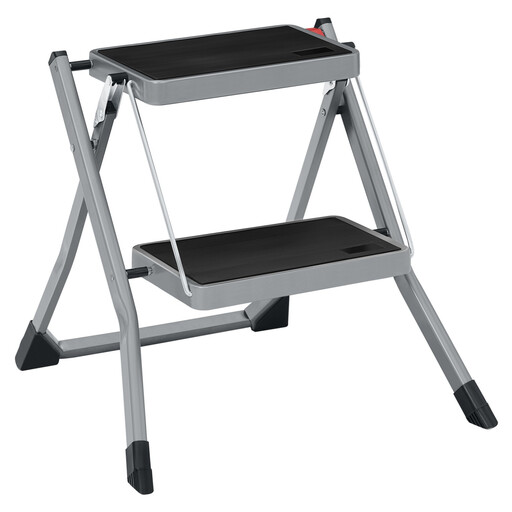
Why this product suits this profile: For frequent tasks in the kitchen, home or workshop, this model offers a steel frame, wide ridged steps and a flat folded size of 55 × 50 × 4.5 cm.
The automatic locking system, ridged step surfaces and rubber feet address the typical weak points of accidental folding and insufficient grip.
Steel frame, 150 kg maximum load capacity, 3.5 kg weight and flat folded size with no assembly required.
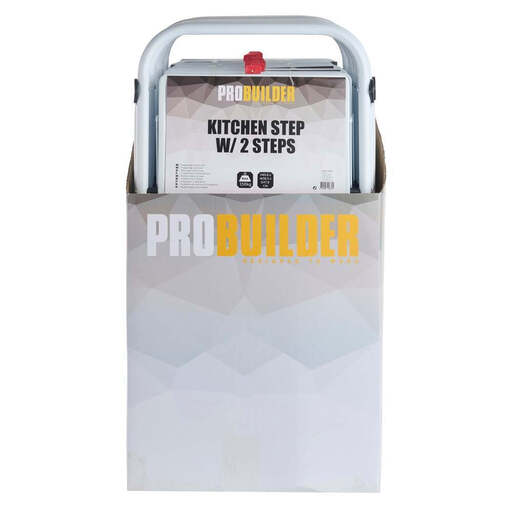
Why this product suits this profile: With a stated folded depth of 4.7 cm, this folding household ladder is designed for storage behind doors or in narrow alcoves.
The product description specifies an audible locking mechanism, two steps measuring 20 × 30 cm and the EN 14183 standard. Before buying, compare the folded dimensions with the available storage space.
Steel and plastic construction, 150 kg maximum load capacity, 3 kg weight and 4.7 cm folded depth according to the product details.
We have put together a complete, regularly updated list of products that fully meet these strict selection criteria and the safety regulations applicable in the EU.
Before each use, check the frame, joints, feet and step surfaces. Pay particular attention to loose connectors, cracks, worn rubber feet or a locking mechanism that does not engage fully.
The following basic rules apply when using the product:
A damp cloth is generally all that is needed for care. The surface should then be allowed to dry completely. Folding step stools should be stored in a dry place, with the joints protected from prolonged exposure to moisture.
The working height depends on the model and its design. In the product details available here, the open height ranges from around 65.8 cm for the PROBUILDER model to 83 cm for the aluminium and metal models. For shelves or kitchen cupboards, choose a height that means you do not have to reach beyond the top step.
Yes, provided there is enough space and the product is stored in a dry, stable position. However, the key advantage of a folding step stool is its compact storage. Before each use, check the locking mechanism, joints, steps and rubber feet. Any damage may affect safe use.
A folding step stool does not require electricity and incurs no ongoing energy costs during normal household use. The only costs to consider are possible replacement parts or replacing the product if it becomes worn. Before buying, therefore, check whether rubber feet, joints or other components are available as replacements.