
Lieferung heute & morgen

Qualitätsgarantie

Willkommens-Angebote freischalten: KOSTENLOSE Lieferung | Bis zu 80 % RABATT | Kostenlose 30-Tage-JoyPlus-Testphase
App herunterladen
A 2-zone built-in hob fits into many kitchen runs, flats, holiday homes and households where space is limited. Two cooking zones are often enough to heat water and prepare a meal at the same time. However, price and appearance should not be the only considerations when buying. The key factors are the installation dimensions, heating technology, connected load and safety features.
The term “30 cm built-in hob” usually refers to the approximate width of the appliance. However, it is the worktop cut-out that matters for installation. For example, a hob with overall dimensions of around 29 × 52 cm may require a cut-out measuring 26 × 49 cm or 26.5 × 49.5 cm.
You should therefore check the following before ordering:
An existing cut-out must not automatically be assumed to be suitable. Even a difference of a few millimetres can make installation more difficult.
A 3000 W hob or a model with a total output of 3500 W can power two zones. However, the total output is distributed between the activated cooking areas. For everyday use, it is therefore important to know how much power each zone can deliver individually and whether a boost function is available.
With a 2-zone induction hob, heat is generated directly in the base of a suitable pan. This allows the hob to respond quickly when you change the power level. However, you will need magnetic pots and pans. A simple magnet test on the base will show whether your cookware is fundamentally suitable.
A 2-plate ceramic hob, or a glass-ceramic hob, uses heating elements beneath the surface. It is generally less demanding when it comes to cookware, but the surface remains hot for longer after the hob is switched off. The residual heat indicator is therefore an important safety feature.
A hob with touch controls is easy to clean because there are no protruding rotary controls. However, in small kitchens, the controls can be inconvenient if water or grease gets onto the control panel. Look for clearly visible displays, separate controls for both zones and an easy-to-reach power button.
A hob with a timer can switch a zone off after the set time. Check whether the timer can be set separately for each cooking zone and how long it can run for at most. The timer function does not replace supervision while cooking, particularly when heating oil or fat.
An electric hob with glass-ceramic heating elements is suitable for many conventional pots. Heat is transferred from the heating area to the cookware. With induction, the base of the pan must be magnetic. Aluminium, copper and some stainless-steel cookware will only work if they have a suitable magnetic base.
The following points are particularly important when choosing:
A child safety lock generally prevents accidental inputs, but it does not replace supervision. A residual heat indicator warns you when the surface is still hot. Other useful features may include automatic switch-off, overheating protection, overflow protection and pan detection.
The exact way each feature works depends on the model. Read the operating and installation instructions before fitting the hob. If a glass-ceramic hob is damaged, disconnect it from the mains and do not continue using it.
Compact built-in hobs are often designed for 220–240 V. Specifications such as 3000 W, 3500 W or a required 16 A fuse rating describe the electrical load. The connection should be carried out in accordance with the instructions and local requirements. If you are unsure, installation by a qualified electrician is advisable.
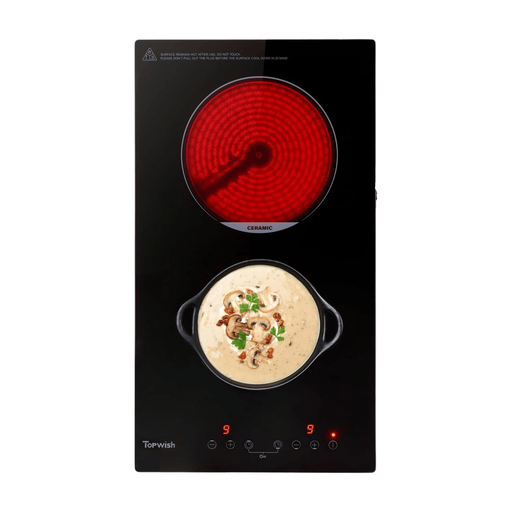
Why this product suits this profile: This compact ceramic hob offers two cooking zones, nine power levels and a total output of 3000 W for everyday meals in smaller households.
The product specifications state both the overall dimensions of 29 × 52 cm and a cut-out size of 26 × 49 cm. This makes it easier to check the installation requirements before buying.
Glass-ceramic surface, touch controls, timer of up to 90 minutes, child safety lock and residual heat indicator.
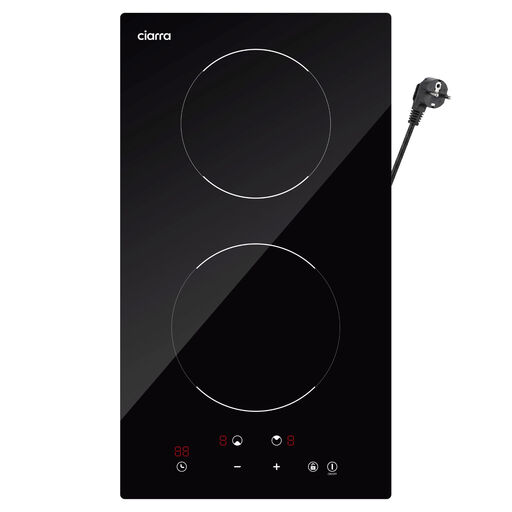
Why this product suits this profile: This induction hob is designed for users who have suitable magnetic cookware and value separate power levels together with automatic safety features.
Pan detection and nine power levels make it clear whether a suitable pan is positioned on the zone and which setting has been selected.
Two induction zones, 3000 W total output, individual timer of up to 99 minutes, child safety lock and overheating protection.
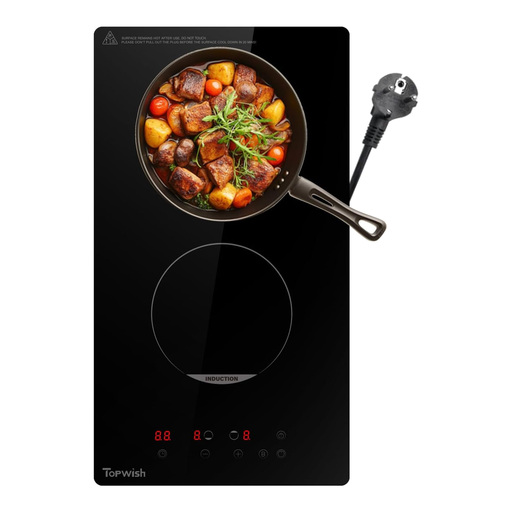
Why this product suits this profile: With a total output of 3500 W and a boost function, this 2-zone hob is an appealing option for households that regularly prepare two dishes at the same time.
The technical specifications show the output of each zone as well as the cut-out dimensions of 26.5 × 49.5 cm. This makes it easier to compare the hob with your cookware and worktop.
1800/2300 W zone, 1200/1500 W zone, boost function, timer from 1 to 99 minutes and automatic switch-off.
We have put together a complete, regularly updated list of products that fully meet these strict selection criteria and the safety regulations applicable in the EU.
Before ordering a 2-zone built-in hob, make sure you have checked the following:
Many compact models are approximately 29 to 30 cm wide and around 52 cm deep. However, the actual installation dimensions vary. The cut-out size specified in the product details is what matters, not just the width of the appliance.
Running costs depend on the electricity price, cooking time, power setting and frequency of use. Induction responds directly to pan detection and requires suitable cookware. A ceramic hob can be used with many existing pots and pans. For a realistic decision, consider your cooking habits and the equipment you already own.
It is not possible to guarantee a fixed service life. Among other things, it depends on daily usage, cleaning, professional installation and how the glass-ceramic surface is treated. Use flat, clean pan bases, avoid sliding heavy pots across the surface and only clean the hob once the residual heat indicator has gone out.