
Lieferung heute & morgen

Qualitätsgarantie

Willkommens-Angebote freischalten: KOSTENLOSE Lieferung | Bis zu 80 % RABATT | Kostenlose 30-Tage-JoyPlus-Testphase
App herunterladen
A 20 cm chef’s knife is a practical all-rounder for many kitchens. Its blade offers enough cutting surface for vegetables, herbs, meat and poultry, while generally remaining easy to control. However, not every feature in a product description is as clear-cut as it may initially seem. Terms such as “particularly sharp”, “professional quality” or “durable” are of limited value without specific technical details.
That is why our selection is based on clear, verifiable criteria: blade length, steel, edge grind, handle design, care requirements and intended use.
A chef’s knife that is sharp straight out of the packaging will not necessarily stay sharp over the long term. Factors such as the type of steel used, heat treatment, blade grind and cutting surface all play a role. A fine V-edge can enable precise cutting, but it requires appropriate care. Regular honing with a suitable honing steel or sharpening on a whetstone is part of normal use for many kitchen knives.
The term stainless steel kitchen knife initially says only something about the material category. It does not automatically reveal the knife’s hardness, flexibility or resistance to rust. Details about the specific type of steel, hardening process or manufacturing method are more informative. A forged chef’s knife may be made from a single piece of steel; even so, you should also check how the handle, blade and transition between them have been finished.
A chef’s knife with an ergonomic handle needs to suit your hand size, grip style and intended working time. A heavy, broad handle may feel stable during forceful cutting, while a lightweight plastic handle may be more comfortable during longer preparation tasks. A dry handle, a secure transition to the blade and balanced weight distribution are also important.
With a 20 cm chef’s knife or 20 cm kitchen knife, the blade typically runs from the tip to the heel. The curved edge is suitable for rocking motions, such as chopping herbs or cutting up vegetables. A shorter blade may be easier to handle when working with particularly small ingredients, while a 20 cm blade offers greater reach for larger ingredients.
Also pay attention to the blade height. A wider blade can provide additional guidance when cutting cabbage or larger pieces of vegetables, and can make it easier to lift up chopped ingredients. However, a chef’s knife is not automatically suitable for bones, frozen food or hard objects.
When choosing a knife, specific manufacturer details about the blade should be available. Terms such as FRIODUR ice-hardening or SIGMAFORGE refer to specific manufacturing or heat-treatment processes used by ZWILLING. According to the product description for the relevant model, the blade of the ZWILLING TWIN Cuisine chef’s knife is made from special ZWILLING steel, manufactured using the SIGMAFORGE process and FRIODUR ice-hardened.
Greater hardness can support edge retention, but it does not make a blade impervious to damage. The cutting surface remains crucial: wood or suitable plastic are generally more appropriate for everyday use than glass, stone or ceramic. Also check whether the knife is explicitly approved for use in the dishwasher. Several of the models listed here recommend or require hand washing.
A V-edge of approximately 15 degrees per side is specified for several ZWILLING models. This figure describes the sharpening angle and is not, on its own, proof of quality. It can, however, help you choose a suitable sharpening tool.
When it comes to the handle, the material, fastening and transition to the blade are all relevant. A joint-free or seamless transition can make cleaning easier. Rivets, a full tang and a finger guard affect stability and handling. The details should always be checked against the specific product data sheet.
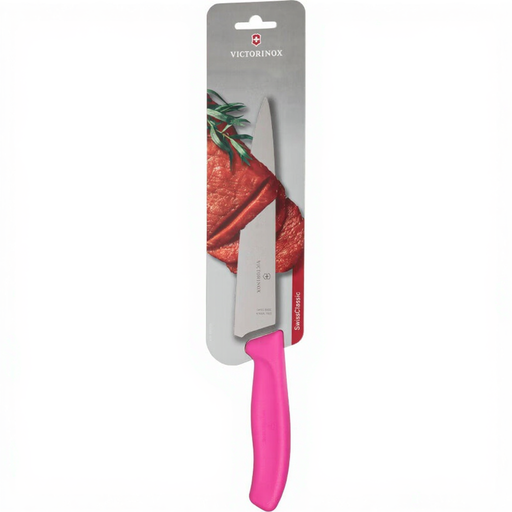
Why this product suits this profile: The 19 cm blade is close to the desired size, while the plastic handle is designed for everyday cutting tasks. This model is suitable for fruit, vegetables and meat when you are looking for straightforward essentials.
The product details specify the blade length, handle material and areas of use, rather than relying solely on general claims about sharpness.
Straight edge, ergonomic plastic handle and dishwasher-safe according to the product information.
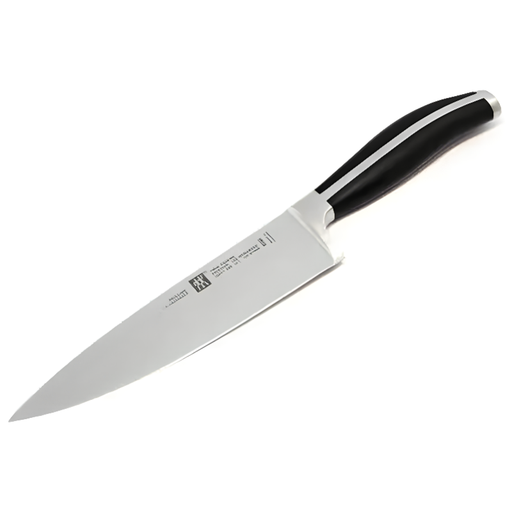
Why this product suits this profile: This forged chef’s knife combines a 20 cm blade with SIGMAFORGE manufacture, FRIODUR ice-hardening and a seamless plastic handle. It is aimed at users who want to compare workmanship and care requirements in detail.
The construction, blade angle and hand-washing requirement are specified in the product data. This makes it easier to assess the care required realistically before buying.
20 cm blade, V-edge of around 15 degrees per side and horizontal full-tang construction without rivets, according to the product description.
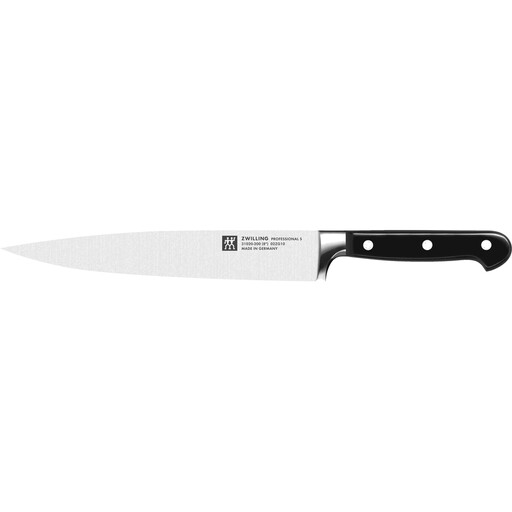
Why this product suits this profile: According to the product description, the 20 cm blade is intended for raw meat, roasts, poultry and goulash. For users who frequently prepare meat, this focus may be more suitable than that of a purely vegetable knife.
The stated intended use prevents you from expecting this to be a universal knife. According to the manufacturer’s information, it is not intended for bones, frozen food or hard objects.
Forged, FRIODUR ice-hardened stainless-steel blade, ergonomic plastic handle and finger guard, according to the product data.
We have put together a complete, regularly updated list of products that fully meet these strict selection criteria and the safety regulations applicable in the EU.
To help a 20 cm chef’s knife retain its edge for as long as possible, a few habits make all the difference:
A sharp kitchen knife should always be handled with dry hands and on a stable surface. The blade should not be left loose in a drawer, particularly if children have access to the kitchen.
Yes, the classic blade shape is generally suitable for a wide range of cutting tasks. Vegetables, herbs, meat and poultry are all typical uses. A standard chef’s knife is usually not designed for bones, frozen food or particularly hard ingredients.
That depends on how it is used, the steel, the cutting surface and your technique. A honing steel realigns the edge during everyday use, but removes only a limited amount of material. If the knife still does not cut cleanly despite being used correctly, you may need a whetstone or a professional sharpening service.
Only if the manufacturer expressly states that it is. Heat, detergents, water pressure and contact with other items can affect the blade and handle. Hand washing is recommended for many forged chef’s knives, even where individual models are listed as dishwasher-safe.