
Lieferung heute & morgen

Qualitätsgarantie

Willkommens-Angebote freischalten: KOSTENLOSE Lieferung | Bis zu 80 % RABATT | Kostenlose 30-Tage-JoyPlus-Testphase
App herunterladen
A 20 cm cooking pot is suitable for many kitchen tasks: soups, sauces, pasta, vegetables, stews and smaller one-pot dishes. Its compact size often suits households of two to four people and takes up less cupboard space than a large stockpot.
However, some product details can lead to the wrong choice. A pot with a diameter of 20 cm can hold significantly different amounts depending on its height. Likewise, a surface described as “non-stick” says little by itself about the material, care requirements or permitted temperatures. If you also fail to consider your hob type or the pot’s weight, you may end up buying cookware that is impractical for everyday use.
The specification 20 cm generally refers to the upper diameter, not the usable volume. A shallow 20 cm braising pan may hold less than a tall cooking pot with a lid of the same width. For soups and stews, it is therefore also important to check the height and stated capacity.
As a guide:
The pot should not be filled to the brim. Leaving enough space reduces the risk of boiling over.
A pot for all hob types should explicitly be listed as suitable for gas, electric, ceramic and induction hobs. Aluminium pots often require a magnetic base to work on an induction hob. If the manufacturer provides no clear information, check compatibility before buying.
Oven suitability also needs to be considered carefully. A pot may be ovenproof, while the lid, glass lid or plastic handles have a lower temperature limit.
A non-stick pot makes it easier to remove delicate foods, but it is not automatically suitable for high temperatures or metal utensils. Wooden and silicone utensils help protect the surface. With ceramic and PTFE coatings, you should also avoid overheating and heating the pot for a long time while empty.
If you prefer an easy-care, uncoated option, you can choose a stainless steel cooking pot. Stainless steel is robust and often dishwasher-safe, but when searing you need to use the right temperature and a little fat to prevent food from sticking excessively.
A multi-layer stainless steel body with an aluminium core can heat up quickly and distribute heat evenly. This is practical for sauces and milk-based dishes, as it makes it easier to control the temperature.
Aluminium is comparatively lightweight and conducts heat well. With coated versions, follow the care instructions. A 20 cm cast iron pot retains heat for a long time and is particularly suitable for braising. However, it is considerably heavier and responds more slowly to changes in temperature.
A well-fitting lid keeps steam in the pot and reduces energy consumption while simmering. Glass lids allow you to monitor the food, but may be more fragile. With a cooking pot with lid, check whether the lid can be used in the oven and whether the handle becomes hot.
Two side handles make it easier to carry a heavy braising pot. A long handle, on the other hand, takes up less space on lightweight saucepans or milk pans.
Before buying, check that the following details match your requirements:
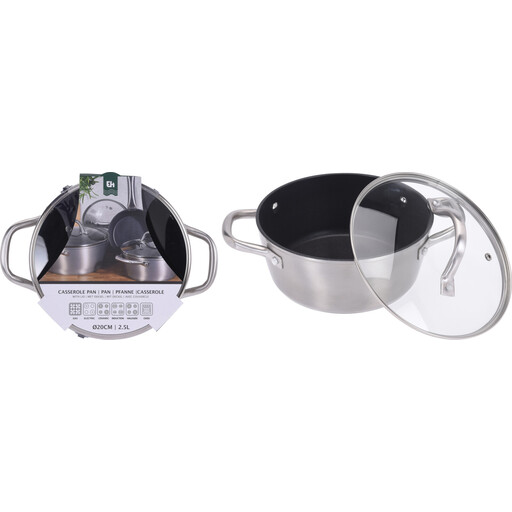
Why this product suits this profile: This lightweight aluminium pot is designed for soups, sauces and braised dishes. With a diameter of 20 cm and a height of 9 cm, it offers a compact format for everyday use. Check the product details to confirm its induction compatibility before buying.
The diameter and height are listed separately. This makes it easier to assess the volume than with a size specification alone. Check the specific manufacturer information for the coating and hob compatibility.
Aluminium is lightweight and conducts heat well. The 20 cm design is suitable for smaller portions and takes up comparatively little storage space.
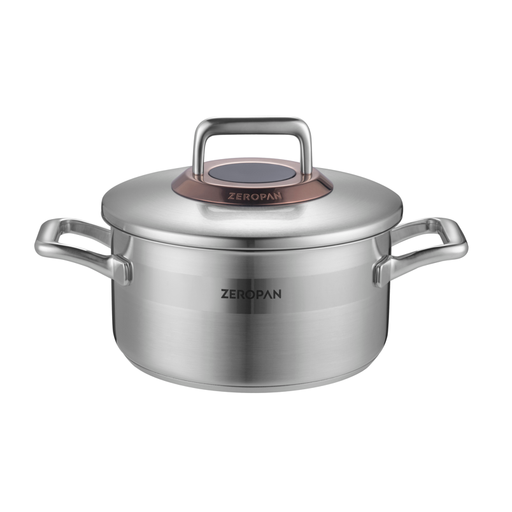
Why this product suits this profile: This cooking pot combines stainless steel with a ceramic coating and a three-layer construction with an aluminium core. According to the product details, it holds 1.7 litres, is suitable for several hob types and is ovenproof up to 260 °C; the glass lid is rated up to 148 °C.
The different temperature limits for the pot and lid are clearly specified. Gas, electric, ceramic, halogen and induction are also listed as suitable hob types.
1.7-litre usable capacity, stainless steel body, ceramic coating, stated dishwasher suitability and ovenproof construction.
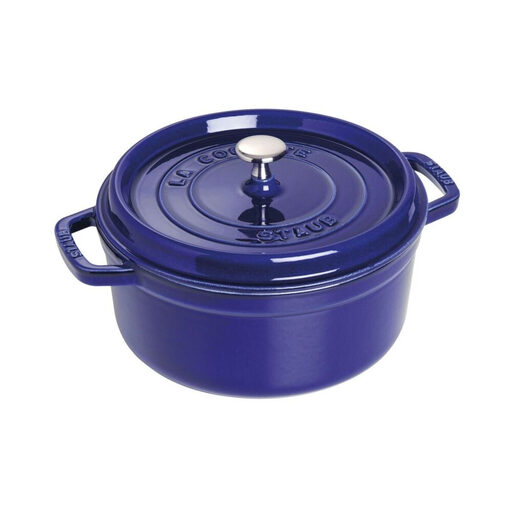
Why this product suits this profile: This 20 cm enamelled cast iron pot is designed for slow braising, searing and serving. With a capacity of 2.25 litres, it is suitable for stews and braised dishes. Its weight of 3.6 kg should be taken into account when planning your kitchen.
The product details specify the weight, capacity, hob types and oven limit of up to 260 °C. This makes it easier to assess how the pot will handle and where it can be used before buying.
Enamelled cast iron, suitability for all hob types including induction, and a lid with condensate return according to the product description.
We have put together a complete, regularly updated list of products that fully meet these strict selection criteria and the safety regulations applicable in the EU.
The product’s lifespan depends heavily on how it is used. Coated pots should not be heated empty at a high setting. Wooden or silicone utensils are also suitable for stainless steel, while enamelled cast iron should be protected from sudden changes in temperature. Filling a hot pot directly with cold water can put stress on the material and coating.
Follow the manufacturer’s instructions when cleaning. Dishwasher suitability does not necessarily mean that the surface will remain unchanged over the long term. Hand washing with mild washing-up liquid and a soft sponge is often gentler on the material when dealing with delicate coatings and enamel.
This depends on the capacity and the dish. Models holding around 1.7 litres are more suitable for smaller portions, sauces and side dishes. Pots with capacities of 2.2 to 2.5 litres are more practical for soups, stews and one-pot dishes for several people. The pot should not be filled to the brim.
Choose models whose product details explicitly mention induction compatibility. Stainless steel and cast iron models are often compatible. Aluminium pots require a magnetic induction base. A suitable symbol on the base of the pot or clear manufacturer information provides reassurance.
There is no reliable way to give a general lifespan. It depends on the type of coating, temperature, cleaning method and kitchen utensils used. Metal cutlery, overheating and abrasive cleaning products can damage the surface more quickly. For frequent searing at high heat, an uncoated stainless steel or enamelled cast iron pot may be a suitable alternative.