
Lieferung heute & morgen

Qualitätsgarantie

Willkommens-Angebote freischalten: KOSTENLOSE Lieferung | Bis zu 80 % RABATT | Kostenlose 30-Tage-JoyPlus-Testphase
App herunterladen
A 20 cm frying pan is ideal for small kitchens, compact hobs and typical single portions. It’s well suited to fried eggs, omelettes, vegetables, fish and smaller cuts of meat. However, its compact size also means that not every model is suitable for every hob, temperature or cleaning method.
If you focus only on colour, brand name or an advertised non-stick coating, it’s easy to overlook important details. Three common buying mistakes are particularly worth avoiding:
For an induction hob, a 20 cm induction frying pan needs a magnetic base. Stainless steel models often have an additional steel base built in for this reason. Aluminium conducts heat well, but without a suitable base construction it is generally not directly compatible with induction.
Before you buy, check that the product description specifically states whether the pan is suitable for gas, electric, ceramic, halogen and induction hobs. A pan for all hob types gives you more flexibility if you move house or change your hob later.
It’s also important to check that the pan is a suitable size for your hob. Some models have a rim diameter of 20 cm but a smaller contact base. This is down to their design and worth bearing in mind when choosing a pan.
An aluminium frying pan is usually lightweight and responds comparatively quickly to changes in temperature. Models made from pressed or forged aluminium can be practical for everyday use. If you choose a coated pan, check the permitted temperatures and which kitchen utensils are suitable.
A stainless steel frying pan with an aluminium core distributes heat across several layers of material. It’s often heavier, but depending on the design, it may be suitable for higher temperatures and use in the oven. A smooth stainless steel surface behaves differently when frying than a coated frying pan. Preheating, using enough fat and choosing the right temperature are more important to help prevent food from sticking.
For a non-stick pan, follow the care instructions. Wooden, silicone or nylon turners help reduce the risk of scratches. Claims such as “scratch-resistant” apply to the specific product description and aren’t a reason to ignore the care instructions.
A dishwasher-safe frying pan can go in the dishwasher according to the product information. However, hand-washing a coated surface with a soft sponge may be gentler. Let the pan cool before cleaning it, as sudden temperature changes can put strain on the material and coating.
If you want to finish cooking dishes in the oven, you’ll need an oven-safe frying pan. It’s not just the pan body that matters, but the handle too. Plastic or Bakelite handles may limit the maximum permitted temperature. If the handle is removable, take it off before putting the pan in the oven.
A frying pan with a lid is handy for braising, cooking vegetables and preparing small portions over a lower heat. However, the lid isn’t included with every product. Check this explicitly before you buy.
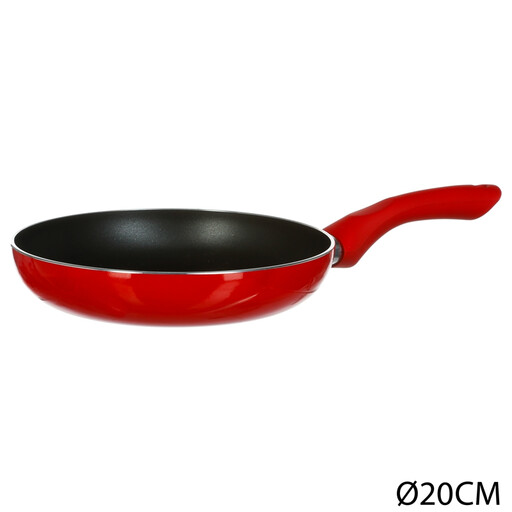
Why this product suits this profile: According to the product information, this compact aluminium frying pan weighs 0.5 kg and is designed for gas, electric and induction hobs. With a 20 cm diameter and a height of around 4 cm, it’s ideal for small portions and everyday use.
Hob compatibility is stated explicitly rather than inferred from the material alone. Its low weight makes it easier to handle in smaller kitchens.
Aluminium body, compact dimensions and a weight of 0.5 kg according to the supplier.
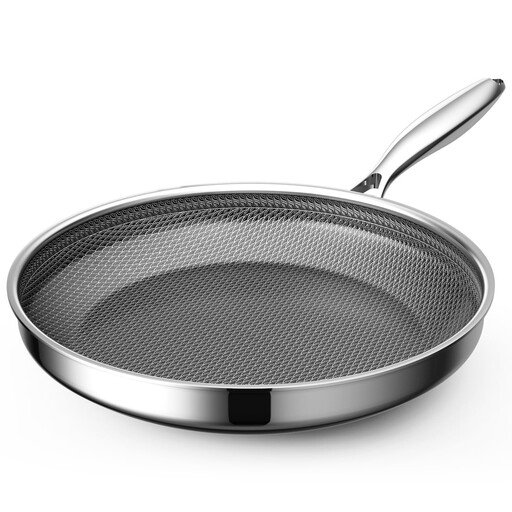
Why this product suits this profile: Its Tri-Ply construction combines 304 stainless steel on the inside, an aluminium core and a 430 stainless steel base. According to the product information, the pan is suitable for all common hob types and oven-safe up to 260 °C.
Its induction compatibility comes from the stated stainless steel base. The maximum oven temperature is clearly specified, making it easier to plan how you’ll use the pan.
Tri-Ply construction, ceramic coating without PFAS, PFOA and PTFE according to the supplier, and oven-safe up to 260 °C.
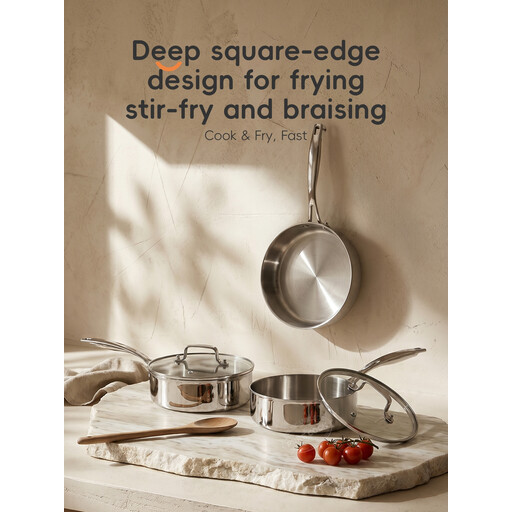
Why this product suits this profile: This deep 20 cm pan comes with a lid made from tempered glass. It’s suitable for induction, gas and electric ceramic hobs and, according to the product information, is dishwasher-safe.
The lid is explicitly listed as included. The compatible hob types and oven-safe temperature of up to 260 °C are also stated, so you can check the accessories and temperature limits at a glance.
Tri-Ply stainless steel construction, a deep body, a glass lid and stated compatibility with several hob types.
We’ve put together a complete, regularly updated list of products that meet these strict selection criteria and fully comply with the safety regulations in force in the EU.
A 20 cm pan is often big enough for one person, for example to cook an egg, an omelette, a small portion of vegetables or a fish fillet. A larger pan is more practical for several people or larger cuts of meat. What matters is the actual cooking surface, not just the diameter of the rim.
A small frying pan should be explicitly labelled as suitable for induction. Aluminium models need a magnetic base. Stainless steel pans with an integrated steel base or layered construction are often designed for induction. Always check the manufacturer’s information before you buy.
How long it lasts depends on the coating, temperature, cleaning and the utensils you use. Heating an empty pan until it’s too hot, using metal turners, abrasive cleaners and exposing it to sudden temperature changes can all put strain on the surface. Replace the pan if the coating starts to peel visibly, the base becomes unstable or the handle is damaged.