
Lieferung heute & morgen

Qualitätsgarantie

Willkommens-Angebote freischalten: KOSTENLOSE Lieferung | Bis zu 80 % RABATT | Kostenlose 30-Tage-JoyPlus-Testphase
App herunterladen
A 20 cm frying pan is ideal for individual portions, breakfast, omelettes, fish, vegetables or small side dishes. For people living alone, couples and households with limited storage space, a compact pan is often more practical than a large model. However, 20 cm pans can vary considerably in their cooking surface, coating, handle, hob compatibility and cleaning requirements.
The stated size usually refers to the top rim. The actual base of the pan can be considerably smaller. For example, the BALLARINI Vipiteno product details list a 20 cm top diameter and a 14.3 cm base diameter. This affects how much of the hob’s cooking zone is actually covered and heated.
A compact base is fine for smaller dishes. But if you want to cook a large omelette or several pieces of fish, check the usable cooking surface and, where possible, place the pan on a suitably sized cooking zone.
A pan for all hob types must be explicitly approved for each heat source. An induction hob in particular requires a magnetic or induction-compatible base. A standard aluminium frying pan won’t necessarily work on induction.
According to its product details, the 5Five Forged Aluminium Frying Pan, with a 20 cm diameter, is designed for gas and electric hobs, but not for induction. If you’re looking for a 20 cm induction pan, check the technical details for the words “induction compatible” or “suitable for induction”.
A coated frying pan makes it easier to release delicate foods. However, it shouldn’t be left to heat empty on a high setting for too long. Metal turners, knives and scouring pads can damage the surface unless the manufacturer says otherwise.
“Dishwasher-safe” isn’t a measure of quality, either. Dishwasher cleaning can put more strain on a non-stick coating than washing by hand with a soft sponge and mild washing-up liquid. Always check the care instructions, the permitted temperature and whether the pan is oven-safe.
Aluminium heats up relatively quickly and is usually easy to handle, especially in smaller pans. An aluminium frying pan with a reinforced or multi-layer base can distribute heat more evenly. In stainless steel models, an aluminium core often does this job.
A 20 cm stainless steel pan without a traditional non-stick coating is a good choice if you prefer a durable, uncoated surface. However, you’ll usually need to pay closer attention to preheating, the amount of fat and the temperature. An uncoated surface isn’t automatically non-stick, despite what some product descriptions may suggest.
A non-stick frying pan is practical for eggs, omelettes, fish and delicate vegetables. PTFE and ceramic coatings differ in their construction and care requirements. A 20 cm ceramic pan is often not made entirely of ceramic, but has a metal body with a ceramic coating.
When using coated models, stick to low or medium heat, use suitable wooden, silicone or plastic utensils, and avoid heating the pan empty. Claims such as “scratch-resistant” shouldn’t be taken as permission to handle the pan roughly.
Check these three details:
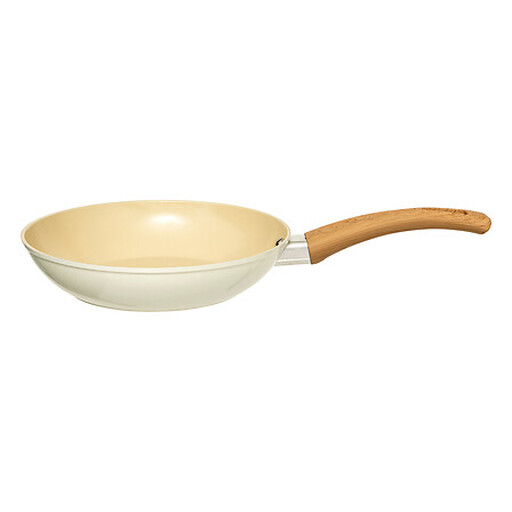
Why it suits this profile: According to the product details, this compact aluminium pan is lightweight and designed for gas and electric hobs. It’s a good option for simple meals on a limited budget, as long as you don’t have an induction hob.
Its lack of induction compatibility is clearly stated. You can choose this pan specifically for a suitable hob type, rather than focusing only on its compact size.
Forged aluminium body, 20 cm diameter and a low weight of 0.320 kg according to the product details.
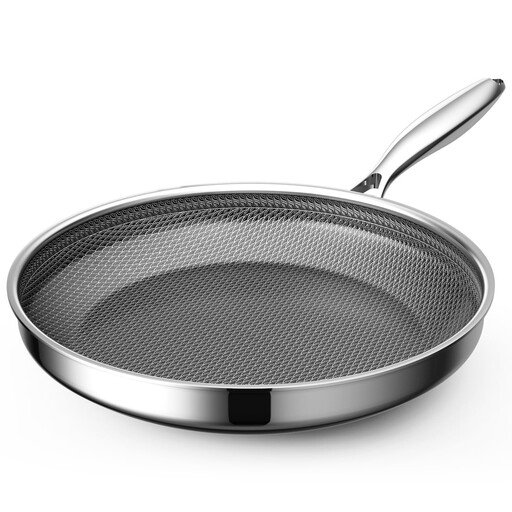
Why it suits this profile: According to the manufacturer, its tri-ply construction combines 304 stainless steel on the inside, an aluminium core and a 430 stainless steel base for induction. It’s a good choice if you want to compare materials and hob compatibility in detail.
The product details clearly specify its construction and suitability for gas, electric, ceramic, halogen and induction hobs. The ceramic coating is also described as free from PFAS, PFOA and PTFE.
Induction-compatible stainless steel base, aluminium core, ceramic honeycomb structure and oven-safe up to 260 °C according to the product details.
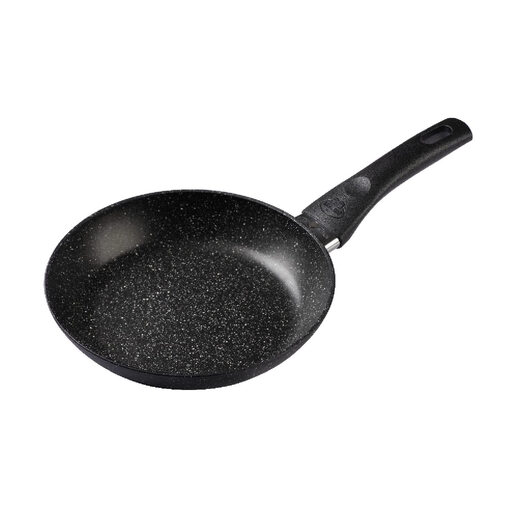
Why it suits this profile: This pan is designed for anyone looking for a coated frying pan with a temperature indicator, induction compatibility and easy cleaning.
The product details list compatible hob types, a maximum oven temperature of 160 °C and care instructions. This helps you avoid overlooking temperature limits or compatibility requirements.
Four-layer Nerolite non-stick coating, Thermotion indicator, and suitable for induction and dishwasher use according to the product description.
We’ve put together a complete, regularly updated list of products that meet these strict selection criteria and the safety regulations in force in the EU.
A 20 cm frying pan is best suited to one portion or smaller amounts for two people. For several large schnitzels, pan-fried meals or family-sized portions, a larger cooking surface is usually a better choice.
It’s not just the material that matters: the base must be explicitly suitable for induction. Aluminium usually needs a magnetic layer in the base for this. Also check that the base diameter matches your cooking zone.
Its lifespan depends on the heat, utensils, cleaning and storage. Scratches, heating the pan empty and abrasive cleaning products can damage the coating. It’s therefore not possible to give a reliable general estimate of how long it will last. Always follow the care instructions and warranty terms provided by the manufacturer.