
Lieferung heute & morgen

Qualitätsgarantie

Willkommens-Angebote freischalten: KOSTENLOSE Lieferung | Bis zu 80 % RABATT | Kostenlose 30-Tage-JoyPlus-Testphase
App herunterladen
A 20 cm frying pan fits on many small hobs and is ideal for single portions, omelettes, vegetables, fish or side dishes. Its compact size saves space and, when used on a suitably sized hob zone, it heats up relatively quickly. However, diameter alone doesn’t determine whether a pan will perform well day to day.
Relying on product descriptions without checking the details can easily lead to buying a pan that isn’t suited to your hob, cleaning routine or cooking style. The following criteria will help you distinguish technical specifications from marketing claims.
The claim suitable for all hob types should be backed up with specific information about induction, gas, electric and ceramic hobs. Induction requires a magnetic or induction-compatible base. A 20 cm induction frying pan may work on a large hob zone, but it will usually distribute heat evenly only where the base is in contact with the hob.
Different manufacturer guidance may apply to halogen or infrared hobs. Check the technical specifications before you buy.
“Non-stick” doesn’t automatically tell you what the coating is made of, how much care it needs or how heat-resistant it is. A coated frying pan might have a PTFE coating, a ceramic coating or a textured hybrid surface, for example. These options differ in their recommended cooking temperatures and in the types of utensils you can use.
Don’t heat a PTFE surface when the pan is empty, as it can overheat. Low to medium heat is often recommended for ceramic coatings. Wooden, silicone or nylon utensils can help extend the life of the surface, although some manufacturers allow metal utensils.
A dishwasher-safe pan isn’t necessarily suitable for the dishwasher with its handle, lid and accessories attached. Removable handles often come with separate care instructions. The same applies to an oven-safe pan: the stated temperature limit may apply to the pan itself, while plastic handles or lids may have lower limits.
The 20 cm measurement usually refers to the top rim of the pan. However, the base size is what matters for heat transfer. For example, the Silit Belluna is stated to be suitable for a hob zone with a diameter of 14.5 cm. If you use a larger zone, compare the size of the pan base with the hob zone.
A 20 cm pan is often enough for one portion or smaller quantities for singles and couples. For several people, a set of frying pans in 20, 24 and 28 cm sizes may be more practical.
For stainless steel models, 304 stainless steel is a material specification. It doesn’t replace the need to check the base construction, handle, coating and care instructions.
If you’re looking for a non-stick frying pan, check exactly what type of coating it has. According to the product information, the ZEROPAN Standard has a ceramic Honeycomb coating that is free from PFAS, PFOA and PTFE. Other models are specifically listed as having a PTFE coating, including the Silit Belluna and ZWILLING Joy Plus.
These details apply to the specific products and shouldn’t be assumed to apply to the whole product category. Whatever the material, heating an empty pan, exposing it to sudden temperature changes and using abrasive cleaning products are common causes of wear and tear.

Why it suits this profile: A single, compact aluminium pan for smaller households. According to the product information, it’s suitable for gas, electric and ceramic hobs, as well as induction.
The specifications list the compatible hob types, coating and a specific oven limit: up to 70 °C according to the product information. The plastic handle shouldn’t be treated as equivalent to a metal construction designed for high temperatures.
Coated aluminium, 20 cm diameter and a Bakelite handle. The supplier also offers a five-year guarantee covering materials, workmanship and non-stick performance.
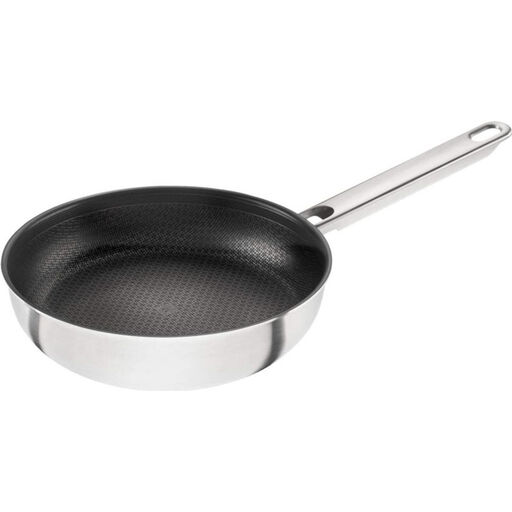
Why it suits this profile: Its three-layer construction, combining 18/10 stainless steel with an aluminium core, will appeal if you’re looking for a clearly specified design, induction compatibility and a coated surface.
The product details specify a PTFE coating and a maximum oven temperature of 200 °C. They also advise against heating the pan empty or for prolonged periods at high temperatures.
18/10 stainless steel with an aluminium core, a wide pouring rim and a stainless steel handle. The product information also states that it’s dishwasher-safe.
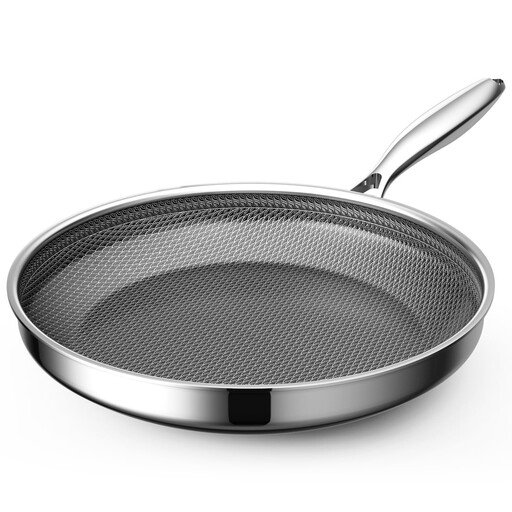
Why it suits this profile: The combination of a 304 stainless steel interior, an aluminium core, an induction-compatible 430 stainless steel base and a ceramic coating may appeal if you have specific material requirements.
The supplier specifies that the coating is free from PFAS, PFOA and PTFE. The pan is also listed as suitable for gas, electric, ceramic, halogen and induction hobs.
Oven-safe up to 260 °C according to the product information, with a hollow stainless steel handle. The product is also listed as dishwasher-safe.
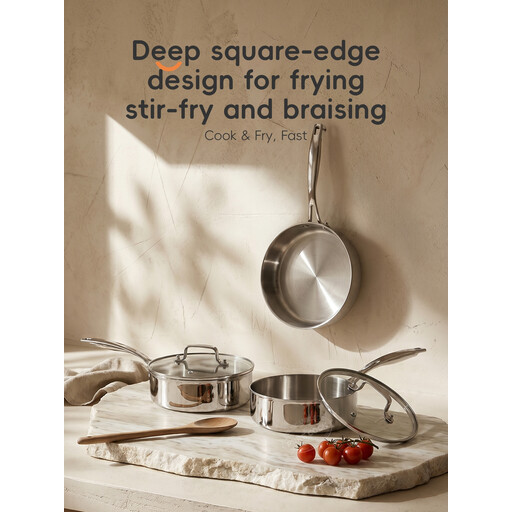
Why it suits this profile: The deep design and supplied glass lid are ideal for small braises, pasta, vegetables and dishes where you want to prevent splashes.
The pack contents explicitly include a 20 cm pan and a toughened glass lid. Compatibility with induction, gas and electric ceramic hobs is listed separately.
Uncoated 304 stainless steel, three-layer construction and a glass lid. The product information also states that it’s dishwasher-safe.
Before using your 20 cm frying pan for the first time, wash it with warm water and mild washing-up liquid. Low to medium heat is recommended for coated models. With stainless steel pans, it helps to preheat the pan properly and wait before moving the food.
A few simple rules:
We’ve put together a complete, regularly updated list of products that meet these strict selection criteria and fully comply with the safety regulations in force in the EU.
A 20 cm pan is usually suitable for one portion or smaller quantities for two people. For family meals, a larger pan or a set of frying pans in different sizes is more practical.
The key is a base that the manufacturer explicitly identifies as induction-compatible. With a 20 cm induction frying pan, make sure the base size is also suitable for your hob zone. Stainless steel, aluminium or ceramic alone doesn’t tell you whether a pan will work on induction.
Its lifespan depends on the type of coating, temperature, utensils and cleaning routine. Avoid overheating the pan when it’s empty, scratching the coating with metal utensils and using harsh scouring products. If the surface starts to peel, warp or show significant damage, stop using the pan.