
Lieferung heute & morgen

Qualitätsgarantie

Willkommens-Angebote freischalten: KOSTENLOSE Lieferung | Bis zu 80 % RABATT | Kostenlose 30-Tage-JoyPlus-Testphase
App herunterladen
A 20 cm induction frying pan is ideal for small portions, omelettes, fried eggs, fish, vegetables or a quick pan-fried meal. Singles, couples and households with limited storage space can all benefit from its compact size. However, not every small frying pan is automatically suitable for induction or practical for everyday use over the long term.
Before buying, it is therefore worth taking a close look at the material, coating, hob compatibility and cleaning requirements. Marketing terms such as “non-stick”, “suitable for all hob types” or “dishwasher-safe” do not always provide the details that matter for your kitchen.
The stated diameter usually refers to the top rim. The actual base of the pan may be considerably smaller. According to the product details, the base of the Silit Belluna measures around 14.5 cm, while the top diameter is 20 cm. On induction hobs, the base of the pan should match the cooking zone as closely as possible to ensure reliable energy transfer.
A 20 cm coated frying pan can make low-fat frying easier and help delicate foods slide off the surface. Nevertheless, it should not be heated empty at a high setting for an extended period. Metal turners, knives, wire wool and abrasive cleaners can damage the surface. Even a pan labelled dishwasher-safe may show signs of wear more quickly with regular machine washing than with gentle hand washing.
A pan suitable for all hob types may be compatible with gas, electric, ceramic and induction hobs. However, this does not automatically mean that it is oven-safe. The maximum temperature and the handle material are the deciding factors. With a pan that comes with a lid, you must also check whether the lid needs to be removed before using the pan in the oven.
When choosing a small pan, you should distinguish between three measurements:
A 20 cm pan is designed for one or two portions. Larger quantities can be difficult to turn and distribute evenly in it.
An aluminium frying pan is often lightweight and heats up quickly. For induction cooking, however, it needs a suitable magnetic base. Multi-layer constructions combine different properties: aluminium can support heat conduction, while stainless steel provides stability and a robust surface.
A stainless steel frying pan is generally uncoated and can be used at high temperatures. However, it requires suitable preheating and a little practice to prevent delicate foods from sticking. A ceramic frying pan usually has a ceramic coating applied to a metal body. Claims such as PFAS-free, PTFE-free or PFOA-free should come directly from the relevant product description and should not be applied generally to all ceramic frying pans.
Look for specific information about:
A frying pan with a lid is practical for steaming vegetables, preparing small casseroles or cooking dishes further after browning. A glass lid makes it easier to monitor the cooking process without having to open the pan.
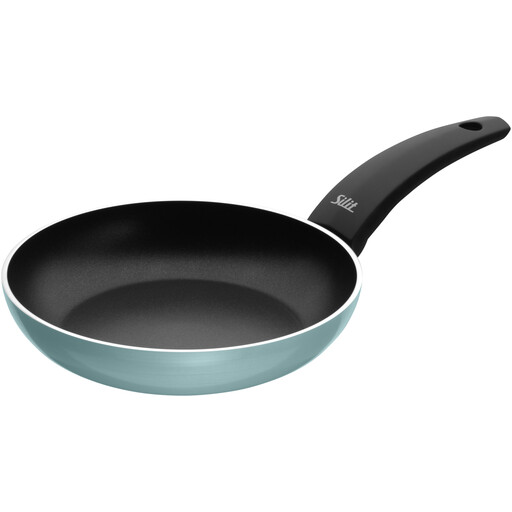
Why this product suits this profile: This lightweight aluminium frying pan is designed for small everyday meals and, according to the product details, is compatible with gas, electric, ceramic and induction hobs.
The product details specify both the optimum cooking-zone diameter of 14.5 cm and compatibility with several hob types. The permitted oven temperature is limited to 70 °C, making this restriction clear.
Silitan PTFE coating, plastic handle, aluminium body and, according to the product details, a five-year manufacturer's warranty.
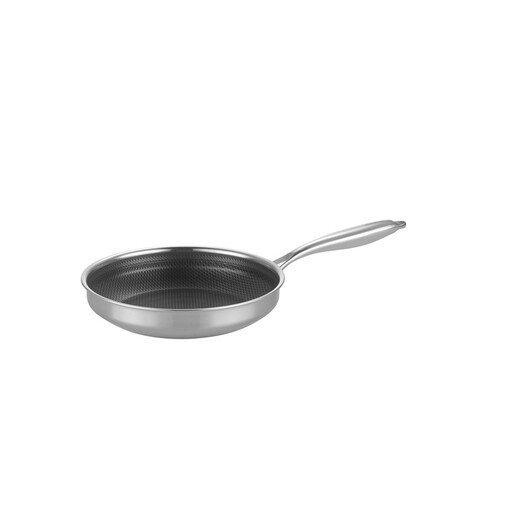
Why this product suits this profile: According to the product details, this stainless steel frying pan combines a ceramic non-stick surface with a three-layer construction and an ergonomically shaped stainless steel handle.
The specifications state that it is suitable for induction, gas, electric and ceramic hobs, as well as for oven use up to 260 °C. According to the product details, the ceramic coating is described as PFAS-, PTFE- and PFOA-free.
Three-layer construction with an aluminium core, ceramic non-stick coating and, according to the product details, dishwasher-safe materials.
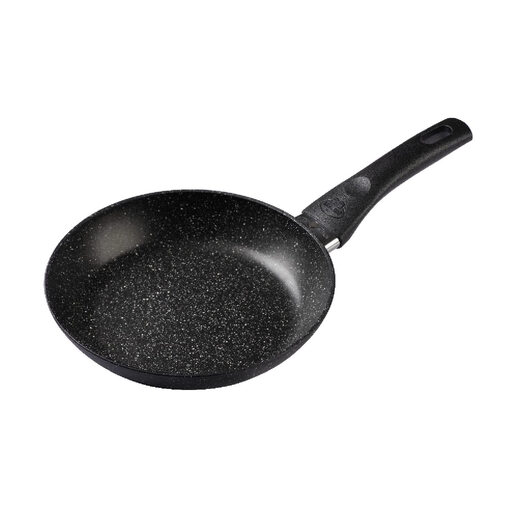
Why this product suits this profile: This pan is aimed at users who want to combine temperature control, easy cleaning and use on different hob types.
The product details limit oven use to 160 °C and advise against using metal utensils. This clearly sets out important care and temperature limits.
Four-layer Nerolite coating, THERMOTION temperature indicator, aluminium body and, according to the product details, dishwasher suitability.
We have put together a complete, regularly updated list of products that fully meet these strict selection criteria and the safety regulations applicable in the EU.
Regardless of the material, everyday use affects the lifespan of a small frying pan:
The size is generally suitable for an omelette, a fried egg, a small portion of vegetables or a single fish fillet. For two larger portions, a 24 or 28 cm pan may be more practical. Also check the actual base diameter, as it may be smaller than the rim.
A non-stick induction frying pan can reduce the amount of oil needed because food slides more easily from the surface. However, the result also depends on the temperature, food and cooking method. Coated pans should generally be used at low to medium heat.
It is not possible to give a reliable fixed service life. This depends on the heat used, cleaning method, stacking and cooking utensils. If you avoid overheating the pan when empty, do not use metal objects and clean it with a soft sponge, you can treat the coating more gently in everyday use. If there is visible damage or flaking, the cookware should no longer be used.