
Lieferung heute & morgen

Qualitätsgarantie

Willkommens-Angebote freischalten: KOSTENLOSE Lieferung | Bis zu 80 % RABATT | Kostenlose 30-Tage-JoyPlus-Testphase
App herunterladen
A 20 cm springform cake tin is ideal for smaller households, compact cakes, sponge bases and gateaux with a modest diameter. Cheesecakes can also be baked in smaller portions, so you do not have to store a large cake for days. However, the size alone is not the only consideration when buying one: the fastening mechanism, base, coating and care requirements all determine whether the cake can be removed cleanly and whether the tin will remain suitable for long-term use.
A non-stick springform cake tin can make it easier to remove your cake. However, the term alone says nothing about how durable the surface is. Sharp knives, metal spatulas, abrasive cleaners and heavy mechanical wear can damage the coating. It is therefore important to check the manufacturer’s specific instructions on cleaning and using kitchen utensils.
For example, Le Creuset recommends washing its springform cake tin by hand with warm water, washing-up liquid and a soft sponge. According to the product details, it is not dishwasher-safe. This requires a little extra care in everyday use, but may help protect the coating.
A side clip holds the rim of a springform cake tin together and allows it to be opened after baking. However, it does not necessarily replace an additional seal. With runny cheesecake batter or particularly soft fillings, check whether the manufacturer explicitly mentions leak protection or a leak-resistant design.
With a traditional springform cake tin, baking paper placed between the base and rim can help reduce leakage. For particularly runny mixtures, an appropriate tray or a bain-marie setup may also be needed. Never use a tin if the clip is not fully closed.
A 20 cm cake tin can hold different amounts of batter depending on the height of its rim. The internal height is therefore important for tall cake layers or sponge cakes that rise substantially. You will also need to adjust the recipe quantity: a recipe designed for a 26 cm tin cannot be baked in a 20 cm tin without recalculating the quantities.
A carbon steel cake tin is comparatively rigid and can transfer heat to the batter quickly. The Le Creuset Non-Stick Carbon Steel Bakeware Springform is described as being made from heavy-duty carbon steel. The manufacturer also specifies heat resistance up to 240 °C.
Coated steel tins are also widely available. Ceramic tins retain heat for longer and may be suitable for bakes or gratins, but they are not a direct alternative to a springform cake tin with a fastening mechanism. Silicone tins are flexible and easy to store, but do not offer the same rim stability as a solid metal ring.
An oven-safe baking tin must be approved for the temperature required by your recipe. The maximum temperature should not be confused with suitability for hobs, grills or direct heat. According to the product description, the Le Creuset tin is oven-safe up to 240 °C, but must not be used on a hob or any other direct heat source.
Oven gloves are essential when removing the tin from the oven. Allow the tin to cool before cleaning it or opening the fastening mechanism. With coated surfaces, it is also advisable to check for scratches or damaged areas before each use.
A removable base makes it easier to release delicate cake layers. With a springform cake tin for gateaux, it is also important that the rim closes evenly and that the clip locks securely. Rolled rim edges can provide additional stability during transport; however, silicone elements or grip areas must not come into contact with the hot oven temperature.
For sponge cakes, mousse gateaux and soft cheesecakes, clean release is more important than particularly high capacity. Lightly greasing the base or lining it with baking paper before filling can make removal even easier.
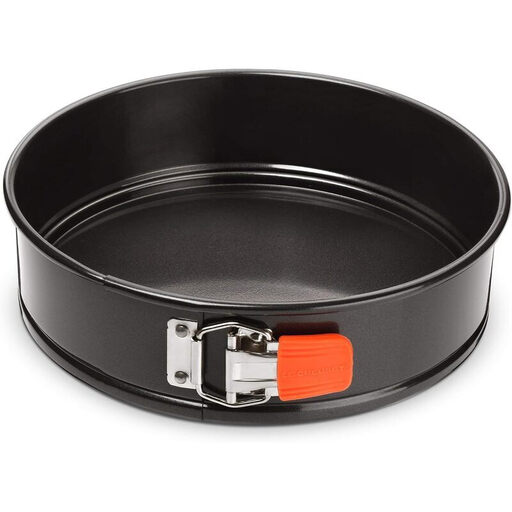
Why this product suits the profile: This tin has the desired 20 cm diameter and combines carbon steel, a removable base and a side clip for easy cake removal. It is aimed at shoppers who prioritise clear information about materials and temperature limits.
The product details explicitly state the diameter, maximum oven temperature and hand-wash requirement. This makes it easier to compare important buying criteria before placing your order.
Carbon steel construction, removable base, non-stick surface and oven-safe up to 240 °C according to the product description.
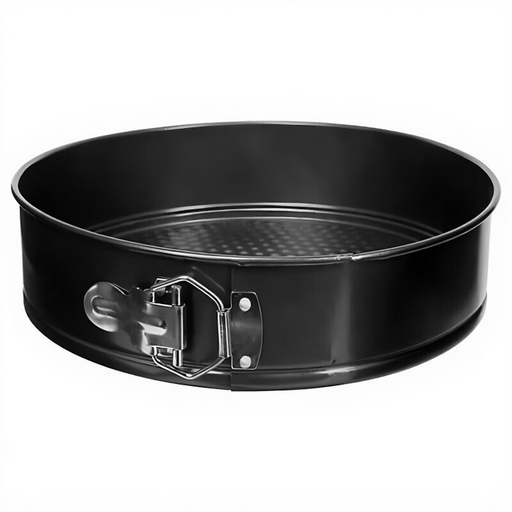
Why this product suits the profile: This round springform cake tin, with a diameter of 26 cm, is designed for larger cakes and features a side fastening mechanism and a base for easier release. It is an option for households that find 20 cm too small.
The fastening mechanism is described as a detachable side wall. This makes it easier to remove the cake without confusing the tin size with a 20 cm recipe.
26 cm diameter, 6.8 cm height, steel construction and springform fastening mechanism according to the product description.
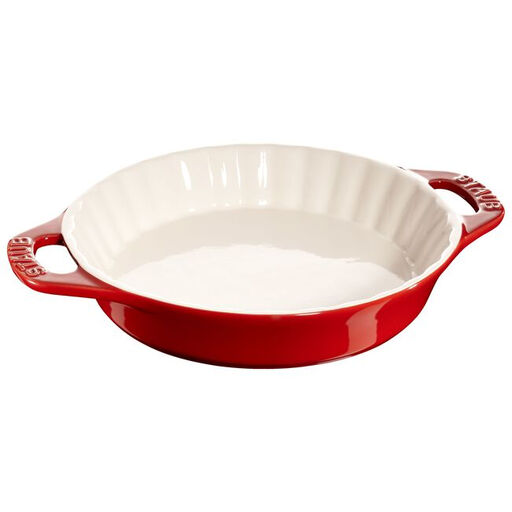
Why this product suits the profile: This round ceramic dish, with a diameter of 24 cm, is designed for baking and gratinating. It is not a springform cake tin, but may appeal to users looking for a dish that is suitable for the oven, grill, microwave and freezer.
The different design is clearly taken into account: there is no springform clip and no removable base. This makes it easier to choose the dish for its actual intended use.
Ceramic construction, enamel interior, oven-safe up to 300 °C, and suitable for the grill, microwave, freezer and dishwasher according to the product details.
We have put together a complete, regularly updated list of products that fully meet these strict selection criteria and the safety regulations applicable in the EU.
That depends on the height, recipe and desired portion size. A 20 cm tin is often sufficient for a small household when making a compact cake or smaller gateau. For larger gatherings, a tin with a diameter of 24 or 26 cm is more practical. The baking time may change with a smaller tin because the batter will be deeper.
Yes, provided the tin is sufficiently deep and the fastening mechanism closes securely. For very runny cheesecake mixtures, the product description should explicitly mention leak protection. Alternatively, baking paper and an additional outer seal may help, but they do not replace watertightness guaranteed by the manufacturer.
There is no universal lifespan. It depends on how frequently the tin is used, the temperature, cleaning and how the coating is treated. Hand washing, soft sponges and suitable kitchen utensils reduce mechanical wear. If you notice scratches, flaking or a clip that no longer closes securely, stop using the tin.