
Lieferung heute & morgen

Qualitätsgarantie

Willkommens-Angebote freischalten: KOSTENLOSE Lieferung | Bis zu 80 % RABATT | Kostenlose 30-Tage-JoyPlus-Testphase
App herunterladen
For many children, a 200-piece puzzle marks the transition from simple jigsaws to more complex challenges. It's a valuable educational toy that promotes concentration and logical thinking. However, the sheer number of options can be overwhelming and lead to poor purchases. Certain product features that seem appealing at first glance often prove unsuitable in practice, leading to frustration instead of fun.
This guide highlights the crucial criteria you should check before buying. We analyse the most common pitfalls and explain what truly matters when it comes to material, piece size, and design choice to help you find the perfect gift for children around 8 years old.
Disappointment often sets in when a new puzzle is left untouched after a short time. This is usually due to one of three common problems that can be avoided with careful selection.
To avoid these pitfalls, you should carefully examine three key product features. These determine whether a puzzle is suitable for the child and will bring them joy.
The "200 pieces" label alone says little about the difficulty level. The size of the individual pieces is what's crucial.
A good puzzle is characterised by its sturdiness and precision. Look for the following features:
Choosing the right design is crucial for a child's motivation.
Based on the criteria above, we have identified several products that are well-suited for different interests and requirements.
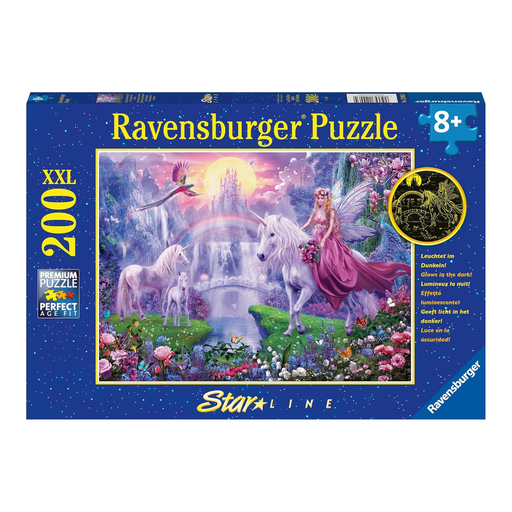
Why it's a good fit: Ideal for children fascinated by unicorns and magical worlds. The design is rich in detail, and the glow-in-the-dark feature provides an extra incentive to finish the puzzle.
The XXL pieces ease the entry into this piece count and prevent the overwhelm caused by a mismatched age rating. The popular unicorn puzzle theme ensures the design will be met with interest.
The glow-in-the-dark feature adds a special effect and an extra reward after completing the puzzle. The piece size is well-suited for children aged 8 and up.
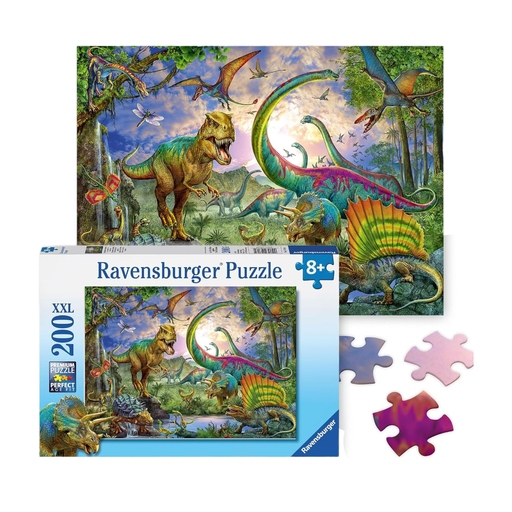
Why it's a good fit: Perfect as a gift for children aged 8 and up who are fascinated by dinosaurs. The dynamic scene with various dinosaur species offers plenty of details to discover.
The clearly defined dinosaur puzzle theme taps into a popular interest. The proven Ravensburger quality with thick cardboard and XXL pieces prevents frustration from poor materials or handling.
The large XXL pieces make the puzzle accessible even for less experienced children. The detailed design promotes visual perception and concentration.
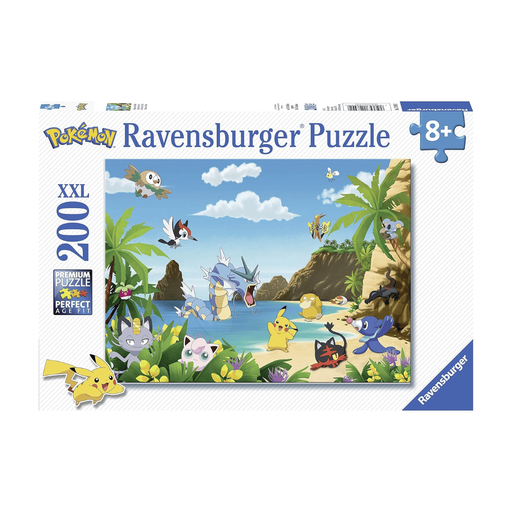
Why it's a good fit: For children who are fans of the Pokémon universe. Recognising the well-known characters provides motivation and makes puzzling a special experience.
The design is a guaranteed hit with fans, thus avoiding the pitfall of disinterest. The XXL pieces and robust quality ensure a positive, frustration-free puzzle experience.
The large final size of 49 x 36 cm and the many familiar Pokémon characters offer long-lasting puzzle fun and high recognition value.
We have compiled a complete, up-to-date list of products that fully meet these strict selection criteria and all relevant safety standards.
1. From what age is a 200-piece puzzle suitable? As a general rule, 200-piece puzzles are suitable for children aged around 7 to 10. However, this depends heavily on the child's individual development and puzzle experience. A 200-piece XXL puzzle can be a suitable challenge for younger or less experienced children from age 6 or 7, while a puzzle with small, standard pieces is better suited for children aged 8 and up.
2. What does "XXL" mean for a 200-piece kids' puzzle? The "XXL" designation refers to the size of the individual puzzle pieces, not necessarily the overall size of the finished picture. XXL pieces are significantly larger and thicker than standard pieces. This makes it easier for children to grip, examine, and connect the pieces, which is particularly helpful when moving to a higher piece count and helps prevent frustration.
3. How do I choose the right design for a kids' puzzle? The right design is the key to long-lasting motivation. Observe your child's current interests: are they into dinosaurs, unicorns, vehicles, animals, or characters from popular films and series? A puzzle whose design reflects the child's world will be received with much more enthusiasm. Furthermore, a colourful, detail-rich picture is easier to solve than one with large, monotonous areas of colour.