
Lieferung heute & morgen

Qualitätsgarantie

Willkommens-Angebote freischalten: KOSTENLOSE Lieferung | Bis zu 80 % RABATT | Kostenlose 30-Tage-JoyPlus-Testphase
App herunterladen
A 200 W foldable solar panel combines a useful rated output with a portable design that’s well suited to camping, van life, the garden and portable power stations. But wattage alone won’t tell you whether a portable solar panel is right for your everyday setup. Connections, folded size, weight and ingress protection can have a greater impact on how useful it is in practice than efficiency claims in the marketing.
The 200 W rating describes the panel’s output under specific test conditions, usually STC (Standard Test Conditions). In the UK, sunlight, the sun’s position, temperature and shade all vary. So a 200 W solar panel won’t consistently deliver 200 W in everyday use.
When planning your setup, check how much input power your power station can actually accept. A higher panel output isn’t automatically better if the voltage or current exceeds the permitted range.
A monocrystalline solar panel may achieve a certain efficiency according to the manufacturer. This is a technical figure for comparison, not a promise of the output you’ll get at every location. Even shade on part of the cells can significantly reduce performance.
That’s why integrated stands, an adjustable tilt and a cable that’s long enough are important in practice. Without a stable stand, a foldable solar panel may shift in the wind or remain at an angle that’s less than ideal for the sun.
IP65, IP67 and IP68 describe protection against dust and water under defined conditions. They don’t automatically mean that a portable solar panel should be used in storms, hail or prolonged rain. ETFE coatings also won’t protect it from creasing, sharp objects or heavy mechanical stress.
So check the instructions for the specific model. Many portable models are designed for temporary outdoor use and should be stored somewhere sheltered in strong winds or severe weather.
Compare the panel’s technical specifications with the solar input on your power station:
Only connect the panel as instructed in the manual. Connections may be live in direct sunlight. Also check the polarity and condition of all cables.
Pack size matters when you’re travelling by motorhome, caravan or train. A high-output panel may be more than two metres long when unfolded. Check the following:
A solar charger for camping should be easy to set up and pack away without tools. For a permanent garden set-up, larger, heavier models may be a better choice.
Wipe the surface with a soft, damp cloth. Abrasive or harsh cleaning products may damage the laminate. Only fold the panel at the designated points, and store it somewhere dry.
An off-grid solar panel will only provide reliable power if it’s positioned out of the shade. To use solar power for backup, you’ll also need a compatible power station or suitable charge controller and, where necessary, an inverter. The panel alone won’t automatically power household appliances with 230-volt AC.
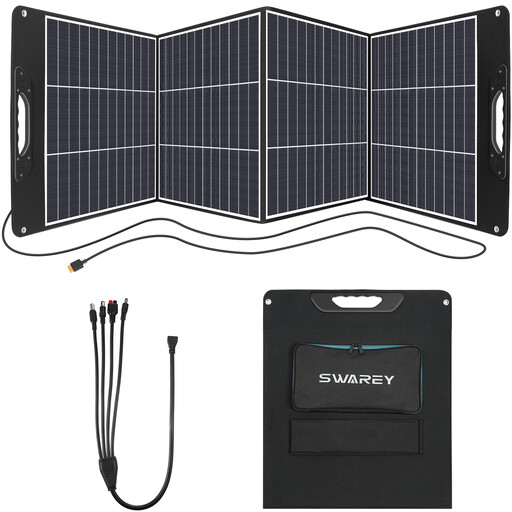
Why this product suits this profile: This panel is aimed at people looking for a compact 200 W solar panel with several charging options for camping or travelling.
According to SWAREY’s product information, it offers a 200 W rated output, a foldable design and several adapters in the box. Check that it’s compatible with your power station before buying.
According to SWAREY’s product information: monocrystalline cells, a stated conversion efficiency of 23%, USB-A, USB-C and XT60 connections, and a weight of 5.5 kg.
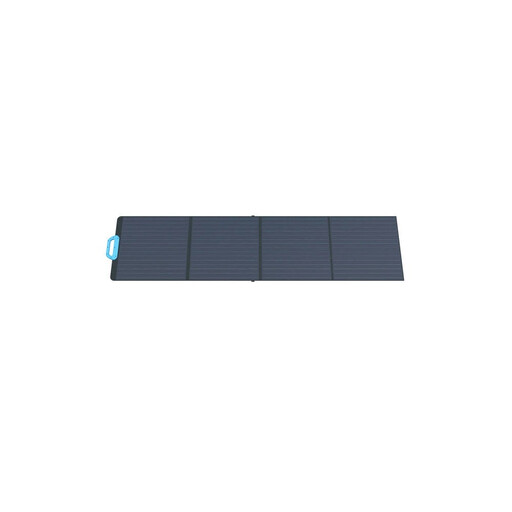
Why this product suits this profile: A good choice if you value clearly specified electrical ratings, MC4 compatibility and a design that folds into four sections.
According to BLUETTI’s product information, Vmp, Imp, Voc and Isc are listed separately. This makes it easier to check the panel against your power station’s solar input.
According to BLUETTI’s product information: a stated efficiency of 23.4%, an ETFE surface, an MC4 cable, a weight of 7.3 kg and folded dimensions of 590 × 630 mm.
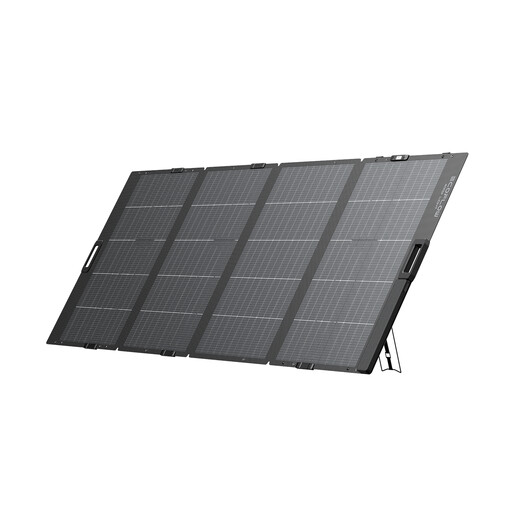
Why this product suits this profile: For motorhome, caravan and garden users who want more than 200 W and have room to transport a larger panel.
According to EcoFlow’s product information, the weight, voltage, current and efficiency are specified. Factor its higher weight of around 16 kg into your transport plans.
According to EcoFlow’s product information: 400 W rated output, a bifacial design, an integrated stand, an XT60 cable and an IP68 rating.
We’ve put together a complete, regularly updated list of products that meet these strict selection criteria and the safety regulations in force in the EU.
Set the panel up on a stable, level surface and point it as directly towards the sun as possible. Avoid shade from trees, buildings or vehicle structures. With a solar panel for a power station, connect it according to the instructions first, then position the panel.
If you’re using a motorhome or caravan, don’t leave a portable solar panel loose on the vehicle roof unless it’s designed for that purpose. Foldable models are generally intended to be stood up while in use. Fold them away and store them somewhere sheltered in strong winds, hail or thunderstorms.
The actual energy yield depends on the sun’s position, orientation, temperature, shade and charging losses. The 200 W rated output is a test figure, not a constant daily output. A power station will usually show the current input directly while it’s running.
No. The voltage, current, connection and permitted input power all need to match. You may need an adapter for a solar panel with an MC4 connector. Check the technical specifications of both devices before buying, and only use suitable cables.
Its lifespan depends on the materials, folding mechanism, transport and weather conditions. Storing it somewhere dry, folding it carefully and protecting it from mechanical stress can help it last. Refer to the warranty and manufacturer’s information for the specific model.