
Lieferung heute & morgen

Qualitätsgarantie

Willkommens-Angebote freischalten: KOSTENLOSE Lieferung | Bis zu 80 % RABATT | Kostenlose 30-Tage-JoyPlus-Testphase
App herunterladen
A 2000 W electric fan heater can warm individual rooms for short periods without having to adjust the entire central heating system. However, whether you are heating a bedroom, office, study, basement or living room, wattage is not the only factor that matters. Temperature control, noise levels, safety features and how you plan to use the heater are all important considerations.
A 2000 W appliance consumes approximately 2 kWh per hour of operation when running at full power. At an electricity price of, for example, 0.35 euros per kWh, that works out at around 0.70 euros per hour. Actual costs depend on how often the heating element is active.
A fan heater with a thermostat can limit power consumption during operation by automatically pausing once the set temperature has been reached. An ECO function can adjust the regulation further. However, it does not turn a 2000 W appliance into a fundamentally low-consumption heater. Room size, insulation, target temperature and operating time remain the decisive factors.
A traditional fan heater warms the air using a blower. This usually provides rapid local heating, but unfavourable positioning can create warm and cold zones. Oscillation or a precisely directed air outlet distributes the heat more evenly.
An electric radiator using convection, or an oil-filled radiator, works differently: the heat is distributed more slowly, but is often more even as a result. If you only need a few minutes of warmth at your desk, a portable fan-assisted electric heater may be a better choice. For longer, quieter use, a 2000 W convection heater or oil-filled radiator may be worth considering.
Look for clearly specified features such as:
A heater must not be covered and should be connected directly to a suitable wall socket. Extension leads, multiway adaptors and cable reels can be problematic under a high continuous load. For bathrooms, shower rooms and other damp areas, only appliances explicitly approved for such use are permitted.
2000 W is suitable as supplementary heating for individual, appropriately sized indoor rooms. A second or third power level is useful because maximum consumption is not always necessary. Models with 800/1200/2000 W, 1000/2000 W or similar settings can be adjusted more effectively to suit the room and time of day.
The stated room size is only a guide. A poorly insulated room with high ceilings requires more heating power than a small, well-insulated office.
An adjustable thermostat switches the heating element on and off according to the room temperature. This is more convenient in a bedroom or office than a simple on/off switch. A fan heater with a timer can limit operating time, for example when warming up a study. Depending on the model, 12- or 24-hour settings may be available.
A fan heater with a remote control or display is useful if you want to operate it from the sofa or bed. Check whether the remote control actually adjusts the temperature, power and timer, or whether it only switches the appliance on and off.
A ceramic fan heater uses a PTC heating element. According to the product information available here, this technology is associated with rapid heat delivery and adjustable power output. However, a blower will still produce some noise. For a quiet fan heater, specific decibel figures are more useful than terms such as “whisper-quiet”.
Convection heaters generally operate without a powerful blower and can therefore be more comfortable during longer periods of use. An oil-filled radiator such as the Midea NY2009-24UR distributes heat more evenly, but is larger and takes longer to become noticeably warm after switching on.
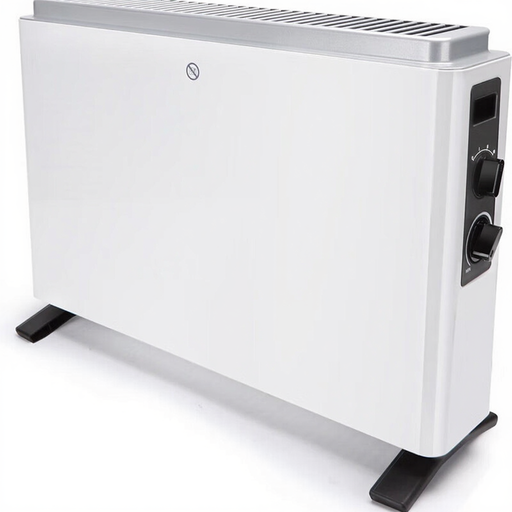
Why this product suits this profile: According to the product information, this freestanding convection heater offers 800, 1200 and 2000 W settings, as well as an adjustable thermostat. This makes it suitable for shoppers looking for straightforward supplementary heating without an extensive range of additional features.
The multiple power levels help prevent every heating session from running continuously at 2000 W. Overheating and tip-over protection are integrated according to the description.
Convection heating, thermostat, three power levels and a carry handle.

Why this product suits this profile: According to the product description, this model offers temperature selection from 5 to 35 °C, a remote control, a 12-hour timer and oscillation. The stated noise level ranges from 25 to 42 dB, depending on the operating mode.
The specific decibel rating is more informative than an undefined claim that the appliance is “quiet”. Tip-over and overheating protection are also listed.
PTC ceramic technology, oscillation, precise temperature adjustment and multiple safety features.
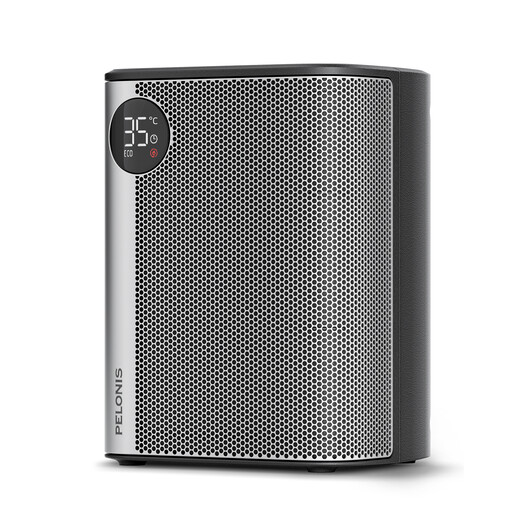
Why this product suits this profile: According to the product information, this appliance offers five modes including ECO mode, a 24-hour timer, thermostat, touch controls and a carry handle. It is therefore designed for varied use in bedrooms, offices, basements and living rooms.
ECO mode and the timer can help structure operating time. The stated overheating and tip-over protection address two key safety risks.
Five operating modes, 24-hour timer, ECO mode and temperature display.
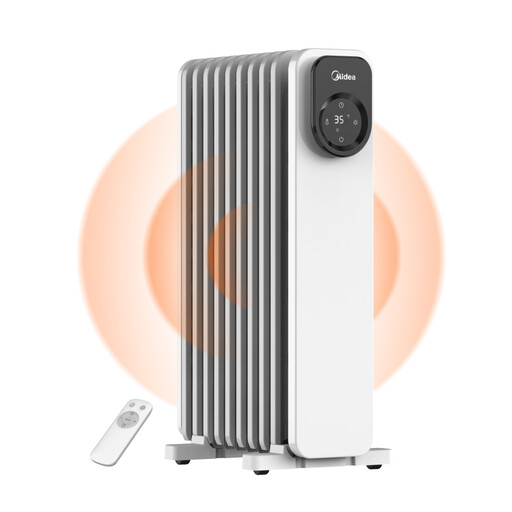
Why this product suits this profile: According to the product description, this mobile electric radiator with nine fins offers four modes, a thermostat, a remote control and an LED touchscreen. It is suitable for living rooms and workspaces where even heat distribution is more important than an immediate flow of warm air.
The design avoids having a blower running continuously. Tip-over and overheating protection are included according to the description; the radiator must still not be covered.
Quiet operation without the typical fan-heater airflow, four modes and remote control.
We have put together a complete, regularly updated list of products that fully meet these strict selection criteria and the safety regulations applicable in the EU.
At full power, consumption is approximately 2 kWh per hour. Actual consumption may be lower when using the thermostat, lower power levels and a timer. To calculate the cost, multiply consumption by your personal electricity tariff.
This depends on the user manual and the safety features provided. A fan heater with tip-over and overheating protection reduces certain risks, but it does not replace safe positioning. The appliance must not be covered, must be left unobstructed and should be switched off and disconnected from the mains if you are going to be away for an extended period.
It is not possible to give a reliable general lifespan. Dust in the air inlet and outlet, frequent overheating, damaged cables or being dropped can shorten its service life. Once the appliance has cooled down, clean it according to the instructions and stop using it if the housing, cable or plug shows visible damage.