
Lieferung heute & morgen

Qualitätsgarantie

Willkommens-Angebote freischalten: KOSTENLOSE Lieferung | Bis zu 80 % RABATT | Kostenlose 30-Tage-JoyPlus-Testphase
App herunterladen
A storage bench is a smart solution for apartments and homes where every square foot counts. It combines seating and storage, helping to create order in your hallway, living room, or bedroom. However, the market is flooded with models of widely varying quality. Certain design flaws often render a promising piece of furniture useless after just a few months.
This guide will walk you through the most common pitfalls and explain which technical features you should look for to make an informed decision.
Many buyers focus on design and price, but overlook crucial construction details. This often leads to disappointment.
storage bench is not only unreliable but also a safety hazard.padded is no guarantee of comfort. Many budget-friendly models use thin foam that flattens and loses its shape after only a short period of use. The cover fabric, often made of simple faux linen or non-woven material, is prone to pilling, tears easily, or is difficult to clean.foldablestorage chest is practical, but this flexibility often comes at the expense of stability. If the side walls are not sufficiently reinforced or the base panel is too thin, the entire structure can give way under load. Furthermore, the usable interior space is often smaller than expected, as thick walls or fixed dividers take up room.To avoid a bad buy, you should focus on verifiable technical specifications. These three criteria are crucial for the durability and functionality of your new storage bench.
The foundation of any good storage bench is its frame material. Look for products whose body is made of E1 standard MDF (Medium-Density Fibreboard). This material is denser and more dimensionally stable than conventional particleboard.
The most important criterion is the static load capacity, specified in kilograms (kg). This value indicates the maximum weight the bench can support in a stationary state.
shoe bench in the hallway): A load capacity of at least 120 kg is recommended.Seating comfort depends directly on the quality of the padding. A good upholstered storage bench uses high-resilience foam (often described with a density rating like 25D). This type of foam returns to its original shape even after prolonged use.
There are also clear differences in cover fabrics:
The choice between a foldable and a fixed-assembly bench depends on your specific use case.
storage box with seating is extremely flexible.hallway bench or shoe bench and generally offer greater stability and durability. They are the better choice if the bench will be used daily as a primary seating option.Here are some models that are suitable for different needs and living situations based on their objective features.
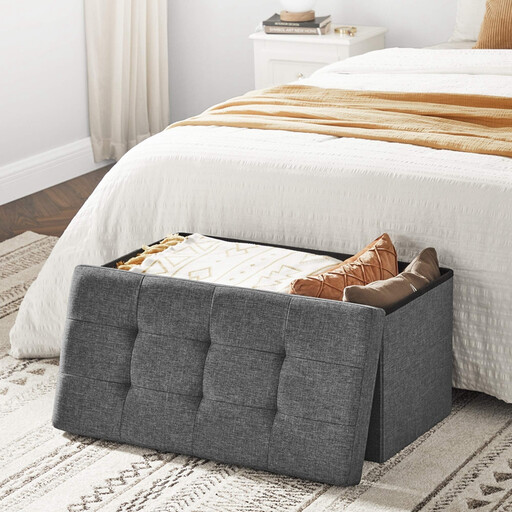
Why this model is a good fit: Ideal for students or a first apartment. It combines a large storage volume (80L) with an impressive load capacity for a foldable model, serving flexibly as a seat, footrest, or for storing blankets and pillows.
The E1 standard MDF frame ensures high stability. According to the manufacturer, the static load capacity is 300 kg, which avoids the typical problem of unstable foldable designs.
High load capacity combined with foldability; durable linen-look fabric cover.
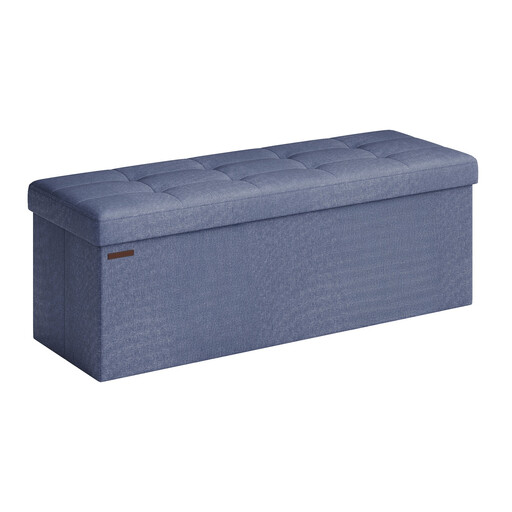
Why this model is a good fit: At 110 cm wide, this bench offers ample space for two people and plenty of storage. The tufted design and high-resilience foam padding make it a comfortable and elegant piece for the living room or bedroom.
According to the manufacturer, the padding is made of 25D high-resilience foam, which counteracts the problem of the seat quickly going flat. The robust MDF construction supports a high load capacity of 300 kg.
Generous dimensions; shape-retaining padding; elegant appearance.
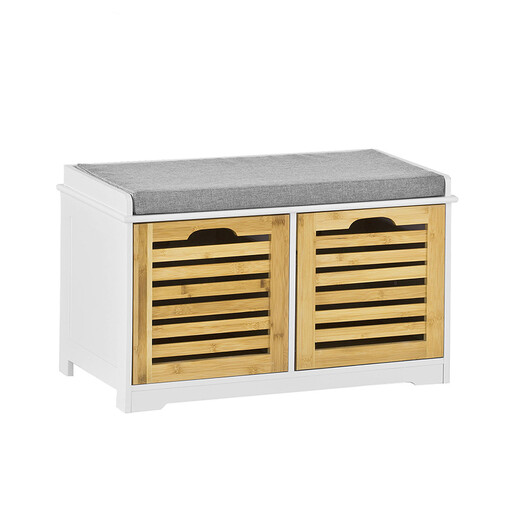
Why this model is a good fit: This fixed-assembly shoe bench is specifically designed for the entryway. The combination of MDF and bamboo ensures stability, while the removable baskets allow for organised storage of shoes, scarves, or gloves.
As a fixed-assembly design, it bypasses the stability issues of foldable models. The stated load capacity of 120 kg is perfectly adequate for its intended purpose—sitting down to put on shoes.
Stable, non-foldable construction; dedicated storage with removable baskets.
We have compiled a complete, up-to-date list of products that fully meet these strict selection criteria and relevant safety regulations.
1. What is the average load capacity of a storage bench? Load capacity varies greatly depending on the construction. Simple, foldable storage stools are often rated for 100 kg to 150 kg. Sturdy, fixed-assembly benches or models with a reinforced MDF frame can have a static load capacity of up to 300 kg, according to manufacturer specifications. It is essential to check the manufacturer's specific details before purchasing.
2. Can a foldable storage chest be used for daily seating? Yes, as long as the specified maximum load capacity is not exceeded and the model is designed for this purpose. Products with a solid frame made of E1 standard MDF and a sturdy, well-fitting base panel are generally suitable for daily use. Always ensure the lid is fully and correctly placed on the body before sitting down.
3. How do you clean the fabric cover of an upholstered storage bench? Most fabric covers (e.g., linen-look, velvet, teddy fleece) are not machine washable. The recommended care method is regular vacuuming with a soft brush attachment. Stains should be treated immediately with a slightly damp cloth and, if necessary, a mild upholstery cleaner. Always test any cleaning agent on an inconspicuous area first.