
Lieferung heute & morgen

Qualitätsgarantie

Willkommens-Angebote freischalten: KOSTENLOSE Lieferung | Bis zu 80 % RABATT | Kostenlose 30-Tage-JoyPlus-Testphase
App herunterladen
Blue cookware is more than just a functional kitchen tool; it's a design statement. From deep petrol blue to soft sky blue, coloured cookware can add a personal and stylish touch to any kitchen. However, this aesthetic appeal comes with potential pitfalls. Many buyers soon discover that the colour peels, heat distribution is poor, or the non-stick coating fails.
This guide is designed to help you avoid such disappointments. We will highlight the critical features that define high-quality blue cookware and show you how to find products that deliver on both style and performance.
Before investing in a new cookware set, it's helpful to understand the typical flaws often hidden behind an attractive exterior.
To avoid these problems, you should base your purchase decision on objective criteria. The following three parameters are crucial for the durability and functionality of your blue cookware.
The base material is the primary factor determining the cookware's heat conductivity, weight, and durability.
Not all cookware works on every stovetop. Special care is needed for induction cooktops. A pot or pan must have a ferromagnetic base to be heated on an induction hob.
Look for the official induction symbol (a stylised coil) on the packaging or the bottom of the product. Technologies like the "Radiant Induction" base on Ballarini pans are designed to ensure particularly fast and even heating on induction stovetops. Check this specification carefully to ensure your new blue cookware set is compatible with your kitchen.
A good non-stick coating makes low-fat cooking and cleaning easier.
Instead of making a blanket recommendation, we have selected products that fit different user profiles and meet the quality criteria mentioned above.
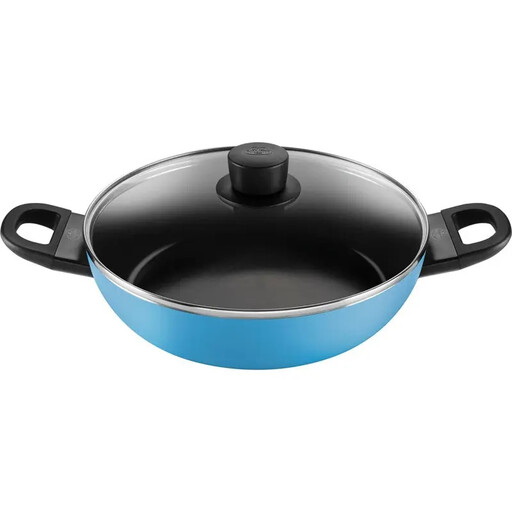
Why This Fits Their Persona: This pan from Ballarini (part of the ZWILLING Group) combines Italian design with practical functionality for daily use. It's light enough for quick handling yet robust enough for even cooking results on all stovetops.
The KERA GLOSS ceramic coating is designed for high temperatures and is more durable than basic PTFE layers. The Radiant Induction technology ensures even heat distribution and prevents hot spots.
Suitable for all stovetops, including induction. The matching glass lid allows for energy-efficient cooking and braising.
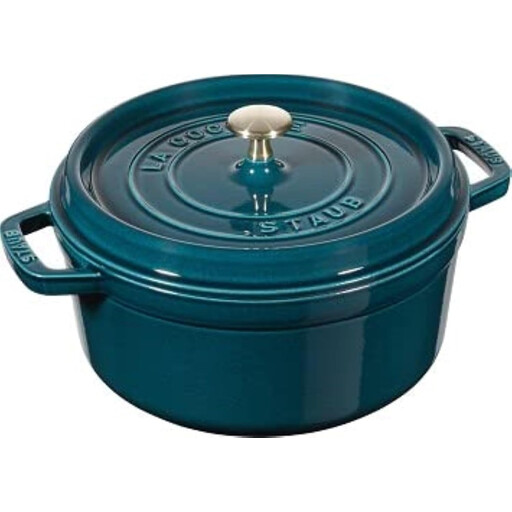
Why This Fits Their Persona: For those who celebrate the art of cooking and value perfect braised dishes. This French-made cast-iron Dutch oven is a tool prized for its outstanding heat retention and a special lid designed for continuous basting.
The STAUB La Mer colour is a multi-layered, fired-on enamel that is extremely resistant to chipping. The solid cast iron guarantees unparalleled even heat distribution and retention.
Self-basting system in the lid for succulent results. Suitable for all stovetops, including induction, and oven-safe up to 250°C.
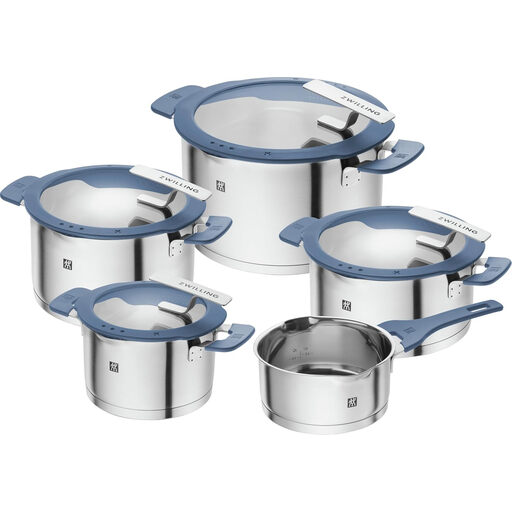
Why This Fits Their Persona: Ideal for anyone setting up a new kitchen or looking to replace their old equipment with a visually and qualitatively cohesive blue cookware set. This set offers a well-designed starter collection with clever details.
The set is made of high-quality 18/10 stainless steel with a SIGMA Classic+ sandwich base that ensures optimal heat distribution. The blue accents on the silicone handles are heat-resistant and durable.
An integrated straining function in the lid and a lid holder on the pot handle add convenience. The set is suitable for all stovetops, including induction, and is dishwasher-safe.
We have compiled a complete, up-to-date list of products that fully meet these strict selection criteria and rigorous safety standards.
1. How do you care for coloured cookware to make the colour last? For enamelled cast iron and high-quality lacquers, the colour is very durable. However, hand washing with a soft sponge is recommended, even if the item is labelled dishwasher-safe. Avoid metallic or abrasive cleaning tools. Store pots and pans with a pan protector between them to prevent scratches.
2. Is blue cookware with a ceramic coating suitable for high temperatures? Yes, ceramic coatings are generally designed for higher temperatures than traditional PTFE coatings. They are well-suited for searing meat at high heat. However, always follow the manufacturer's instructions regarding maximum heat resistance and avoid heating the pan empty on the highest setting, as this can damage any coating.
3. How can I tell if a blue pot is truly induction-compatible? The most reliable indicator is the induction symbol (a coil in a square) on the product's base or packaging. A simple test: hold a magnet to the bottom of the pot. If the magnet sticks firmly, the base is ferromagnetic and therefore suitable for induction cooktops.