
Lieferung heute & morgen

Qualitätsgarantie

Willkommens-Angebote freischalten: KOSTENLOSE Lieferung | Bis zu 80 % RABATT | Kostenlose 30-Tage-JoyPlus-Testphase
App herunterladen
Long hours at a desk, whether in the office or at home, are a daily reality for many of us. An unsuitable chair can quickly lead to tension and discomfort. The market for ergonomic office chairs is vast, but not every model advertised as "ergonomic" meets the necessary criteria. This guide will help you identify the crucial features and steer clear of common purchasing pitfalls.
As a Joybuy Product Recommendation Officer, my job is to filter market information and provide you with objective, practical advice so you can make an informed decision.
Before we dive into the key features, let's look at three common problems that often lead to a bad buy:
To find a suitable and durable ergonomic office chair, you should focus on the following non-negotiable criteria.
A back-friendly office chair must adapt to your body, not the other way around. Look for these adjustment options:
The mechanism determines how the seat and backrest move. There are two common types:
Stability is a direct measure of durability. An executive chair rated for up to 150 kg or more signals a robust construction. Look for a base made of metal (steel or aluminium) and a gas lift certified to common standards (e.g., BIFMA). For upholstery, a breathable mesh fabric is often a great choice for a home office chair as it promotes air circulation.
Here are some recommendations tailored to different user profiles and their requirements.
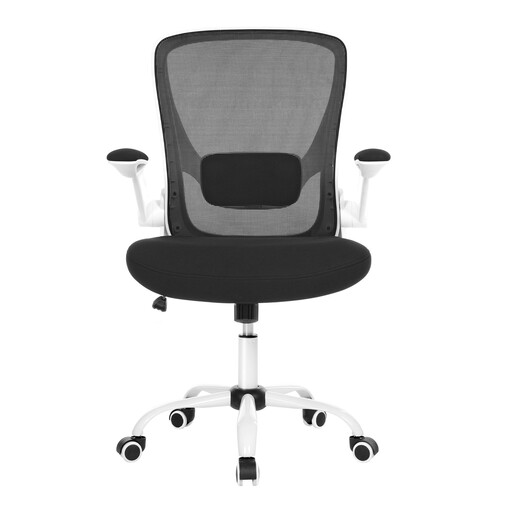
Why This Fits Their Persona: Ideal for users who need a functional and space-saving chair for moderate work hours in a home office. The flip-up armrests allow the chair to be pushed completely under the desk.
This chair offers adjustable lumbar support and a breathable mesh back. It thus avoids the trap of the empty "ergonomic" marketing term and unsuitable materials.
Space-saving design with flip-up armrests; basic ergonomic adjustments for comfort during moderate use.
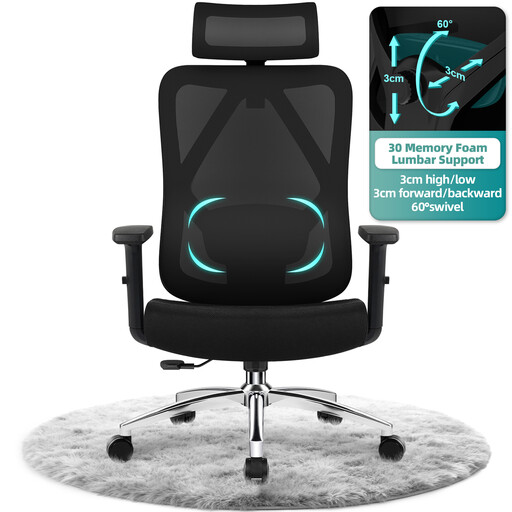
Why This Fits Their Persona: Designed for individuals who spend many hours at their desk daily and require maximum adjustability to promote a healthy posture.
With 3D adjustable lumbar support made of memory foam and an aluminium alloy base that has passed over 120,000 pressure tests according to the manufacturer, it consistently avoids the pitfalls of inadequate ergonomics and unstable mechanics.
Comprehensive adjustment options (lumbar support, headrest, armrests, tilt angle); high load capacity of up to 200 kg.
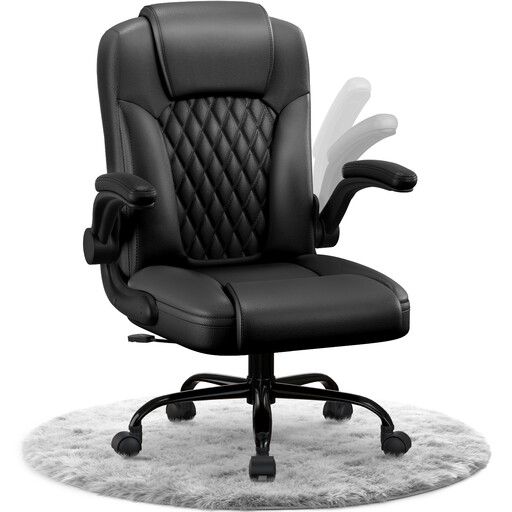
Why This Fits Their Persona: This chair is designed for users who need a high load capacity and a robust construction. The sturdy metal frame and certified gas lift provide the necessary safety and durability.
This product directly addresses the pitfall of unstable mechanics by specifying a load capacity of 150 kg and a certified gas lift. The adjustable lumbar support provides the necessary ergonomic customisation.
High load capacity of up to 150 kg; sturdy metal frame; rocking function for relaxation breaks.
We have compiled a complete, up-to-date list of products that fully meet these strict selection criteria and German safety regulations.
The lifespan of an office chair depends heavily on the quality of its components, frequency of use, and maintenance. Mid-range models often last for 5 to 7 years with normal use. The quality of the gas lift, mechanism, and upholstery is crucial. Regularly checking and tightening screws can extend its lifespan.
Both materials have their pros and cons, and the choice is often a matter of personal preference:
Proper adjustment is crucial for comfort. Follow these steps: