
Lieferung heute & morgen

Qualitätsgarantie

Willkommens-Angebote freischalten: KOSTENLOSE Lieferung | Bis zu 80 % RABATT | Kostenlose 30-Tage-JoyPlus-Testphase
App herunterladen
Managing appointments, tasks, and goals can be a challenge. Whether for your professional life, your studies, or organizing personal projects, a clear structure is often the key to success. A well-chosen planner serves as an essential tool to stay organized, set priorities, and boost your productivity.
This article is your practical guide. We'll introduce different types of planners, explain which features are relevant for various needs, and present a selection of models to help you optimize your organization for 2026 and beyond.
The right planner depends heavily on your personal workflow and requirements. Three key criteria can make the decision easier.
A 2026 dated planner comes pre-filled with fixed dates. This provides a clear, pre-defined structure for the entire year and is ideal for those who prefer continuous, seamless planning. An undated planner, on the other hand, offers maximum flexibility. You can start planning at any time, take breaks without wasting pages, and adapt the layout to your individual needs. This is particularly advantageous for project-based work or irregular planning cycles.
The size of the planner affects both its usability and the amount of space available for notes.
The layout, such as a weekly planner with a full week's overview on a two-page spread, allows for forward planning of tasks. Daily planners, in contrast, offer more space for detailed hourly schedules and to-do lists.
The binding significantly impacts everyday use. A spiral binding allows the planner to lay completely flat or be folded back 360 degrees, saving desk space. A classic book binding often has a more premium feel and is typically more durable for transport in bags. The cover material—whether hardcover, softcover, or PU leather—determines the planner's longevity and tactile feel.
Based on the criteria mentioned, we've curated a selection of planners that cater to different needs.
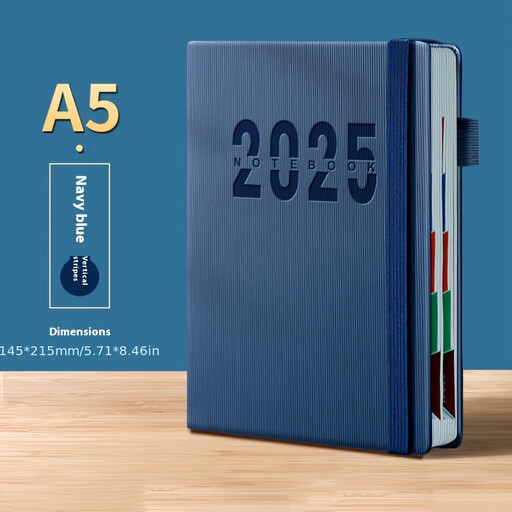
Why it stands out: This model is designed as a comprehensive time management system. It provides structured pages for daily, weekly, and monthly planning. The special "Self-Disciplined Check-In" sections support the consistent tracking of habits and goals.
Benefits:
Who is it for? Professionals and self-employed individuals looking for a detailed system to manage daily tasks and track long-term goals. Also great for anyone wanting to strengthen their self-discipline through regular reflection.

Why it stands out: This undated planner in A5 format offers maximum flexibility with its 18-month layout. The sturdy hardcover and high-quality 100gsm offset paper ensure a pleasant writing experience and durability.
Benefits:
Who is it for? Students, creatives, and anyone who prefers flexible planning that isn't tied to a calendar year. Ideal as a goal tracker or for the long-term organization of personal and professional projects.
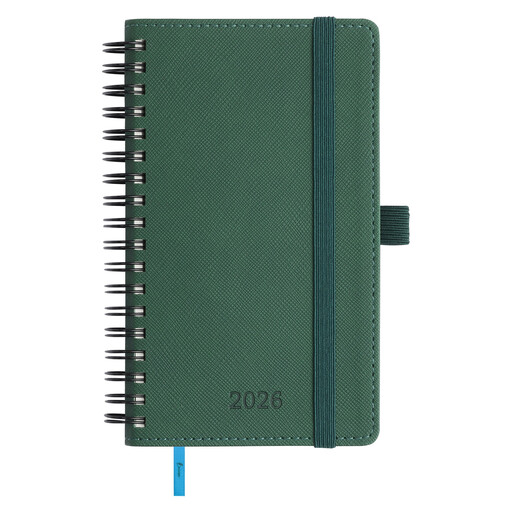
Why it stands out: This compact A6 planner for 2026 is designed for portability and functionality. The spiral binding allows it to lay flat, while practical extras like monthly tabs, a pocket, and a pen loop make on-the-go organization easy.
Benefits:
Who is it for? People who are frequently on the move and need a lightweight, functional diary for 2026 to manage appointments and tasks efficiently.
Didn't find the perfect model in our selection? There is a wide variety of other designs, formats, and layouts tailored to different needs.
? Discover a wider selection of Notebooks with Calendars here.
A calendar is primarily used for displaying dates and recording appointments. A planner is a more comprehensive tool. It often integrates a calendar but also provides dedicated sections for to-do lists, goal tracking, notes, and sometimes even budgeting or habit tracking. It functions as a complete personal organization system.
A planner is most effective when used consistently. At the beginning of each week, schedule your upcoming tasks and appointments. Set priorities by marking important tasks. Use daily checklists to track your progress, and take a moment at the end of the day or week to review what you've accomplished and prepare for the next period.
The choice depends on your use case. An A5 planner is a great choice if it will mainly stay in one place, like your desk, and you need plenty of space for notes and detailed planning. An A6 planner is ideal if you want to carry it with you at all times to quickly jot down appointments and maintain a compact overview.