
Lieferung heute & morgen

Qualitätsgarantie

Willkommens-Angebote freischalten: KOSTENLOSE Lieferung | Bis zu 80 % RABATT | Kostenlose 30-Tage-JoyPlus-Testphase
App herunterladen
Missed appointments, postponed tasks, and personal goals that feel out of reach—it's a familiar struggle. A well-designed planner can help you stay on top of your professional and private commitments and boost your productivity.
As your Joybuy Product Recommendation Officer, my goal is to provide clear guidance through the vast world of planners. This article will introduce different models and explain their features, helping you make an informed choice that perfectly suits your unique needs.
Choosing the right planner depends on your personal preferences and how you intend to use it. Three key criteria can help guide your decision.
A crucial factor is whether you want a planner tied to a specific year.
The planner's interior layout determines how you organise your day-to-day life.
Many models combine monthly, weekly, and daily views and offer extra pages for notes, similar to an A5 notebook.
The quality of the materials impacts the user experience and the planner's longevity.
Here is a selection of planners that stand out for their unique features and are suited for various purposes.

Why it stands out: This planner combines flexibility with high-quality materials. The undated 18-month design allows for long-term planning without being tied to a calendar year. The durable hardcover and cream-coloured 100 gsm offset paper provide a pleasant feel and excellent longevity. Functional extras like a bookmark and an elastic closure band complete the package.
Advantages:
Who is it for? For individuals looking for a flexible time management book for long-term goals, projects, or academic cycles. Ideal for anyone who values aesthetics and high-quality craftsmanship.
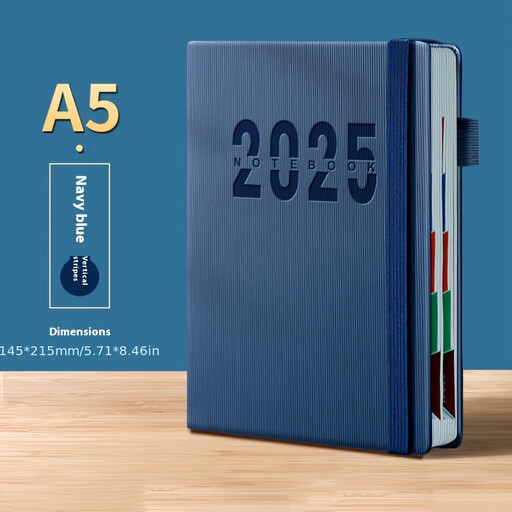
Why it stands out: This dated 2025 annual planner is specifically designed for disciplined time management and goal tracking. It offers a clear 365-day structure with special sections for "Self-Disciplined Check-ins" that encourage regular reflection and progress monitoring. The layout is designed to systematically record appointments, tasks, and personal habits.
Advantages:
Who is it for? For professionals, students, and anyone looking for a structured 2025 planner to boost their productivity and consistently pursue their goals.
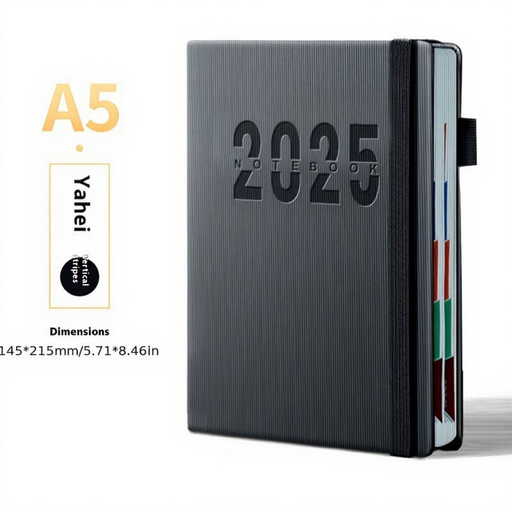
Why it stands out: This model is a classic office planner for 2025. With its simple black cover and sturdy binding, it is designed for daily use in a professional environment. The pages are clearly structured to manage appointments, tasks, and notes efficiently. The design is functional and streamlined.
Advantages:
Who is it for? For professionals who need a reliable and discreet 2025 agenda for managing meetings, deadlines, and projects in their daily work life.
The models featured here cover common needs, but the world of planners is vast. If you're looking for different sizes, special layouts for hobbies, or a variety of designs, it's worth exploring our wider selection.
Discover more models in our Calendars & Diaries category and find the planner that fits your life perfectly.
1. What is the difference between a planner and an agenda? The terms are often used interchangeably. Traditionally, an "agenda" often referred to a more formal book for scheduling business appointments, while a "planner" could cover a broader range of organisational functions for both professional and personal use. In practice, however, the distinction has become blurred.
2. How do I use an undated planner effectively? Start by filling in the months and days for your desired time frame. The biggest advantage is that you can begin at any point in the year. If you don't need the planner for a while, you can simply pick up where you left off without wasting any pages.
3. What kind of paper is best for a planner? For a pleasant writing experience and to prevent ink from showing through, a paper weight of 100 gsm (grams per square metre) or more is often recommended. This is especially important if you use fountain pens, fineliners, or highlighters. Thinner paper (around 80 gsm) is lighter but more prone to "ghosting" (where the writing is visible on the other side) or "bleeding" (where ink soaks through the page).