
Lieferung heute & morgen

Qualitätsgarantie

Willkommens-Angebote freischalten: KOSTENLOSE Lieferung | Bis zu 80 % RABATT | Kostenlose 30-Tage-JoyPlus-Testphase
App herunterladen
A well-chosen planner can fundamentally change the way you structure your days, weeks, and months. But the market is flooded with options, and not every product lives up to its promise. Many buyers quickly find that their new organiser is impractical or has quality defects. This guide will help you navigate the common pitfalls and make an informed decision that truly boosts your productivity.
Before deciding on a model, it's helpful to know the most common reasons a planner ends up unused in a drawer.
To avoid a poor purchase, you should check three technical features. These largely determine the functionality and longevity of your planner.
Paper thickness, measured in grams per square meter (gsm), is a critical factor. Standard copy paper is often just 80 gsm, which is insufficient for most pens without the writing showing through on the other side.
The type of binding affects how flat the planner lies and how durable it is.
The format (e.g., A5, A6) should match your use case. A5 is a good compromise for both desk and bag, while A6 is especially portable. For the desk, alternatives like a wooden desk calendar can also serve as a durable organiser.
The interior is the heart of any planner. Think carefully about the structure you need:
Here are some recommendations tailored to different needs and workflows.
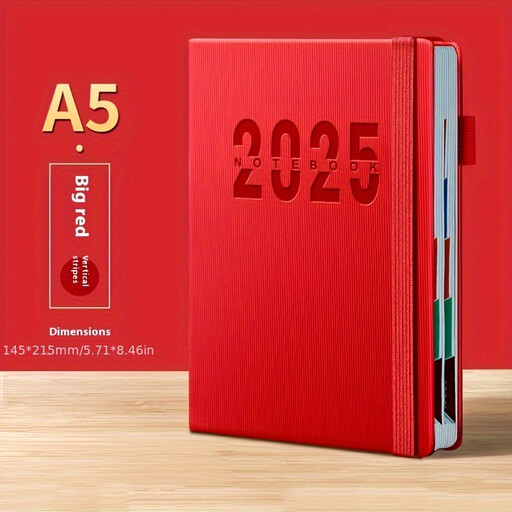
Why It's a Great Fit: This model is designed as a comprehensive time management system. It offers dedicated sections for daily scheduling, task logging, and self-reflection—ideal for professionals who want to consistently track their goals.
The highly structured 365-day layout is precisely tailored for detailed planning, avoiding the problem of an incompatible layout. The sturdy cover is designed for daily office use.
Integrated system for scheduling, task tracking, and habit building in a single book.
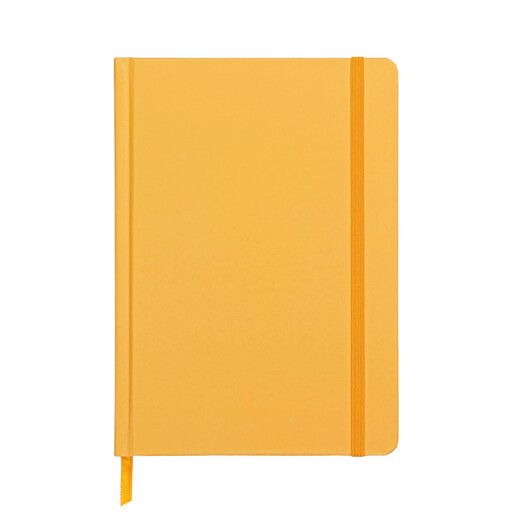
Why It's a Great Fit: The undated 18-month format offers maximum flexibility for project work, irregular semester schedules, or creative endeavours. You can start at any time without wasting pages.
The 100 gsm paper is a direct counter to ink bleed-through. As an undated planner, it's a deliberate choice for users who need flexibility and want to avoid the pitfall of wasted pages.
Long 18-month lifespan and high-quality paper in a versatile A5 format.
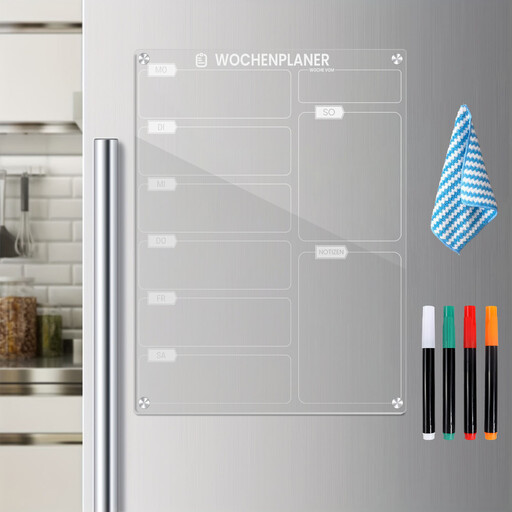
Why It's a Great Fit: This magnetic weekly planner is designed for a central location like the refrigerator. It makes schedules, tasks, and the meal plan visible and easy to coordinate for all family members.
As a reusable board, this product completely bypasses issues of paper quality and binding. The layout is specifically optimised for weekly family and meal planning.
Central, reusable, and visible to multiple people. Includes markers and an eraser for use right out of the box.
We've compiled a complete, up-to-date list of products that fully meet these strict selection criteria.
Pay attention to the paper weight. A weight of 100 gsm is a good rule of thumb for most pens, including fineliners and rollerballs. If you use fountain pens, a weight of 120 gsm or higher is recommended to prevent any ghosting or ink feathering.
Although the terms are often used interchangeably, there are subtle differences. A calendar primarily focuses on displaying dates. An agenda is typically a book for managing appointments, often in a professional context. A planner is a more comprehensive tool that, in addition to appointments, provides space for to-do lists, goal setting, notes, and other aspects of personal organisation.
An undated planner is particularly beneficial if you have irregular schedules, want to start mid-year, or need a tool for specific projects. They offer maximum flexibility, as no pages go to waste. The downside is that they require more initiative, as you have to fill in the dates and months yourself. For people who prefer a fixed structure, a dated planner is often the better choice.