Sticky notes and related products like sticky markers or index tabs are fundamental tools for an organized workflow in the office, for academic studies, and in your personal life. However, their effectiveness depends directly on selecting the right product for the specific application. The key differentiators lie in the material, adhesive technology, format, and surface finish. This guide analyzes the technical parameters relevant for making an informed purchasing decision.
Buyer's Guide: What to Look for When Choosing Sticky Notes
The functionality of sticky notes and marking strips is determined by objective criteria. An analysis of these factors allows you to select a product that meets your individual requirements for office organization or study management.
1. Material and Surface Properties
The base material is crucial for durability and the intended use.
- Paper: The standard for classic sticky notes. The surface is typically optimized for most writing instruments (ballpoint pens, pencils, fineliners). The paper weight, measured in grams per square meter (g/m?), affects opacity and sturdiness. Thinner paper may allow ink from rollerball pens or markers to bleed through.
- Plastic Film (Polyester/PP): This material is frequently used for index strips and page markers. It is tear-resistant, water-repellent, and durable. The surface is often slightly matted to be writable, but it usually requires permanent markers or special pens, as water-based ink can bead up. Transparent film markers have the advantage of not obscuring the text underneath.
2. Adhesive Technology and Sticking Power
The adhesive determines how well and how long a note sticks, and whether it can be removed without leaving residue.
- Repositionability: A key feature is the ability to be repositionable. High-quality adhesives allow the note to be moved multiple times without significant loss of sticking power or damage to the surface.
- Adhesive Strength: The adhesive strength must be suitable for the surface. Standard sticky notes are designed for smooth surfaces like paper, monitors, or desks. For rough surfaces such as wood, textiles, or concrete, there are products with stronger adhesion.
- Residue-Free Removal: No adhesive residue should remain on the surface after removal. This is a quality indicator that is particularly important for delicate documents or surfaces.
3. Format, Color, and Functionality
The physical design is tailored to the specific application.
- Size: Small index tabs (e.g., 12 x 45 mm) are suitable for marking specific lines or as dividers. Square formats (e.g., 76 x 76 mm) provide space for short notes. Larger formats serve as mobile to-do lists or for memos.
- Color: Color-coding is an efficient method for visual organization. Bright colors draw attention to important information, while more subtle colors are used for discreet structuring.
- Additional Features: Perforations allow for clean tearing of sheets from a pad. Lined or dot-grid patterns support neat handwriting. Pop-up dispensers facilitate one-handed dispensing.
Comparison Shopping Favorites
Based on an analysis of product specifications and applications, we present a selection of functional adhesive products.
1. Sticky Notes - with perforations - 275 sheets
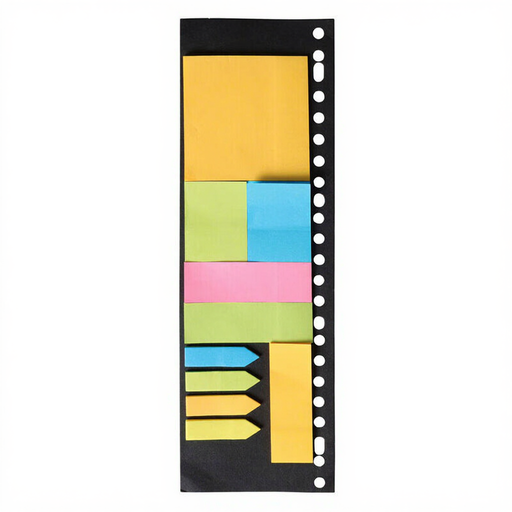
- Why we recommend this product: The combination of a high sheet count (275) and a clean perforation directly addresses the need for efficiency and a large supply. The perforation ensures a precise tear without frayed edges, preserving the professional look of your notes.
- Advantages:
- High capacity for long-lasting use.
- Perforation for clean edges after tearing.
- Repositionable adhesive that leaves no residue.
- Smooth paper surface, suitable for various writing instruments.
- Who it's for: Users with a high volume of notes, such as office workers, students during exam periods, or teams in project workshops.
2. Deli Index Tabs, Office Filing Supplies, 45x12mm
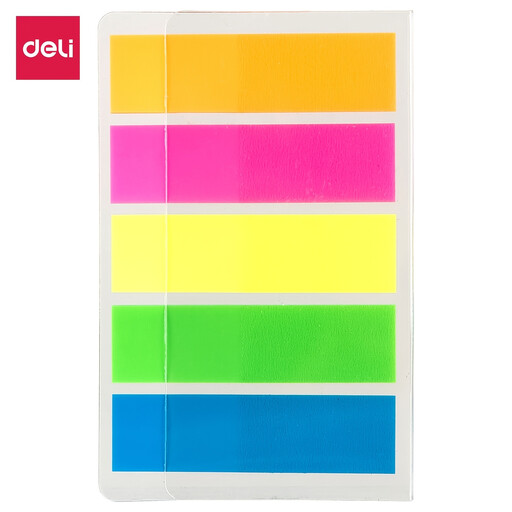
- Why we recommend this product: These index tabs are made from durable plastic, making them significantly more long-lasting and reusable compared to paper markers. The assortment of different colors enables an intuitive system for categorizing documents and files.
- Advantages:
- Robust plastic material for a long lifespan.
- Variety of colors for easy implementation of an organizational system.
- Compact format (45 x 12 mm) ideal for precise marking in books and binders.
- Easy to transport and archive.
- Who it's for: Individuals aiming for systematic office organization, especially for managing binders, project documents, and professional literature.
3. Post-it Flags 680-8, Purple, 25.4mm x 43.2mm
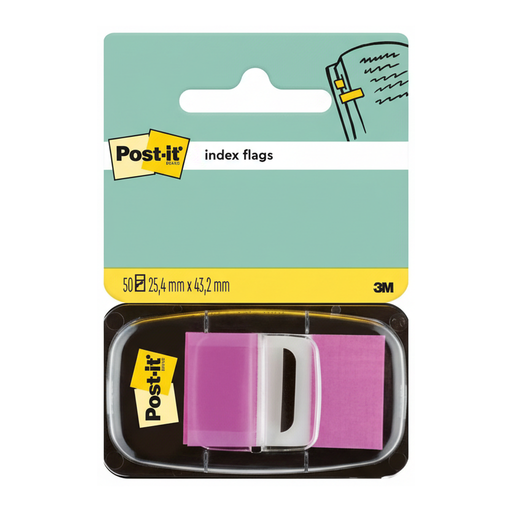
- Why we recommend this product: This product from Post-it (3M) stands out for its specialized adhesive technology and material. The base of the marker is transparent, so the text underneath remains visible, while the colored part serves as a page marker. The tear-proof polyester material and the reliably repositionable adhesive are designed for professional applications.
- Advantages:
- Transparent adhesive area does not cover information.
- High-quality adhesive allows for repositioning without damaging the paper.
- Durable polyester material that does not tear or wrinkle.
- Writable surface for detailed indexing.
- Who it's for: Users in legal, scientific, or administrative professions who need to precisely and durably mark important passages in dense documents.
More Options for Your Office Organization
If the featured products do not exactly meet your requirements, or if you are looking for other specialized solutions like labels or other marking aids, the Tag Labels category offers a broader selection of items for your office supply needs.
Frequently Asked Questions (FAQ)
1. What is the difference between paper and plastic sticky notes? Paper sticky notes are ideal for quick, handwritten notes and offer optimal writability with most pens. Sticky markers made of plastic (film), on the other hand, are significantly more robust, tear-resistant, and often water-repellent. They are excellent as durable index strips or page markers that are frequently repositioned.
2. How can I prevent sticky notes from curling at the adhesive edge? The curling of sticky notes often occurs when peeling the note upwards from the bottom. To ensure it lies flat, the sticky note should be peeled from the side of the pad. This minimizes tension on the adhesive strip and allows the note to lie flat on the surface.
3. Are all sticky notes removable without leaving residue? Most sticky notes designed for office use are developed to be repositionable without leaving residue. For products intended for special applications, such as extra-strong sticky notes for rough surfaces, the adhesive strength may be higher. It is advisable to test the adhesion in an inconspicuous area when applying to sensitive surfaces.
Written by your Joybuy Product Recommendation Officer


