
Lieferung heute & morgen

Qualitätsgarantie

Willkommens-Angebote freischalten: KOSTENLOSE Lieferung | Bis zu 80 % RABATT | Kostenlose 30-Tage-JoyPlus-Testphase
App herunterladen
The search for the right stroller can quickly become overwhelming. Manufacturers advertise countless features, but not every innovation is genuinely practical for everyday life. Many parents soon discover that their expensive new model fails on the old town's cobbled streets, the folding mechanism jams at a critical moment, or the stroller marketed as "ultra-lightweight" feels unstable.
This guide serves as an objective filter. We'll show you the three typical pitfalls you should be aware of and which technical parameters truly matter to find a stroller that makes your life easier, not harder.
Marketing promises often sound tempting, but the devil is in the details. Pay close attention to these three points to make an informed decision.
Instead of being swayed by marketing buzzwords, you should check three core technical features. These determine how well a stroller fits your lifestyle.
The chassis is crucial for your child's comfort and your pushing experience.
A stroller that folds compactly makes life immensely easier—whether in the car boot, the hallway, or on public transport.
A stroller should be able to grow with your family to be a long-term investment.
Based on these objective criteria, we have compiled a selection of models suitable for different lifestyles and requirements.

Why it's a great fit: Ideal for city life. It combines a low weight of 7.2 kg with a sturdy aluminium frame and a simple folding mechanism. The 4-wheel suspension and larger rear wheels can even handle cobblestones, while its compact, self-standing fold is a winner on buses, trains, and in small hallways.
It sidesteps the "ultra-lightweight" trap by offering a robust construction and full suspension despite its low weight, making it both stable and comfortable.
Supports a child weight of up to 22 kg; one-hand adjustable backrest with lie-flat function; machine-washable cover.
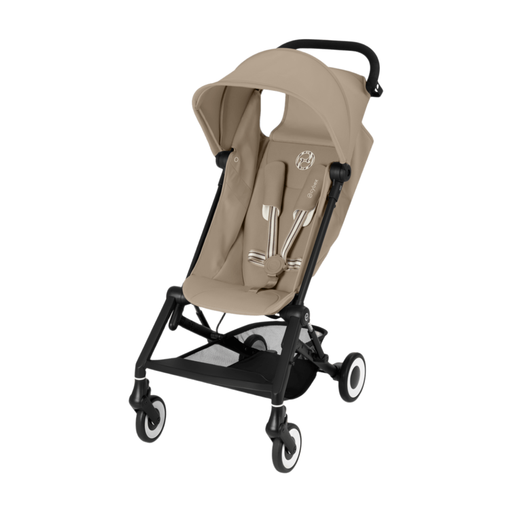
Why it's a great fit: This **travel stroller** is designed for maximum portability. According to the manufacturer, it is cabin-approved when folded, making it the ideal companion for air travel. Its low weight and quick folding mechanism simplify transport at the airport and at your holiday destination.
It solves the problem of a clunky fold with a quick 2-button mechanism that works reliably, transforming the stroller into a compact, self-standing package.
Advanced suspension for uneven paths; extendable sun canopy with UPF 50+; large shopping basket with 5 kg capacity.
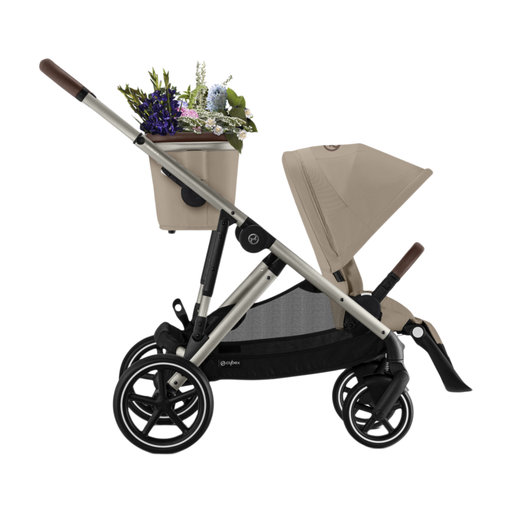
Why it's a great fit: This **tandem stroller** is a future-proof solution. It converts from a single stroller to a double with over 20 configurations. Ideal for parents expecting twins or those who already have one child and are planning for another. The enormous 23 kg load capacity across two baskets is another major plus.
It refutes the assumption that flexible systems must be unwieldy. Despite its size, it folds down compactly and offers a practical solution for daily life with two children thanks to its one-pull harness system.
Over 20 combination options; two large shopping baskets; ergonomic lie-flat position from birth; capacity for two children up to 22 kg each.
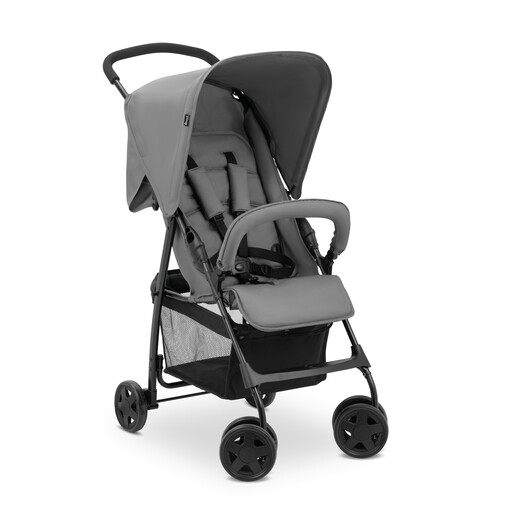
Why it's a great fit: This **sporty stroller** focuses on the essentials: at 5.9 kg, it's extremely lightweight, folds compactly, and is easy to manoeuvre. It's an excellent choice as a secondary stroller for the grandparents, for quick errands, or for parents seeking a straightforward, budget-friendly solution.
It avoids the trap of overpriced features by focusing on core requirements. It doesn't promise exaggerated all-terrain capabilities but is an honest and reliable companion for paved paths.
Very low weight (5.9 kg); adjustable backrest and footrest; large shopping basket; swivelling and lockable front wheels.
We've compiled a complete, up-to-date list of products that fully meet these strict selection criteria and European safety regulations.
A stroller can be used from birth, provided it has a backrest that can be adjusted to a completely flat lie-flat position. This position is essential for the development of a newborn's spine and for unrestricted breathing. A baby should only be placed in an upright sitting position once they can hold their head and upper body up independently, which is typically around six months of age.
The terms are often used interchangeably, but there are traditional distinctions. A pram typically refers to a system with a separate, lie-flat bassinet for newborns. A pushchair or stroller is the term for a model with a seat unit for older babies and toddlers. A buggy is often used to describe a more lightweight, compact, and travel-friendly stroller. However, many modern strollers now offer the comfort and features of a full-sized pushchair, blurring the lines between the terms.
Regular maintenance extends the life of your stroller and keeps it safe. Check the wheels for trapped dirt or hair. The frame can be wiped down with a damp cloth. For the fabric covers, the manufacturer's instructions are key: some are machine-washable at 30°C, while others require hand-washing. Allow all parts to dry completely before folding and storing the stroller to prevent mould growth.