
Lieferung heute & morgen

Qualitätsgarantie

Willkommens-Angebote freischalten: KOSTENLOSE Lieferung | Bis zu 80 % RABATT | Kostenlose 30-Tage-JoyPlus-Testphase
App herunterladen
The search for the right stroller can quickly become overwhelming. Manufacturers advertise with terms like "ultra-lightweight," "compact fold," or "innovative travel system." But not every advertised feature lives up to its promise in daily use. As your Joybuy Product Recommendation Officer, I'll help you cut through the noise and make an informed decision that fits your lifestyle.
A common mistake is focusing on marketing buzzwords without considering the practical implications. Three typical pitfalls often lead to disappointment and unnecessary expense:
To avoid these traps, you should focus on three objective core parameters. These are the primary determinants of a stroller's everyday practicality and longevity.
These three factors define its mobility. A stroller with a compact fold not only saves space in your car's trunk or hallway but is also crucial for travel. Pay attention to the actual folded dimensions in centimetres and compare them with your available storage space. A lightweight stroller (ideally under 8 kg) makes it easier to carry up to the third floor or load onto public transport. Check if the folding mechanism is truly one-handed and intuitive. For air travel, being carry-on compliant is an important criterion; there are special travel stroller models for this. However, note that airline regulations can vary.
The quality of the wheels and the presence of a suspension system are critical for ride comfort.
Your child's comfort and safety are the top priority. A stroller with a recline function is essential, especially for younger children who nap on the go. For newborns, a completely flat lie-flat position is mandatory. Therefore, many strollers are only recommended from around 6 months of age, when the child can sit up independently. A stroller suitable from birth must either offer this lie-flat position or be expandable with a compatible bassinet or infant car seat. An adjustable harness system (a 5-point harness is ideal) and an adjustable footrest also contribute significantly to comfort.
Instead of making a one-size-fits-all recommendation, we have identified models tailored to specific lifestyles.

Why it's a match: Designed for parents who often travel by plane or train. Its extremely low weight and compact fold are engineered for maximum portability, without sacrificing a full recline function for naps.
This model avoids the "ultralight" trap by offering a sturdy construction and a full lie-flat function despite its low weight of just 5.5 kg—a feature missing in many competing products in this weight class.
Weight: 5.5 kg. Folding Mechanism: One-handed operation. Accessories: Includes travel backpack. Suitable from birth thanks to its lie-flat position.
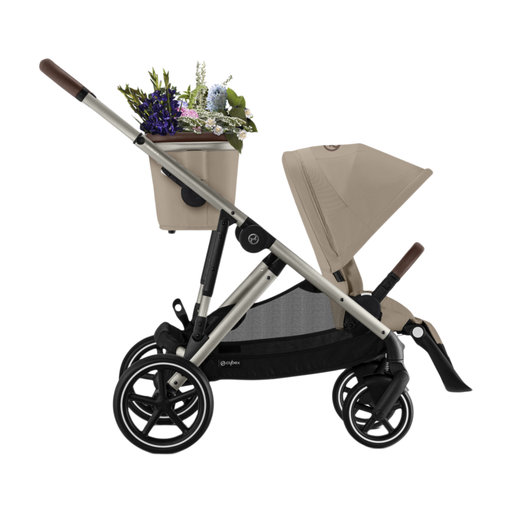
Why it's a match: Perfect for families planning for a new arrival or who already have two children of different ages. The modular system converts from a single to a double stroller and offers enormous storage capacity.
This system prevents the costly mistake of having to buy a completely new double stroller when a second child arrives. It grows with the family and adapts flexibly, saving money in the long run.
Modularity: Over 20 configurations. Storage: Two shopping baskets with a total capacity of 23 kg. Usable life: From birth to approx. 4 years (max. 2 x 22 kg in duo mode).
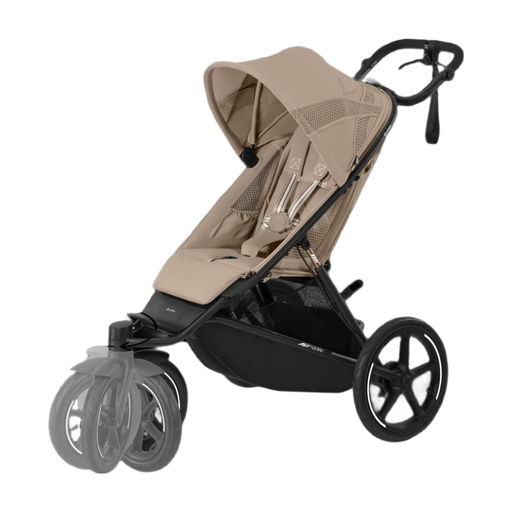
Why it's a match: For active families who navigate both city streets and nature trails and may want to go jogging. The combination of a swivel front wheel for the city and a locked position for stability on uneven ground makes it versatile.
This model is a true all-rounder, not a compromise. It avoids the trap of buying an unstable "sporty-looking" stroller by offering genuine all-terrain features like air-filled tyres and a handbrake for control on descents.
Wheels: Air-filled tyres for optimal suspension. Flexibility: Swivelling and lockable front wheel. Safety: Integrated handbrake and ergonomic lie-flat position from birth.
We've compiled a complete, up-to-date list of products that fully meet these strict selection criteria and all relevant safety standards.
Most standard strollers are designed for children who can already sit up independently, which is usually from around six months of age. If you want to use a stroller from birth, it must have a fully flat recline function or be compatible with a separate bassinet or a compatible infant car seat. This is crucial to protect a newborn's developing spine.
A combination stroller, often called a modular system, typically consists of a frame, a bassinet for newborns, and a later toddler seat. It is often larger, heavier, and offers more comfort for the first few months of life. A buggy (or lightweight stroller) is generally lighter, more compact, and more manoeuvrable. It's the ideal solution once the child has outgrown the bassinet or when a lighter, more travel-friendly alternative is needed for everyday use.
For a stroller for air travel, three features are key: