
Lieferung heute & morgen

Qualitätsgarantie

Willkommens-Angebote freischalten: KOSTENLOSE Lieferung | Bis zu 80 % RABATT | Kostenlose 30-Tage-JoyPlus-Testphase
App herunterladen
An artificial Christmas tree offers practical advantages: it's reusable, doesn't shed needles, and is ready to go year after year. However, the selection is vast, and not every model lives up to its promise. Many buyers are frustrated by unstable construction, a disappointing appearance, or safety defects. To help you make an informed decision, we'll highlight the most common pitfalls and show you which quality features truly matter.
This guide focuses on the objective criteria that separate a long-lasting product from a short-lived one.
Common Flaws in Budget Models:
To avoid a poor choice, you should examine three key aspects: the branch material, the stability of the overall construction, and the safety of any integrated lighting.
The look and feel of an artificial Christmas tree are largely determined by the material of its needles.
A secure base is essential. A metal stand is generally more stable and durable than a plastic one. Ensure that the trunk can be firmly secured in the stand.
The assembly method affects both convenience and longevity:
For most living rooms, a 180 cm Christmas tree is a popular height that offers ample space for decorations without overwhelming the room.
A pre-lit artificial Christmas tree saves you the tedious task of stringing lights. Modern models almost exclusively use LED technology, which is energy-efficient and generates very little heat.
Look for the following features:
Instead of making a one-size-fits-all recommendation, we have selected models for different needs and space constraints.
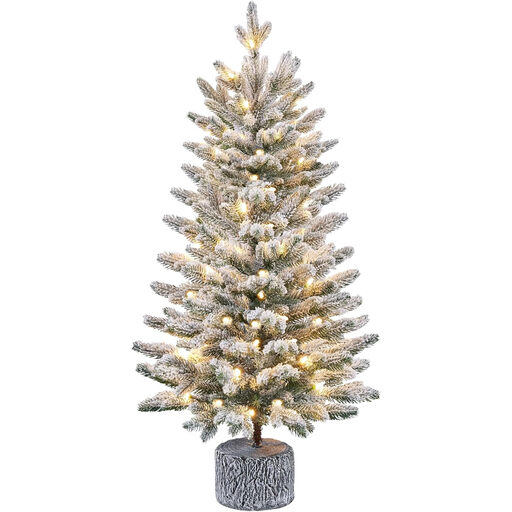
Why it's a great fit: At 90 cm tall, this small Christmas tree is perfect for desks, side tables, or apartments with limited space. The combination of flocking and integrated lighting creates a finished, atmospheric decoration right out of the box.
The sturdy, heavy pot acts as an integrated stand, preventing the wobbling common in small trees. The dense flocking, with 355 tips, ensures a full appearance.
Pre-assembled with 50 warm white LED lights and ready for immediate use. The realistic wood-look trunk adds to its premium feel.
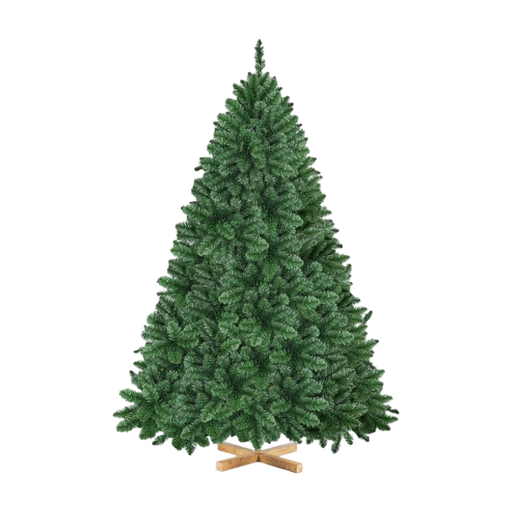
Why it's a great fit: With a classic height of 183 cm (6 ft) and a dense fir appearance, this tree provides a solid foundation for family decorating. It's suitable for most living rooms and offers plenty of space for ornaments.
The sturdy metal stand with a wood-grain finish offers excellent stability. Its hinged system ensures an even distribution of the 903 branch tips, preventing sparse spots.
User-friendly assembly thanks to hinged branches. The model is suitable for both indoor and outdoor use and offers a full, voluminous profile due to its high tip density.
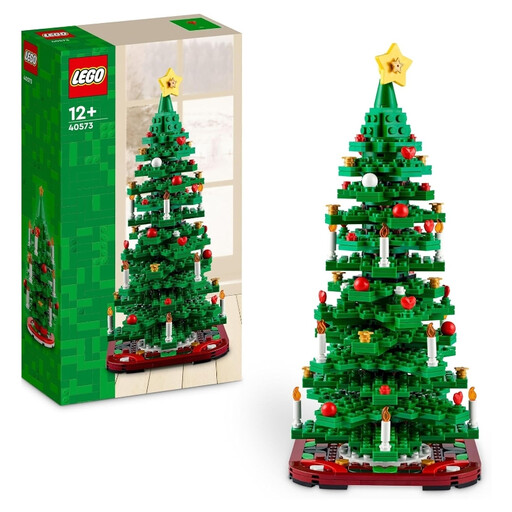
Why it's a great fit: The Lego 40573 Christmas Tree is an unconventional and creative alternative. It's not just a Christmas decoration but also a building project, making it ideal for LEGO fans, families with older children, or as a unique decorative piece for the office.
This product bypasses all the typical problems of artificial trees. It's made from high-quality ABS plastic with defined safety standards. Stability and appearance are guaranteed by its design.
Flexible 2-in-1 design: You can build either one large tree (over 30 cm tall) or two smaller ones. The pieces are compatible with other LEGO systems.
We have compiled a complete, up-to-date list of products that fully meet these strict selection criteria and all relevant safety regulations.
For maximum lifespan, the tree should be stored carefully after the holidays. Disassemble it according to the instructions and gently fold the branches against the trunk. Storing it in the original box or a dedicated Christmas tree storage bag will protect it from dust and deformation. A cool, dry place like a basement or attic is ideal.
Yes, as long as they comply with applicable standards. Look for models with LED technology, as they generate minimal heat and are very energy-efficient. The CE mark confirms conformity with EU safety standards. If used outdoors, the tree must be explicitly rated for it and have an appropriate IP rating (e.g., IP44 for protection against splashing water).
The tip count is a useful indicator of density, but it shouldn't be the sole deciding factor. The quality and volume of the individual branches, as well as the material used (injection-moulded PE looks fuller than PVC film), are just as crucial for a realistic, dense appearance. A well-constructed tree with fewer, but fuller, branches can look more premium than a model with a high number of thin PVC tips.