
Lieferung heute & morgen

Qualitätsgarantie

Willkommens-Angebote freischalten: KOSTENLOSE Lieferung | Bis zu 80 % RABATT | Kostenlose 30-Tage-JoyPlus-Testphase
App herunterladen
The new year is fast approaching, and with it comes the need for structure and organisation. Whether for professional projects, academic deadlines, or coordinating family life, a well-chosen 2027 planner is a key tool for staying on top of things and systematically achieving your goals. However, the variety of planners is vast, and choosing the right model can be overwhelming.
This article serves as a practical guide. We will introduce different types of planners and explain which features are relevant for various needs. Our aim is to provide you with a solid basis for your decision, so you can find the 2027 calendar that effectively supports your personal and professional organisation.
Before you buy a weekly planner or decide on an annual one, the following considerations will help you narrow down the options and identify a suitable model.
The most fundamental decision concerns the format. A classic, dated annual planner for 2027 is ideal if you need a clear structure for the entire calendar year. It is perfect for long-term scheduling and tracking recurring events.
An undated planner, on the other hand, offers maximum flexibility. You can start at any time of the year and take breaks without wasting pages. This format is particularly popular with students and freelancers, whose projects often don't follow the traditional calendar year. Specialised formats, like a magnetic family planner, are tailored to specific use cases and offer features designed for the needs of multiple people.
Planners are available in various layouts that determine the level of detail:
A good office planner often combines monthly and weekly views to facilitate both long-term and short-term planning.
The feel and durability of a planner should not be underestimated. A hardcover binding protects the pages and provides stability, while a flexible softcover is lighter. Paper quality, often indicated in grams per square metre (gsm), is also relevant. Paper that is 100 gsm or thicker typically prevents ink from bleeding through.
Additional features like ribbon bookmarks, a pen loop, a back pocket for loose notes, or an elastic closure band enhance everyday convenience.
Here is a selection of different planner types designed for various organisational needs.
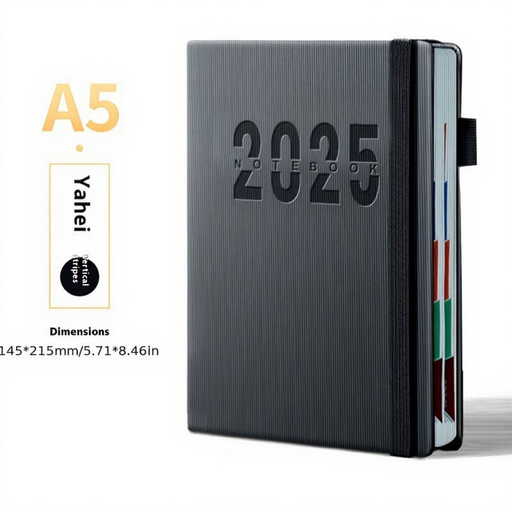
Why It Stands Out: This model is designed as a classic office planner, focused on efficiency and detailed daily organisation. The structured layout allows for seamless tracking of appointments, tasks, and notes.
Benefits:
Who It's For: Professionals, project managers, and anyone who needs precise and comprehensive daily time management to keep track of appointments and tasks.
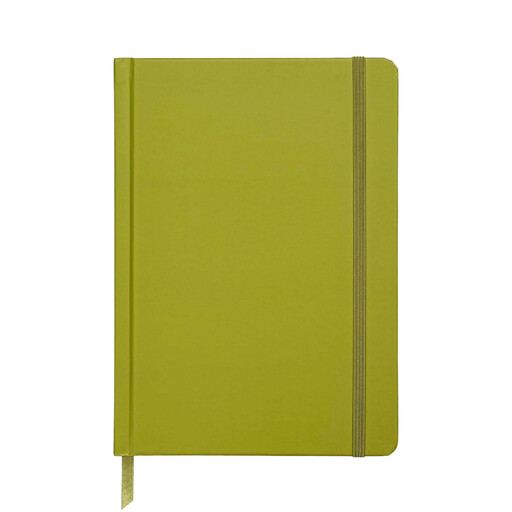
Why It Stands Out: As an undated planner, this model offers maximum flexibility. The 18-month planning period can be started at any time, making it a versatile solution for long-term projects or academic semesters.
Benefits:
Who It's For: Students, creatives, and professionals looking for a flexible planning solution for their goals and projects that isn't tied to the calendar year.
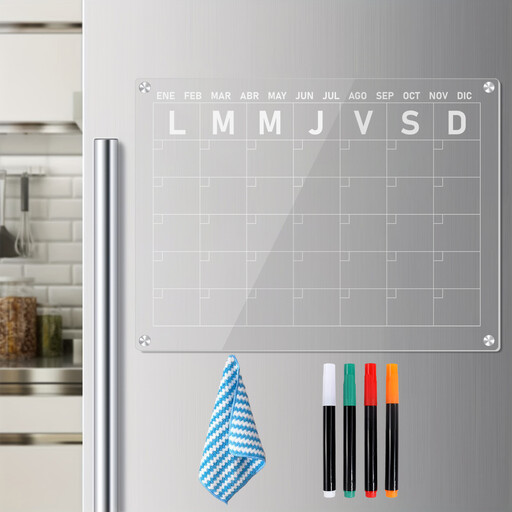
Why It Stands Out: This magnetic family planner is placed centrally on a magnetic surface like a refrigerator. This keeps all appointments, shopping lists, and reminders visible to all household members at all times.
Benefits:
Who It's For: Families, flatmates, and small teams who need a central and flexible solution for coordinating shared schedules and tasks.
The models presented here already cover a wide range of needs. However, if you are looking for other layouts, designs, or specific features, you can find a larger selection in our category.
? Explore our full range of daily planners here
Dated planners for the year 2027 are typically available for purchase starting in the third or fourth quarter of 2026. An undated planner, however, can be bought and used at any time, as you fill in the dates yourself.
A 2027 calendar primarily serves to display dates, weeks, and holidays in a clear format. A planner goes beyond that, offering structured space for the detailed recording of appointments, to-do lists, notes, and goals. It is an active tool for organisation, whereas a calendar is more of a passive reference tool.
To get the most out of a weekly planner, it's a good idea to set aside a few minutes at the beginning of each week for planning. Enter fixed appointments and define three to five main goals for the week. Distribute these tasks across the individual days and use any remaining free time for smaller errands. At the end of the week, you can briefly take stock of what has been accomplished and what needs to be moved to the next week.