
Lieferung heute & morgen

Qualitätsgarantie

Willkommens-Angebote freischalten: KOSTENLOSE Lieferung | Bis zu 80 % RABATT | Kostenlose 30-Tage-JoyPlus-Testphase
App herunterladen
A 20 cm frying pan is a practical addition to many British households: it fits on small hobs, takes up little storage space and is ideal for single portions, omelettes, vegetables or one or two smaller pieces of meat. Yet unclear product descriptions and exaggerated marketing claims often lead to the wrong purchase.
As Joybuy’s Product Recommendation Officer, I filter the relevant information using clear, verifiable criteria. What matters isn’t just the colour or the name of the coating, but the base diameter, hob compatibility, material, cleaning and temperature limits.
The stated size usually refers to the top rim. The actual base of the pan can be significantly smaller. On some models, the base diameter is around 14 to 15.5 cm. That’s fine for small cooking zones, but it reduces the usable cooking area.
So check:
A frying pan for all hob types should be explicitly stated as suitable for gas, electric, ceramic and induction. With aluminium, a magnetic stainless steel base or a comparable induction plate is required. A pure aluminium frying pan will not normally work on an induction hob.
There are also restrictions with removable handles: a pan may be suitable for induction, but only allowed in the oven without the handle. The manufacturer’s specifications for the hob, oven and handle must be considered separately.
A non-stick frying pan makes it easier to release delicate foods. However, it should not be heated empty for long periods at high temperatures. Metal utensils, scouring pads and harsh cleaners can damage the surface.
For a non-stick pan, the following details are relevant:
A ceramic pan is not necessarily made of solid ceramic. It is often an aluminium body with a ceramic non-stick coating. This distinction is important for weight, heat conduction and care.
Aluminium heats up relatively quickly and keeps the weight low. An aluminium frying pan is therefore easy to handle in small kitchens and for daily use. Multi-layer constructions combine aluminium with stainless steel and can improve heat distribution across the base.
A stainless steel pan without coating is more resistant to metal utensils, but requires more attention when searing: preheating, the right temperature and enough fat all affect whether food sticks. Multi-layer stainless steel with an aluminium core combines a robust outer structure with a heat-conducting middle layer.
With induction, it’s not just the material of the pan body that counts, but above all the magnetic base. Look for a clear statement such as “suitable for induction” or “induction compatible”. For gas hobs, a stable base is also important, while for ceramic and electric hobs, a flat base helps with heat transfer.
“Dishwasher-safe” does not mean the dishwasher is the gentlest cleaning method for every coating. Hand washing with warm water, mild washing-up liquid and a soft sponge can preserve the surface for longer.
For an oven-safe frying pan, the maximum temperature for the entire construction must be considered. A stainless steel handle can withstand higher temperatures than a plastic or Bakelite handle. The lowest stated temperature limit is always the decisive factor.
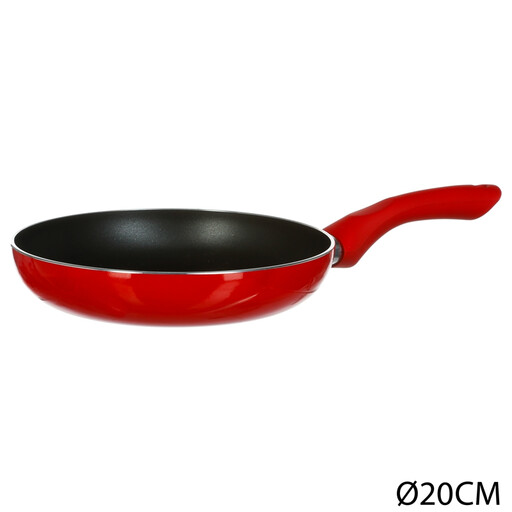
Why this product fits the profile: The compact aluminium pan weighs around 0.5 kg according to the product information and is designed for electric, gas and induction hobs. That suits small kitchens and occasional use.
The induction compatibility is explicitly stated. This avoids the common confusion between pure aluminium and induction-compatible cookware.
Lightweight, 20 cm format and a described non-stick surface for everyday small portions.
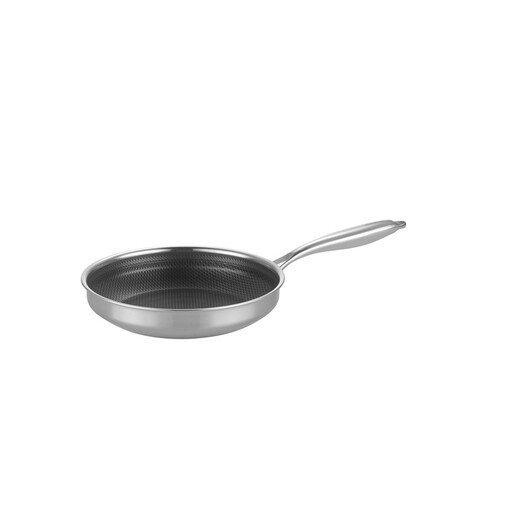
Why this product fits the profile: The manufacturer describes a three-layer construction of stainless steel and aluminium core, plus a ceramic coating. Induction, gas, electric and oven suitability up to 260 °C are also stated.
The specifications separate material construction, coating, hob types and oven temperature. According to the product information, the surface is free from PFAS, PTFE and PFOA.
Multi-layer construction, ceramic coating, dishwasher suitability according to the product information and a comparatively high stated oven limit.
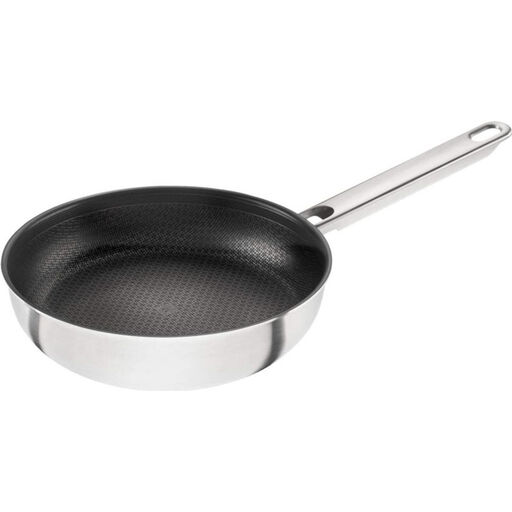
Why this product fits the profile: According to the product description, the 18/10 stainless steel pan has a three-layer construction with an aluminium core, a PTFE coating with a protective grid and oven suitability up to 200 °C.
The stainless steel body is not confused with a pure stainless steel surface: the product information explicitly states a PTFE non-stick coating. Hob and cleaning suitability are also specified.
Three-layer construction, induction compatibility, dishwasher suitability according to the product information and a wide pouring rim.
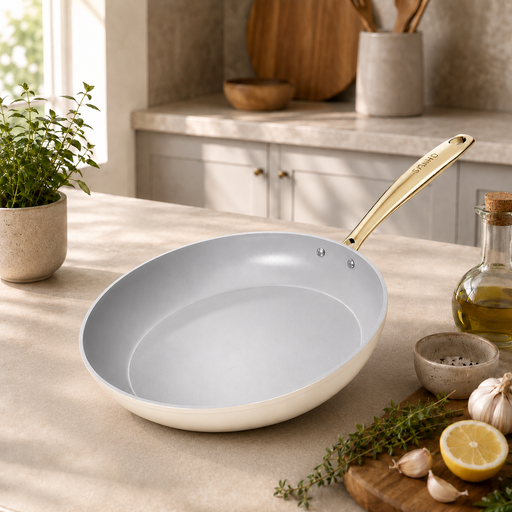
Why this product fits the profile: The aluminium body with ceramic coating is suitable for induction, gas, electric, ceramic, halogen and infrared hobs according to the product information. The body can go in the oven up to 230 °C for a maximum of 60 minutes.
The oven limit and maximum usage time are specifically stated. This makes the vague claim “oven-safe” easier to assess.
Ceramic-coated aluminium body, wide hob compatibility and dishwasher suitability according to the product information.
We’ve put together a complete, regularly updated list of products that fully meet these strict selection criteria and the safety regulations in force in the EU.
A 20 cm pan is usually suitable for a single portion or smaller amounts for two people. For several large steaks, generous portions of vegetables or family meals, a larger cooking surface is more practical.
Models with explicitly stated induction compatibility and a magnetic base are suitable. With aluminium, an integrated induction plate should be present. The specification “aluminium” alone is not enough.
Dishwasher suitability makes cleaning easier, but can put more strain on a coating than gentle hand washing. So follow the manufacturer’s instructions and avoid abrasive cleaners and sudden temperature changes.