
Lieferung heute & morgen

Qualitätsgarantie

Willkommens-Angebote freischalten: KOSTENLOSE Lieferung | Bis zu 80 % RABATT | Kostenlose 30-Tage-JoyPlus-Testphase
App herunterladen
A 20 cm frying pan is ideal for many everyday situations: one or two eggs, a small portion of vegetables, fish fillets, pancakes or a side dish. At the same time, this compact size often leads to poor purchases. What matters is not just the diameter on the packaging, but the interplay of base area, material, coating and hob compatibility.
The measurement usually refers to the top rim. The actual base of the pan can be significantly smaller. With some models, the base diameter is, for example, around 14.4 to 16 cm. This affects how evenly heat is transferred to the food and which hob zone is suitable.
For a small portion, a compact base is practical. However, on a hob zone that is too large, a lightweight aluminium pan can cool down more quickly at the edges or heat unevenly. That is why you should check the specified base diameter and height before buying.
A pan for all hob types should be explicitly approved for gas, electric, ceramic (i.e. glass ceramic) and induction. With aluminium, a magnetic base is required for the pan to work on an induction hob. Not every aluminium or stainless steel pan is automatically induction-compatible.
The handle construction also counts: a pan may be usable on all hobs, but only have limited suitability for the oven. Therefore, check the specific oven safety, including the maximum temperature and any restrictions for plastic or soft-touch handles.
A non-stick coated pan makes turning delicate foods easier. However, this does not mean it is permanently scratch-resistant or suitable for every heat level. Empty pans should not be heated strongly for extended periods. Metal utensils, abrasive cleaners and rough sponges can also damage the surface.
The term dishwasher-safe pan describes the basic suitability for the dishwasher. For a longer lifespan, hand washing with a soft sponge can still be advisable. Always follow the care instructions from the respective manufacturer.
Aluminium heats up relatively quickly and is usually lightweight. A coated aluminium pan is therefore well suited for eggs, vegetables or fish. Models made from multi-layer stainless steel with an aluminium core combine a robust outer surface with heat distribution through the core. Here, the construction is more important than the material name alone.
A 20 cm stainless steel pan without coating is more temperature-resistant and less sensitive to metal turners. However, it requires more attention when searing: preheating, sufficient fat and the right timing all influence whether food sticks.
Cast iron stores heat for longer periods. An enamelled cast iron cocotte with a 20 cm diameter is therefore more suited to braising, slow cooking and oven dishes than to quickly frying a single egg. You should consider the higher weight in small kitchens and when moving it around frequently.
With a coated pan, you should pay attention to the following details:
A coating is not a substitute for proper temperature control. For delicate foods, medium heat is usually sufficient. If you frequently sear at high heat, choose a model with an explicitly stated higher temperature resistance or an uncoated stainless steel pan.
A pan with a lid is practical for vegetables, small braised dishes and keeping food warm. A glass lid allows you to see what is happening, while a tight-fitting lid keeps steam inside the vessel. With a 20 cm diameter, the capacity is roughly between around 1.2 and 2.4 litres, depending on the design.
Also pay attention to a sturdy handle, a secure connection and the temperature rating. Removable handles can save storage space and make it easier to transfer the pan to the oven. However, they must be correctly attached and are not always included in the delivery.
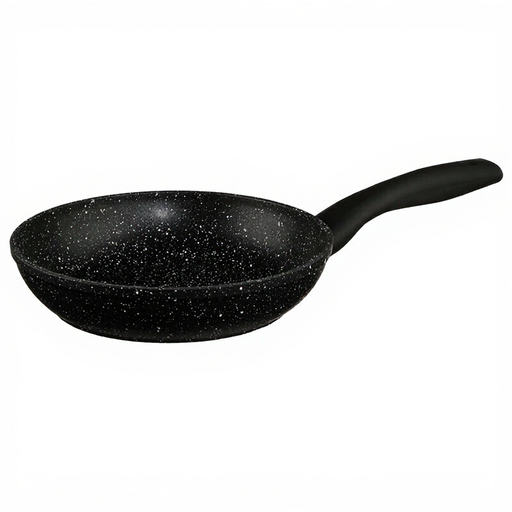
Why this product suits the profile: The lightweight aluminium pan is designed for small everyday portions and, according to the product details, is compatible with gas, electric, ceramic, halogen and induction hobs.
The specifications clearly state the hob types and note that the pan is not dishwasher-safe. This helps avoid false expectations about cleaning.
Forged aluminium, 20 cm diameter and a stated non-stick coating. Care is by hand washing.
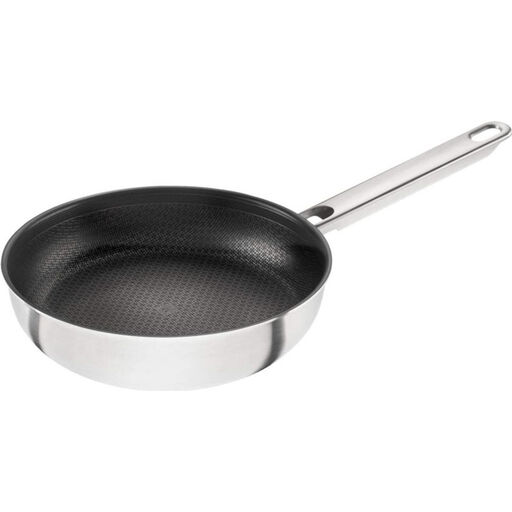
Why this product suits the profile: The 3-layer construction of 18/10 stainless steel and an aluminium core is interesting for users looking for a combination of robust build and a coated cooking surface.
The product details mention a PTFE coating, an oven limit of 200 °C and dishwasher suitability. These concrete values are more meaningful than a general advertising claim.
Suitable for all hob types including induction, with a stainless steel handle, pouring rim and a stated capacity of 1.28 litres.
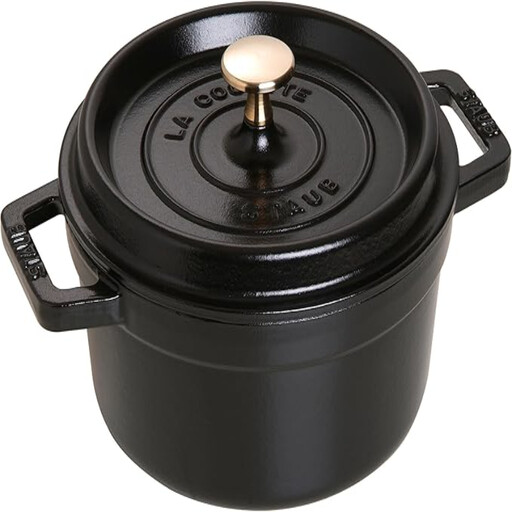
Why this product suits the profile: The 20 cm cocotte with lid is aimed at people who want to prepare small braised dishes, stews or oven recipes in one vessel.
The product description explicitly mentions induction, oven use up to 250 °C and dishwasher suitability. The high weight of cast iron should be factored in before purchase.
Enamelled cast iron, 2.2 litre capacity, matching lid and a construction for slow cooking, braising and baking.
We have compiled a complete, regularly updated list of products that fully meet these strict selection criteria and the safety regulations in force in the EU.
A 20 cm frying pan is usually suitable for a single portion or smaller amounts for two people. For large steaks, several escalopes or substantial pan dishes, a larger cooking surface is more practical.
Look for the explicit statement "suitable for induction". With coated aluminium, a magnetic induction base is required. Stainless steel models with an aluminium core can also be suitable, provided the manufacturer states this.
That depends on the individual model. Some coated pans are approved for the dishwasher according to the product details, while others should be cleaned by hand. The manufacturer's instructions on temperature, detergent and kitchen utensils are decisive.