
Lieferung heute & morgen

Qualitätsgarantie

Willkommens-Angebote freischalten: KOSTENLOSE Lieferung | Bis zu 80 % RABATT | Kostenlose 30-Tage-JoyPlus-Testphase
App herunterladen
A 20 cm saucepan with lid is a practical choice for many British households. This size is suitable for soups, sauces, side dishes, stews and one-pot meals. However, choosing the right pan is about more than diameter alone. Capacity, base construction, coating and hob compatibility all determine whether it remains practical for everyday use.
The diameter says little about the actual internal height and capacity. A shallow 20 cm sauté pan may hold significantly less than a tall 20 cm soup pan. Product specifications for comparable models indicate capacities of around 2.2 to 3 litres. For soups and stews, the combination of diameter, height and usable capacity is therefore crucial.
A saucepan suitable for all hobs should be explicitly approved for induction, gas, electric and ceramic hobs. Induction requires a magnetic, flat-fitting base. The base should also match the size of the cooking zone. An uneven or undersized base can affect heat transfer and cause problems on glass-ceramic hobs.
“Dishwasher-safe saucepan” does not automatically mean that every surface will remain unchanged over the long term. Stainless steel is usually easy to care for, but it can develop water spots or heat discolouration. Coated pans require suitable utensils and moderate temperatures. Enamel can chip if knocked. It is therefore worth reading the manufacturer’s instructions on cleaning, temperature limits and suitable utensils before buying.
Around 1.5 to 2 litres is often enough for sauces, vegetables and smaller portions. A lidded pan holding around 2.2 to 3 litres is more suitable for several portions of soup, pasta or stew. Bear in mind that the stated capacity does not necessarily equal the recommended filling level. Liquids should not be filled right to the rim, so that they do not boil over.
A stainless steel saucepan is robust, does not affect flavour and is generally suitable for high temperatures. A sandwich or encapsulated base with an aluminium core can distribute heat more evenly across the base. In a coated saucepan, the surface makes it easier to release delicate foods, but it requires wooden, silicone or plastic utensils.
A cast iron casserole retains heat for a long time and is well suited to slow-cooked dishes. However, its greater weight should be taken into account when moving and washing it every day. Enameled cast iron does not require seasoning, but it should be protected from sudden temperature changes and hard knocks.
A glass lid allows you to keep an eye on your food, while a heavy cast iron lid helps retain heat inside the pan. Check whether the lid knob and pan handles are oven-safe. With plastic or Bakelite handles, oven use may be prohibited or restricted. The maximum permitted temperature for glass lids also often differs from that of the pan body.
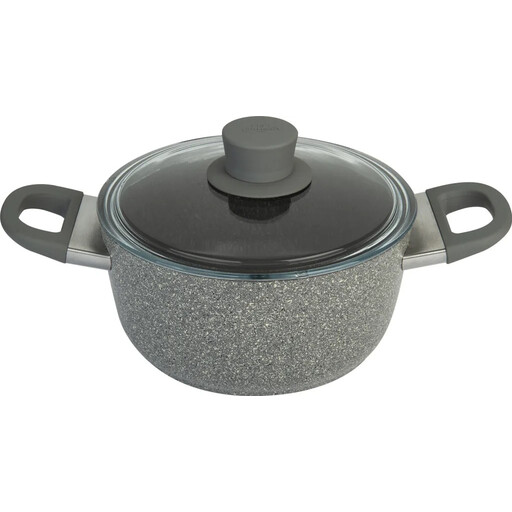
Why this product suits this profile: This 20 cm pan combines an aluminium body with a 5-layer GRANITIUM-Extreme coating and a glass lid. According to the product specifications, it has a 3-litre capacity and is suitable for induction, gas, electric and ceramic hobs.
The specifications clearly state the diameter, capacity, compatible hob types and care instructions. This makes it easier to assess whether the pan is suitable for soups or everyday reheating.
Coated interior, glass lid, stated 3-litre capacity and dishwasher suitability.
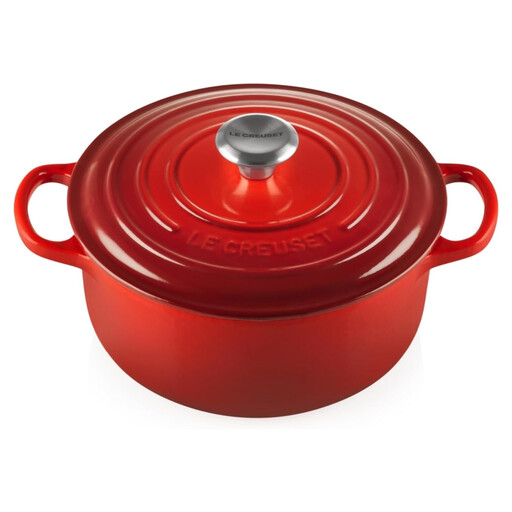
Why this product suits this profile: Enameled cast iron, a light-coloured interior, large handles and a lid with a stainless steel knob make this casserole suitable for slow-cooked dishes, soups and one-pot recipes. According to the product specifications, the model is suitable for all hob types, including induction, as well as oven use.
The material, capacity and usage limits are clearly described. The care instructions also point out that hand-washing can help protect the enamel surface.
2.4-litre capacity, enameled cast iron, and use on the hob or in the oven.
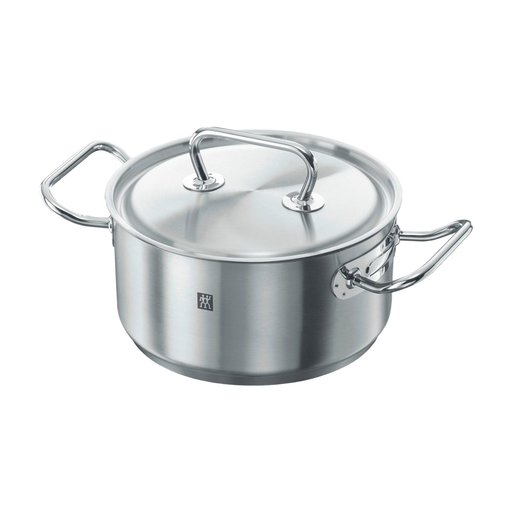
Why this product suits this profile: According to the product description, this 18/10 stainless steel pan has a sandwich base, a glass lid and a 3-litre capacity. It is designed for induction, gas and electric hobs, making it suitable for regular cooking.
The base construction and suitable hob types are specified. Stainless steel does not require an interior coating, so performance does not depend on a coated surface.
18/10 stainless steel, sandwich base, glass lid and 3-litre capacity.
We have put together a complete, regularly updated list of products that fully meet these strict selection criteria and the safety regulations applicable in the EU.
This depends on the capacity and the dish being prepared. Models holding around 2.2 to 3 litres are often suitable for several portions of soup, sauce, pasta or stew. For large family meals, a bigger soup pan may be more suitable.
No. Look for an explicit label such as induction-compatible or suitable for all hob types. A 20 cm induction pan should have a flat, magnetic base. The manufacturer’s specifications are the deciding factor.
It is not possible to give a reliable fixed lifespan. It depends on factors including temperature, utensils, cleaning and frequency of use. With proper care, a stainless steel saucepan or enameled cast iron casserole can avoid the wear associated with a non-stick coating; coated models should be treated with particular care.