
Lieferung heute & morgen

Qualitätsgarantie

Willkommens-Angebote freischalten: KOSTENLOSE Lieferung | Bis zu 80 % RABATT | Kostenlose 30-Tage-JoyPlus-Testphase
App herunterladen
A 20 cm springform tin is ideal for smaller households, compact cakes, sponge bases and cheesecakes. Its diameter is easy to handle, while its capacity is sufficient for many classic recipes. However, the centimetre measurement is not the only factor to consider when buying. The coating, fastening mechanism and care requirements determine whether your bake releases cleanly and whether the tin remains usable over the long term.
A non-stick baking tin can make it easier to remove your bake. However, the name alone says little about its durability. If there is no information about temperature limits, cleaning and suitable kitchen utensils, it is unclear how the surface should be treated.
Many coated tins are designed to be washed by hand with warm water and a soft sponge. Abrasive cleaners, metal scourers and sharp-edged knives can damage the coating. Even a supposedly convenient dishwasher-safe claim should be stated explicitly in the product details rather than assumed.
On a springform tin, the side clasp holds the rim together. If the fastening is stiff, unstable or not fully closed, some of the runnier batter may leak out. A tightly fitting base is particularly important for cheesecake and sponge-cake recipes.
Look for a securely closing side clasp and a well-fitting, removable base. Before placing the tin in the oven, make sure the clasp is fully engaged. A baking tray beneath the tin can provide additional protection against spills, but it does not replace a correctly fitted base.
An oven-safe baking tin is not automatically suitable for every heat source. According to the product details, the Le Creuset springform tin can be used in the oven up to 240 °C, but it is not intended for use on hobs or over direct heat. Such restrictions matter if, for example, you also want to use the tin for pre-baking on a hob.
A 20 cm cake tin or round cake tin requires less batter than a 26 or 28 cm tin. Recipes intended for larger springform tins therefore need to be adjusted. As a general guide, a smaller diameter produces a deeper layer of batter, which can affect the baking time.
As well as checking the diameter, look at the height of the rim. The product details for the Le Creuset springform tin specify a 20 cm diameter and a height of around 7 cm. This is practical for many cakes, sponge bases and softer cheesecakes, provided the amount of batter is suitable for the tin.
A carbon steel springform tin is designed for stability and even heat absorption. The Le Creuset Bakeware described here uses heavy-gauge carbon steel. According to the product details, its construction is intended to resist warping and bending while distributing heat evenly.
Other metal tins can also be suitable. The important factors are the specific details on material thickness, coating and permitted oven temperature. A very lightweight tin is easy to handle, but may perform differently during frequent use from a heavier construction.
A cake tin with a removable base makes it easier to transfer delicate bakes. With the Le Creuset tin, the rim can be opened using the side clip, allowing the cake to remain on the base without having to slide the rim along the sides of the bake.
A smooth non-stick surface is particularly practical for delicate sponge bases, rich cakes and soft cheesecakes. Even so, the product description recommends lightly greasing the tin before first use or before baking. Baking paper on the base can provide additional help when releasing the bake.
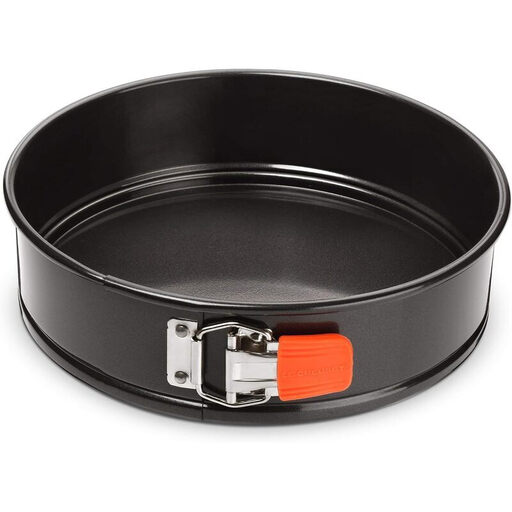
Why this product suits the profile: This tin combines a 20 cm diameter with carbon steel, a non-stick coating and a removable base. It is aimed at households that regularly bake smaller cakes, gateaux or cheesecakes and prefer clear information about oven use and care.
The product details specify the secure side clip, removable base, temperature limit of 240 °C and hand-washing instructions. This makes important usage limits clear before purchase.
20 cm diameter, carbon steel construction, smooth non-stick coating and, according to the product details, oven suitability up to 240 °C. The product description also states that it comes with a lifetime guarantee.
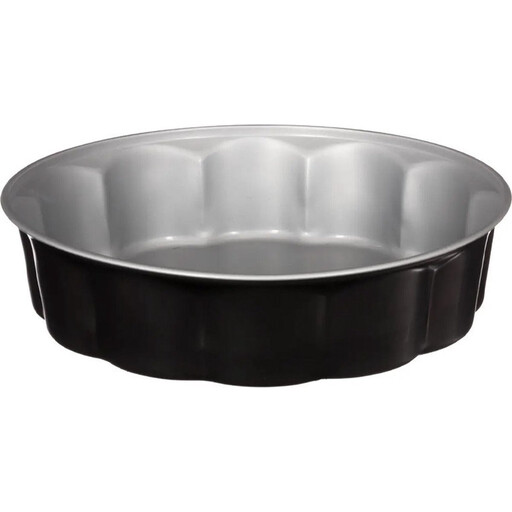
Why this product suits the profile: This tin is a straightforward alternative for larger cakes and households that do not need a springform mechanism. Important: according to the product details, this is not a 20 cm springform tin, but a 26 cm cake tin with a non-stick coating.
The difference in size is clearly stated. If you need a 20 cm diameter or a removable rim, do not mistake this model for a springform tin.
26 cm diameter, metal construction and, according to the product details, a non-stick coating. The tin is intended for oven use and should be cleaned by hand.
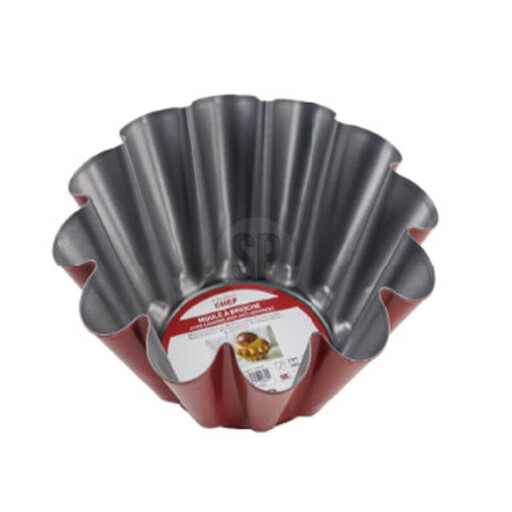
Why this product suits the profile: This rectangular steel tin is aimed at frequent bakers who make deep cakes, bread or bakes. It is not a round springform tin, but can be a useful addition for specialist baking tasks.
The dimensions and rectangular design are clearly stated. This helps prevent a standard springform tin from being confused with a deep, versatile baking tin.
Steel construction, non-stick coating and a depth of 90 mm. The product details recommend lightly greasing the tin and washing it by hand, as well as avoiding direct flames.
We have put together a complete, regularly updated list of products that fully meet these strict selection criteria and the safety regulations applicable in the EU.
This depends on the height of the cake and the size of the slices you want. For a small household or a compact gateau, the diameter will often provide around six to eight portions. For recipes designed for a 26 cm tin, the amount of batter should not be used unchanged, as the cake will be deeper in a 20 cm tin.
Yes, provided the tin is sufficiently deep, the base fits tightly and the baking temperature is observed. A baking tin for cheesecake should have a sturdy fastening mechanism and a precisely fitting base. For very runny fillings, baking paper or an additional baking tray may be useful.
It is not possible to give a reliable fixed lifespan. This depends on how often the tin is used, the temperature, cleaning and how the coating is handled. Hand washing, soft sponges and avoiding sharp or metal tools can help protect the surface. If the coating becomes visibly damaged, the tin should be replaced for safety and performance reasons.