
Lieferung heute & morgen

Qualitätsgarantie

Willkommens-Angebote freischalten: KOSTENLOSE Lieferung | Bis zu 80 % RABATT | Kostenlose 30-Tage-JoyPlus-Testphase
App herunterladen
A 20 cm springform tin is ideal for small to medium-sized cakes, sponge bases, biscuit cakes and cheesecakes. Its diameter is more compact than the standard 24 cm or 26 cm tins, making it a great fit for smaller households or recipes with modest quantities. Before you buy, though, it’s worth checking a few product details. Marketing terms like “non-stick” or “extra durable” don’t tell you much about how the tin will actually perform day to day.
With a 20 cm cake tin, the size given can refer to the usable inner diameter or the outer edge. Even a few centimetres’ difference will affect the batter depth and the baking time. So check whether the measurement really describes a diameter of 20 cm and whether the height suits the recipe quantity you have in mind.
A non-stick coated baking tin often makes it easier to release your cake, but that doesn’t automatically mean it’s dishwasher-safe or resistant to scratches. Abrasive cleaners, metal scourers and sharp knives can damage the surface. What really matters are the manufacturer’s specific care instructions, not just the “non-stick” label.
A springform tin consists of a ring with a clasp and a separate base. A clip that doesn’t close precisely can cause leaks with runny batter. For cheesecakes or very soft fillings, it’s also important that the base sits firmly and can be removed easily after baking.
A 20 cm springform tin is the right size for smaller cakes and compact tortes. For very tall cakes, you should also consider the tin’s height and maximum fill capacity. The round springform with a removable base makes it easier to release delicate cakes, because you don’t have to lift the rim over the cake.
Before you buy, look out for:
A springform tin made from carbon steel can absorb and conduct heat evenly. The Le Creuset Non-Stick Carbon Steel Bakeware Springform is described as having a thicker carbon steel construction, which according to the product details helps resist warping and supports even heating.
Steel tins are generally more shape-stable than very thin metal versions. However, weight alone isn’t a reliable indicator of quality. Also check the material specification, wall thickness, base stability and the maximum temperature allowed.
The maximum temperature allowed needs to suit how you’ll use it. According to the product description, the Le Creuset tin is oven-safe up to 240 °C. It must not be used on a hob or any other direct heat source. The temperature rating refers to oven use and should not be exceeded.
For coated tins, these basic rules also apply:
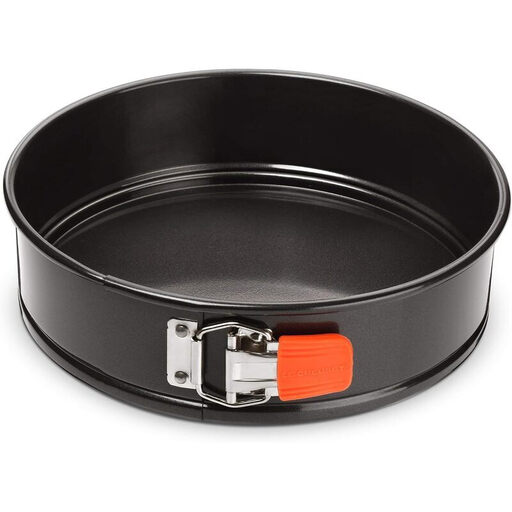
Why this product fits the profile: The stated diameter of 20 cm matches the size you’re looking for. This tin combines carbon steel, a removable base and a non-stick coating for classic cake recipes.
The product details clearly state the diameter, the oven limit of 240 °C and the required hand washing. This makes it easier to assess size and care issues before you buy.
20 cm diameter, removable base, carbon steel construction and, according to the product details, a non-stick coating. The tin is oven-safe up to 240 °C.

Why this product fits the profile: This baking tin is not a 20 cm springform but a larger 28 cm diameter tin. It’s aimed at households that regularly bake larger tarts, quiches or fruit bases.
The size difference is made clearly visible: if you need a 20 cm tin, you won’t accidentally choose this model as a suitable small option.
28 cm diameter, removable base, SafeClick mechanism and, according to the product description, a KAIRAMIC coating that is heat-resistant up to 250 °C.
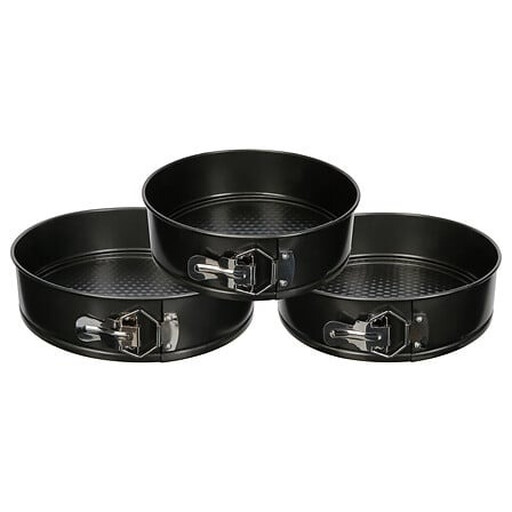
Why this product fits the profile: This set covers several cake tin sizes and is suitable for households that bake a variety of cakes, tortes or desserts. However, a 20 cm tin is not included.
The three actual sizes of 22, 24.5 and 26 cm are stated in the product details. This lets you check before buying whether the size range suits your everyday baking.
Three stackable springform tins, removable bases, non-stick coating and, according to the product details, oven use up to 280 °C.
We’ve put together a full, regularly updated list of products that meet these strict selection criteria and comply with all EU safety regulations.
Let a hot cake tin cool down on a heat-resistant, dry surface. A sudden change in temperature can put strain on the material and coating. Only open the springform clasp once the cake has cooled enough and is stable.
With an oven-safe baking tin, you should also observe the manufacturer’s limit. The tin should not be placed on a hob, under a direct grill or on any other direct heat source unless this is explicitly permitted. For releasing cakes, plastic or silicone tools are usually gentler than sharp metal objects.
That depends on the cake’s height, the recipe and the slice size. For smaller households or a compact cake, a 20 cm tin is often sufficient. A recipe designed for 26 cm shouldn’t be used unchanged, because the batter will be deeper in a smaller tin and the baking time may need adjusting.
A removable base makes it easier to release the cake, but it doesn’t automatically guarantee a completely watertight seal. The clasp must be properly closed, and very runny mixtures can still leak out even with a tight construction. For cheesecakes, it can be a good idea to use an extra baking tray or a suitable liner underneath.
It’s impossible to give a fixed lifespan. It depends on the temperature, frequency of use, cleaning method and how you handle utensils. Hand washing, soft sponges and avoiding scratches can help preserve the coating. Before each use, check the surface for any damage.