
Lieferung heute & morgen

Qualitätsgarantie

Willkommens-Angebote freischalten: KOSTENLOSE Lieferung | Bis zu 80 % RABATT | Kostenlose 30-Tage-JoyPlus-Testphase
App herunterladen
Damp patches on the walls, condensation on the windows in the morning, or a persistent musty smell in the basement—these are all-too-familiar problems for many. High humidity is not only unpleasant but also creates the ideal conditions for mould growth. A dehumidifier with a 20-litre-per-day extraction rate often seems like the right solution for rooms up to 40 m?. However, the market is flooded with devices whose marketing claims often don't hold up in practice.
Before you make a decision, it's important to understand the most common pitfalls. Many buyers focus on unsuitable performance specs or overlook hidden operating costs, which leads to disappointment and unnecessary expenses.
This guide will help you navigate these pitfalls and find a device that objectively meets your requirements.
To make an informed choice, you should focus on verifiable technical data rather than marketing claims. Three core parameters are particularly relevant.
The 20 litres per day specification is a benchmark typically recommended for rooms up to 40 m?. This is a common size for living rooms, large bedrooms, or hobby basements. Such a device is an effective measure as a dehumidifier for mould prevention, as it can permanently lower humidity to a non-critical level (usually 40–60%). However, be aware that rooms with very high ceilings, many windows, or particularly damp basements may require a unit with a higher capacity or longer operating times.
An energy-efficient dehumidifier not only saves you money but also protects the environment. Pay attention to the power rating in watts (W). A lower value means lower electricity consumption for comparable performance. Modern devices also use more environmentally friendly refrigerants like R290 (Propane). This has a significantly lower global warming potential than outdated agents and contributes to better energy efficiency.
For use in living spaces, the noise level is a critical criterion. A quiet dehumidifier for the bedroom should have a sound pressure level below 40 dB(A) during operation. Models with a special sleep mode further reduce fan speed and, consequently, the noise level.
Smart features are becoming increasingly important. A smart dehumidifier with Wi-Fi and app control offers significant convenience. You can control the device remotely, create schedules, or check the current humidity level without having to be physically present. Another useful extra is the laundry drying mode. This special dehumidifier with a laundry dryer function runs the unit continuously at a high fan speed to significantly accelerate the drying of clothes indoors—ideal for the damp season.
Instead of making a one-size-fits-all recommendation, we have identified products tailored to specific use cases.
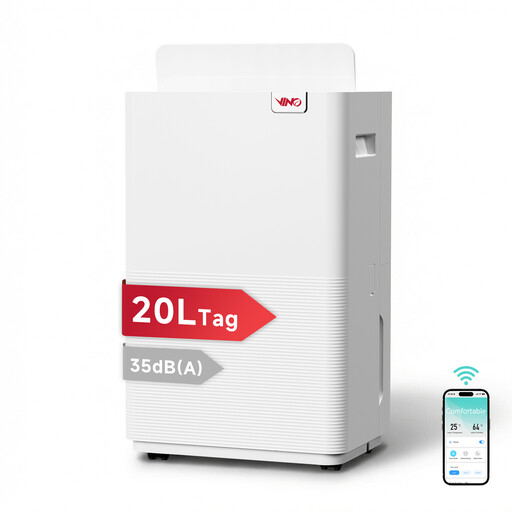
Why it's a good fit: Ideal for users who want full control and convenience. The app control allows you to adjust humidity and create schedules from anywhere, which is perfect for regulating the climate in a living room or office up to 40 m?.
This model offers functional app control that provides real value instead of just being a gimmick. It avoids the trap of useless "smart" features with stable and intuitive operation.
Combines a high 20-litre dehumidification capacity with modern Wi-Fi connectivity and the more eco-friendly R290 refrigerant.
Why it's a good fit: The dedicated laundry dryer function and high 20L/day capacity are ideal for families who regularly dry laundry indoors and want to prevent moisture problems.
It avoids the trap of insufficient performance. While smaller models struggle with a full load of wet laundry, the 20-litre capacity is specifically designed for this demanding task.
Features a special mode for drying clothes that optimises airflow and speeds up the process compared to normal operation.
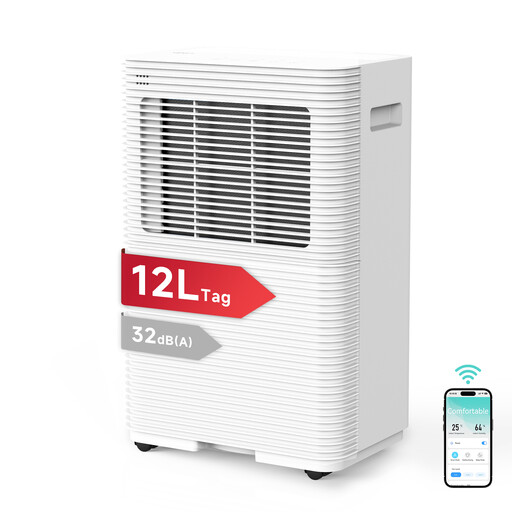
Why it's a good fit: With a 12L/day capacity, it's designed for rooms up to 24 m?. Its key advantage is the exceptionally quiet sleep mode of just 32 dB (according to the manufacturer), making it a great choice for nighttime use in the bedroom.
This model avoids the noise trap. While many devices are too loud for undisturbed sleep, this one focuses on quiet operation, as evidenced by the low dB rating in sleep mode.
Combines a compact design with a very quiet sleep mode while retaining smart features like app control.
We have compiled a complete, up-to-date list of products that fully meet these strict selection criteria and UK safety regulations.
The cost depends on the power rating (in watts), how long you use it, and your electricity rate. For example: a device with a 365-watt (0.365 kW) power rating that runs for four hours a day consumes 1.46 kilowatt-hours (kWh). Assuming an electricity price of 30 pence/kWh, this results in a cost of about 44 pence per day. Models with a built-in humidistat only run when needed, helping to reduce consumption.
No, usually not. Modern devices have an integrated humidistat that lets you set a target humidity level (e.g., 50%). The dehumidifier then automatically turns on when the level is exceeded and off again once it's reached. This ensures efficient, on-demand operation.
You have two options. The most common is to manually empty the water tank. All devices shut off automatically when the tank is full to prevent overflow. For unattended continuous operation, such as in a basement, most models also offer a connection for a drainage hose. The collected water can then be directed straight into a drain.