
Lieferung heute & morgen

Qualitätsgarantie

Willkommens-Angebote freischalten: KOSTENLOSE Lieferung | Bis zu 80 % RABATT | Kostenlose 30-Tage-JoyPlus-Testphase
App herunterladen
Damp basements, misted-up windows and laundry that takes ages to dry are common reasons for buying an electric dehumidifier. A 20L dehumidifier can be a suitable performance class for medium-sized rooms. However, the "20 litres per day" figure shouldn't be taken as a fixed daily expectation: the actual dehumidifying capacity depends on factors including temperature, relative humidity, room size and air circulation.
Manufacturers usually state the maximum dehumidifying capacity under warm, very humid conditions. In a cool basement, the actual amount of water extracted is often lower. So pay attention to the recommended room volume in cubic metres, the operating temperature range and whether the unit has an auto-defrost function.
A room of 40 m² can have very different volumes depending on ceiling height. When choosing a dehumidifier, both figures matter: floor area and room volume. A unit designed for up to 100 m³ may, under certain conditions, suit larger living spaces or basements better than a model with the same litre rating but a smaller recommended volume.
A small tank can fill up quickly when humidity is high. If you don't want to empty it regularly, choose a dehumidifier with a drain hose and continuous drainage. It's important that the hose runs downhill to a suitable drain. A pump is not automatically included with the units mentioned here.
For rooms up to roughly 40 m², a 20L dehumidifier is a commonly chosen performance class. Always consider this figure in relation to the room volume. According to its product data, the Comfee MDDF-20DEN7 is designed for up to around 100 m³ or 40 m² and achieves a maximum of 20 litres per 24 hours under the stated test conditions.
For very large rooms or several heavily affected areas, a 25- or 30-litre unit may be more suitable. Conversely, a smaller model is often sufficient for a bedroom or a single side room, and can be a better fit in terms of both purchase price and energy consumption.
A dehumidifier with a 3-litre water tank offers a compromise between a compact design and adequate collection capacity. For longer unattended operation, a connection for a drain hose is essential. Check before you buy:
A timer can help you adjust the running time to suit your usage. For drying laundry, a dedicated laundry drying mode is handy, as it usually combines intensive dehumidification with a higher fan speed. Even so, hang the washing with enough space for air to circulate.
A unit advertised as a quiet dehumidifier at 46 dB is often suitable for everyday use in a basement, utility room or living area. For a bedroom, check whether a special night or sleep mode is available. The decibel rating is a technical measurement and can be perceived differently depending on the measuring distance and operating level.
A dehumidifier with R290 uses a refrigerant that is common in many current compressor units. Follow the manufacturer's safety instructions, place the unit on a level surface and keep the air inlet and outlet clear. In cold basement rooms, automatic defrosting is particularly important, otherwise ice can form on the heat exchanger.
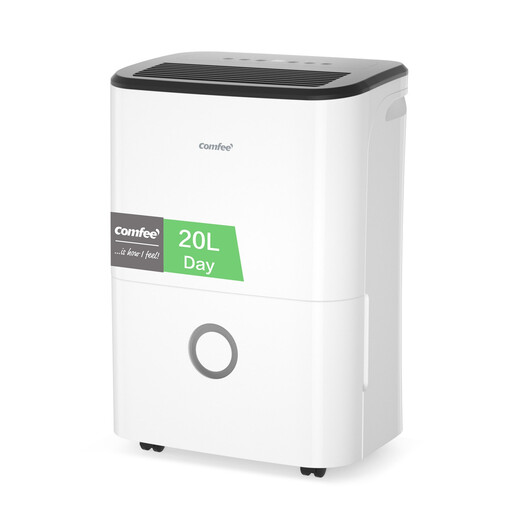
Why this product fits the profile: For households with medium-sized rooms up to around 40 m², this model offers a clearly defined performance class and essential features for a basement, utility room or living room.
The 3-litre tank is removable; a connection for continuous drainage is also provided. This helps reduce the need for frequent manual emptying.
Maximum 20 l/24 h, suitable for up to around 100 m³, 46 dB, timer, three operating modes and R290 according to product data.
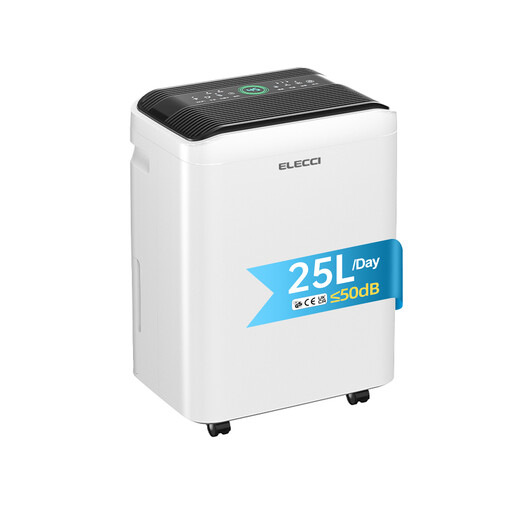
Why this product fits the profile: If you need to dehumidify larger rooms up to around 50 m² or areas with higher moisture levels, this gives you extra performance headroom and flexible drainage options.
The product description mentions both a 4.8-litre tank and continuous drainage. An automatic defrost function is provided for cooler rooms.
Up to 25 l/day according to the manufacturer, 36 dB, three fan speeds, 24-hour timer, R290 and a laundry drying mode.
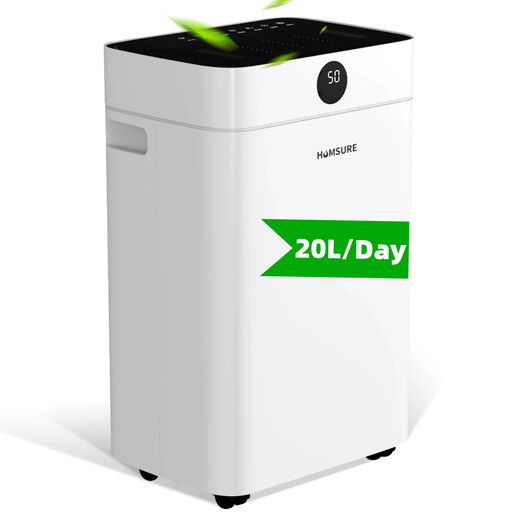
Why this product fits the profile: This model is aimed at users who want a dehumidifier for a basement, living area or laundry room with a variable target humidity setting.
The choice between tank operation and the included drain hose means the unit doesn't rely solely on manual emptying.
20 l/day according to the product description, adjustable target humidity from 40 to 80 %, auto-defrost, drying mode and castors.
We've put together a full, regularly updated list of products that fully meet these strict selection criteria and the safety regulations in force in the EU.
A dehumidifier can reduce excess moisture in the room air and thereby influence the conditions for condensation on cold surfaces. However, a dehumidifier for mould does not replace investigating the cause, nor adequate ventilation, heating or the repair of water damage. Visible mould should be professionally assessed and removed. Do not place the unit directly against a damp wall; air outlets must remain clear.
For running costs, you can multiply the power consumption by the operating time. A unit with 300 W theoretically uses around 0.3 kWh per hour of operation. In practice, a model with a humidity sensor or target value control will switch off intermittently depending on the room conditions. The product data and your electricity tariff provide the basis for a realistic calculation.
It can be, provided the room volume, moisture load and temperature are compatible with the unit. As well as the floor area, check the manufacturer's specification in m³. For a very damp basement or several connected rooms, a more powerful model may be needed.
The hose is attached to the designated connection and routed to a lower-level drain. With a suitable slope, the water flows out by gravity. First check the connection for leaks and avoid kinks in the hose.
This depends on the starting humidity, room size and desired target humidity. A timer, humidity sensor or automatic mode can limit the running time. For continuous operation, regular filter cleaning, clear air paths and a safe setup are important.