
Lieferung heute & morgen

Qualitätsgarantie

Willkommens-Angebote freischalten: KOSTENLOSE Lieferung | Bis zu 80 % RABATT | Kostenlose 30-Tage-JoyPlus-Testphase
App herunterladen
At barbecues, birthday parties, picnics and catered events, plates need to meet several requirements at once: they should be large enough, sturdy and as easy to dispose of as possible. Biodegradable disposable plates measuring 23 cm may look similar at first glance, but they can differ considerably in material, coating, shape and pack size.
Focusing only on terms such as “sustainable”, “compostable” or “extra sturdy” can easily lead you to choose a product that isn’t suitable for your plans. Three common misconceptions are particularly likely to result in the wrong purchase:
Many sugarcane plates, also known as bagasse plates, are made from the fibrous by-products of sugarcane processing. Product descriptions often refer to them as plates made from sugarcane fibre, biodegradable plates or compostable plates. They’re designed for hot and cold food, but you should always check the product details to make sure they’re suitable for your needs.
Paper plates, on the other hand, are made from card or paper and may have an inner coating. This coating affects how the plate handles grease and moisture. Plastic or melamine plates aren’t usually intended for single-use disposal, but they may be reusable. So, if you’re looking for sustainable disposable tableware, compare the material, disposal instructions and intended use—not just the marketing claims.
A diameter of around 23 cm is suitable for main courses, side dishes and typical portions at a barbecue or picnic. A high rim or multiple compartments can reduce the usable surface area.
For saucy food, a raised rim and sturdy construction are important. Three-compartment plates keep the main course, side dish and salad separate. For desserts or small snacks, a 15 cm plate is often enough. For larger portions, a diameter of 25 cm or more may be a better choice.
For sausages, grilled vegetables, potato salad and takeaway meals, look for terms such as grease-resistant, oil-resistant or water-resistant. These describe a product feature, but don’t guarantee performance with every type of food or for any length of time.
Pack size matters too: 50 disposable plates are a good choice for larger parties, catering or keeping a supply on hand. For a small household, 20 plates may be more economical. Before buying, it’s worth working out how many guests you’ll have, how many plates each person will need and how many spares to allow for.
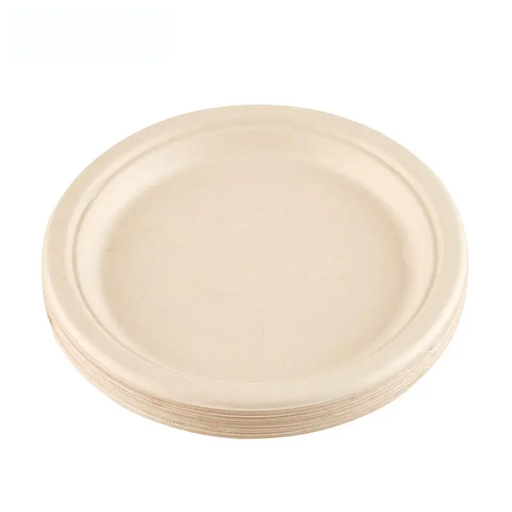
Why this product suits you: At 22.5 cm in diameter, these plates are close to the 23 cm size you’re looking for. The 20-plate pack is a good fit for smaller gatherings, picnics or occasional use at home.
The product details specify sugarcane fibre, as well as water and oil resistance. Microwave suitability is also stated; check the specific instructions before heating food.
Food-grade sugarcane fibre, 22.5 cm diameter, and described as biodegradable, water-resistant and oil-resistant.
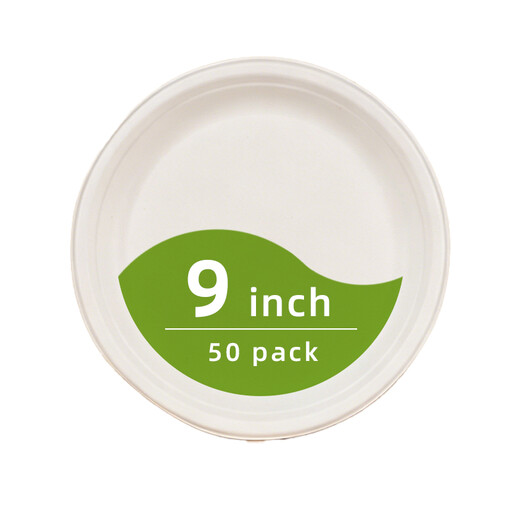
Why this product suits you: The 23 cm diameter and 50-plate pack are ideal for hosts who need a consistent plate size and plenty to spare for a barbecue, birthday party or picnic.
The stated dimensions match the plate size you’re looking for. The product name also specifies bagasse, hot and cold food, and use at picnics and barbecues.
23 cm diameter, pack of 50 and made from sugarcane fibre, according to the product details.
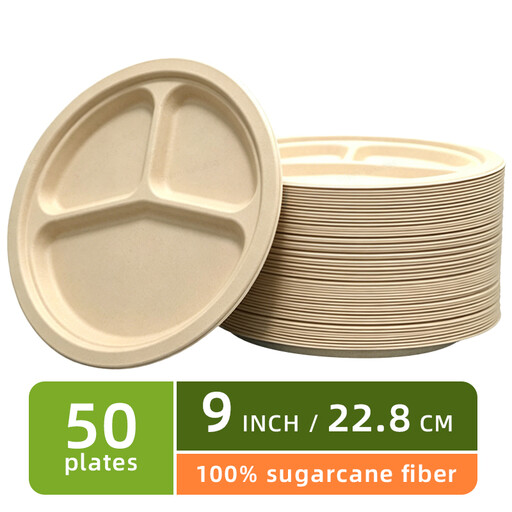
Why this product suits you: The three compartments are useful for catering, buffets and events where you want to serve different foods separately.
The three compartments help keep side dishes separate from the main course. The product description also specifies oil resistance and bagasse construction.
23 cm diameter, three compartments and 50 plates per pack. The product name states that they’re intended for catering and food service.
We’ve put together a complete, regularly updated list of products that meet these strict selection criteria and fully comply with the safety regulations in force in the EU.
Before placing your order, check the following:
It depends on the material and the product’s stated suitability. Sugarcane and bagasse plates are often sold for hot and cold food. Check the details for the specific product, and don’t leave very hot or liquid food on the plate for longer than necessary.
Not necessarily. Disposal depends on local authority rules and on the product’s certification or the conditions at a suitable composting facility. Before disposing of the plates, check the packaging and your local waste provider’s guidance.
As a simple guide, allow at least one plate per guest for the main course. If you’re serving a buffet or dessert, or expect people to go back for seconds, it’s worth having some spares. A pack of 20 is often enough for a small gathering, while packs of 50 are a good choice for barbecues, catering and larger events.