
Lieferung heute & morgen

Qualitätsgarantie

Willkommens-Angebote freischalten: KOSTENLOSE Lieferung | Bis zu 80 % RABATT | Kostenlose 30-Tage-JoyPlus-Testphase
App herunterladen
When looking for 230 V LED recessed spotlights for a bathroom, kitchen, living room or bedroom, most people compare wattage, colour temperature and set price. But it’s easy to overlook important details: will the ceiling cut-out actually fit? Is there enough installation depth in a suspended ceiling? And is the light merely splashproof, or suitable for the intended area of your bathroom?
This buying guide helps homeowners, tenants, renovators and DIY enthusiasts understand technical specifications and avoid common purchasing mistakes.
A 230 V LED recessed spotlight can be connected directly to the mains and generally doesn’t need a separate transformer. This makes planning easier, but it doesn’t replace proper installation. The circuit must be switched off before any electrical work begins. A qualified electrician should carry out the connection in accordance with current regulations.
Also check whether a connection cable, terminals or other installation materials are included. A 15 cm cable can make wiring easier, but the existing connection box and installation setup still need to be suitable.
Flat LED recessed lights are often promoted for low ceilings. However, several measurements matter:
For a light with an installation depth of 25,5 mm, you’ll also need to allow for the connection space. A ceiling cut-out that’s too small or too large can make installation difficult or prevent the light from being held securely in place. So measure any existing openings accurately before you buy.
IP44 LED recessed spotlights are protected against solid objects above a certain size and splashing water from different directions. This doesn’t mean they’re suitable for direct jets of water, consistently high humidity or every zone in a bathroom.
When choosing LED recessed spotlights for a bathroom, consider the IP rating as well as the installation location, distance from water sources, ceiling construction and the manufacturer’s instructions. IP44 may be suitable for certain dry or splash-prone indoor areas, but it doesn’t mean a light is fully waterproof.
A 6500 K recessed spotlight produces cool white light. This colour temperature has a relatively crisp, practical feel and can work well in bathrooms, utility rooms, workspaces or offices. In living rooms and bedrooms, a warmer colour temperature is often preferred.
If you’re planning to fit the same range of lights in several rooms, check whether you want a fixed colour temperature or a switchable option. A light with 3000, 4000 and 6500 K settings offers more flexibility, but you’ll need a compatible switch or the specified control.
Wattage describes electrical consumption, not brightness directly. Luminous flux, measured in lumens, is a more useful figure for comparing lights. A 9 W LED ceiling spotlight producing 720 lumens gives off a different amount of light from a 6 W model producing 430 lumens.
If you’re buying a set of lights, plan for the brightness you want by adding up the total lumen output. Beam angle, room size, ceiling height and wall colour also affect how the light looks.
Non-dimmable LED recessed lights are straightforward to use if you don’t need to adjust the brightness. They shouldn’t be connected to an incompatible dimmer. With dimmable models, check that the existing dimmer is compatible with the light.
Other details worth checking include:
A stated lifespan is a manufacturer’s estimate, not a guarantee that every installation will have identical operating conditions.
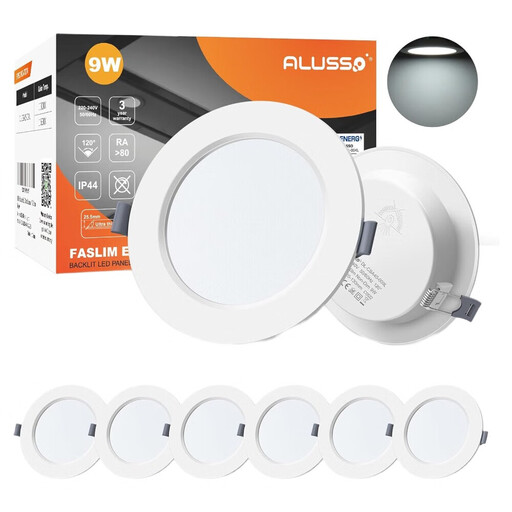
Why this product suits this profile: The set of 6 gives you a predictable number of lights for several rooms or even ceiling lighting. With a stated installation depth of 25,5 mm, it’s suitable for ceilings with limited space.
The light’s dimensions and the ceiling cut-out are specified: 145 mm diameter and a 115–135 mm cut-out. According to the product details, it connects directly to 220–240 V without a separate transformer.
9 W, 720 lumens, 6500 K, IP44 and a stated lifespan of over 30,000 hours according to the product details. This model isn’t dimmable.
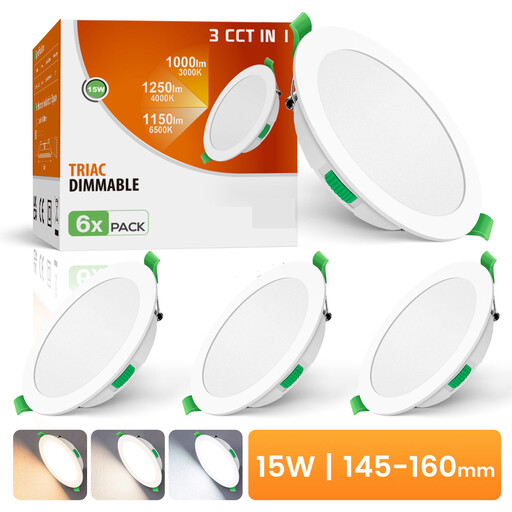
Why this product suits this profile: Switch between 3000, 4000 and 6500 K to suit living areas, workspaces and damp rooms. According to the product details, the dimming function covers a range from 10 to 100 per cent.
The product details specify both the required cut-out of 145–160 mm and the installation depth of 32 mm. This makes it easier to check your ceiling before buying.
15 W, 1200 lumens, IP44 and a 120-degree beam angle according to the product description. The light is designed for direct connection to 230 V.

Why this product suits this profile: With an installation depth of 25,5 mm, this set is designed for low ceilings and shallow cavities. Its cool white light is particularly suited to work and utility areas where clear, practical lighting is preferred.
The required ceiling cut-out of 95–110 mm is clearly specified. The product details also state that it connects directly to AC 220–240 V, comes with a 15 cm cable and isn’t dimmable.
6 W, 430 lumens, IP44, CRI 80 and a stated lifespan of over 30,000 hours according to the product details. This model is designed for indoor use.
Before placing your order, make a note of how many lights you need, the ceiling cut-out size and the available installation depth. If you’re buying a set of 6, also check whether all the lights will run on the same circuit and whether your existing ceiling can accommodate the cut-outs.
Electrical power affects running costs. A 6 W light uses less electricity than a 9 W model over the same period, but the actual lighting in the room depends on the lumen output you need. The energy efficiency class shown on the energy label should also be part of your comparison.
A direct mains connection is technically possible, but in Germany it should be carried out by a qualified electrician. Before installation, the power supply must be switched off and the circuit checked to confirm it’s not live.
IP44 may be suitable for certain indoor areas where splashing is a risk. However, this rating doesn’t allow for direct jets of water or underwater use. The specific installation location must be assessed in line with current installation requirements and the manufacturer’s instructions.
Manufacturers often state an average lifespan, for example 25,000 or 30,000 hours. This figure depends on operating time, ambient temperature, heat dissipation and correct installation. It’s a technical estimate, not a guaranteed service life.
We’ve put together a complete, regularly updated list of products that meet these strict selection criteria and fully comply with the safety regulations in force in the EU.