
Lieferung heute & morgen

Qualitätsgarantie

Willkommens-Angebote freischalten: KOSTENLOSE Lieferung | Bis zu 80 % RABATT | Kostenlose 30-Tage-JoyPlus-Testphase
App herunterladen
23 cm sugarcane disposable plates are a practical alternative to reusable tableware for many households, families and event organisers. Their diameter is suitable for main courses, side dishes and desserts, without taking up too much space on the table. At the same time, bagasse plates, traditional paper plates and bamboo-fibre plates differ considerably in terms of material, heat resistance, pack size and disposal.
Anyone who only looks for terms such as “biodegradable” or “extra sturdy” can easily overlook important details. Three common purchasing misconceptions occur particularly often:
A plate with a 23 cm diameter is a highly versatile size. It provides enough room for a standard meal and fits into many serving and transport boxes. A raised rim can be useful for dishes with sauce. For cake, fruit or small snacks, however, 15 to 18 cm is often sufficient.
Divided models with three or five compartments are suitable when side dishes, the main course and sauces need to be kept separate. For a traditional barbecue or a picnic without separate components, a round disposable plate is usually the simpler option.
Bagasse plates are made from pressed sugarcane fibres. The product information should make clear whether the plate is described as water- and grease-resistant. These properties can help reduce sogginess when serving moist food, but they do not replace checking the specific usage instructions.
Traditional compostable paper plates, on the other hand, are made from paperboard and may have a food-safe inner coating. The Jeden Tag Paper Plate 23cm White is described as having a grease-resistant, food-safe coating. At the same time, according to the product description, these plates are not intended for use in microwaves or with boiling liquids.
“Biodegradable” and “compostable” are also not automatic permission to dispose of a product in a home compost heap. The information on the packaging and local disposal regulations are decisive. In Germany, soiled disposable plates often do not belong in the paper recycling bin.
For a private birthday party with only a few guests, a pack of 20 plates may be sufficient. For a barbecue, club event or catering service, 50 plates or more are often more practical. In addition to the number of guests, allow for plates for second helpings, damaged items and additional courses.
For catering and takeaway use, stackable shapes, low weight and, where appropriate, several compartments are also important. At high temperatures, in direct contact with naked flames or in a microwave, the relevant manufacturer’s instructions must be followed.
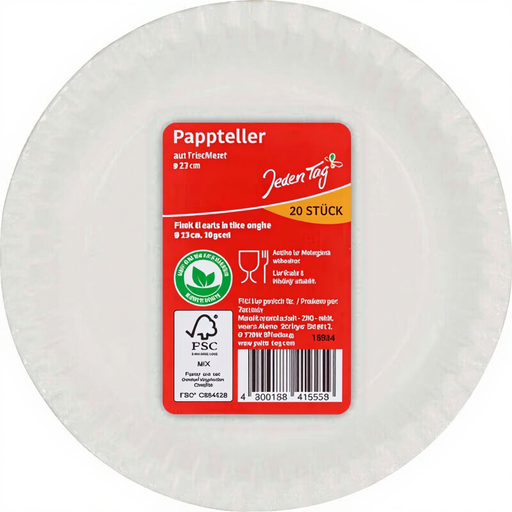
Why this product suits this profile: The pack contains 20 white paperboard plates with a diameter of 23 cm, making it suitable for smaller celebrations, everyday use and a modest picnic.
The product details clearly state the material, diameter, pack size and restrictions on microwave use.
23 cm diameter, grease-resistant inner coating according to the product description, and 20 plates per pack.
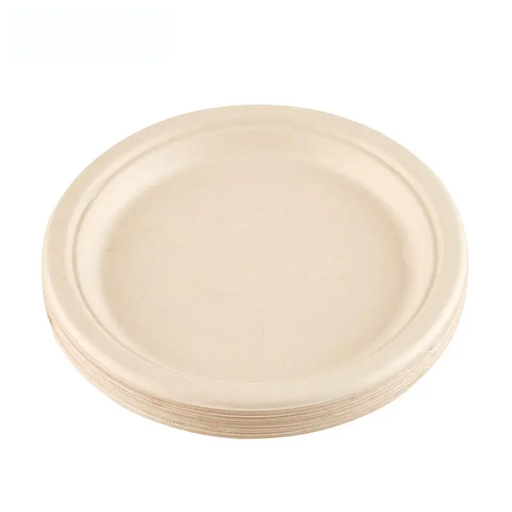
Why this product suits this profile: The plates are made from food-grade sugarcane fibre, are intended for hot and cold food, and are described as water- and oil-resistant.
The details specify the fibre material and intended properties rather than relying solely on a general eco-friendly claim.
22.5 cm diameter, 20 plates per set and microwave suitability according to the product description.
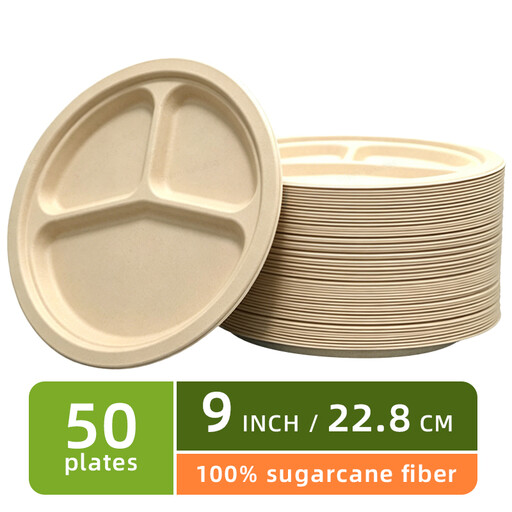
Why this product suits this profile: The pack of 50 plates is designed for larger celebrations, catering, food service and events serving several dishes.
The product name highlights 23 cm, 50 plates, three compartments and intended use for catering and celebrations.
Pack of 50, 23 cm diameter and three separate sections according to the product information.
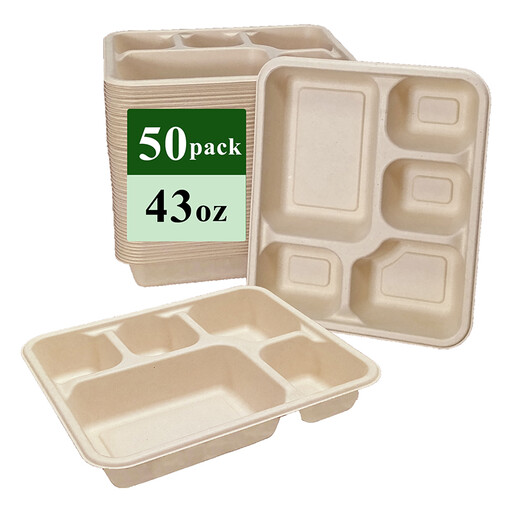
Why this product suits this profile: Five compartments and a stated capacity of 43 oz make it easier to serve the main course, side dishes and sauces separately.
The compartments help prevent different foods from mixing; the product also includes information about single use, heat and microwave use.
Pack of 50, five compartments and bamboo fibre as the stated material.
We have put together a complete, regularly updated list of products that fully meet these strict selection criteria and the safety regulations applicable in the EU.
That depends on the information provided for the individual product. Sugarcane-fibre plates are often described as suitable for hot and cold food. Nevertheless, users should follow the manufacturer’s instructions when serving very hot, liquid or particularly greasy dishes. Suitability for hot food does not automatically mean approval for boiling liquids or oven use.
Their usable life depends on the weight, moisture and temperature of the food. Bagasse plates or sturdy paper plates designed for this purpose are intended for a single meal. Their durability may be lower when serving soup, very moist side dishes or food that is left standing for a long time. For these types of menu, a model explicitly described as water- and oil-resistant is recommended.
Disposal depends on the material, level of soiling and local regulations. Biodegradable does not automatically mean that a plate can go in the food-waste bin or home compost. You should therefore check the packaging information and the rules set by your local waste disposal provider. Empty, clean paperboard packaging should generally be disposed of separately from the used plate.