
Lieferung heute & morgen

Qualitätsgarantie

Willkommens-Angebote freischalten: KOSTENLOSE Lieferung | Bis zu 80 % RABATT | Kostenlose 30-Tage-JoyPlus-Testphase
App herunterladen
A 24 cm frying pan fits many standard hobs and is well suited to smaller households, individual portions and meals for one or two people. However, its compact size doesn’t guarantee that it will perform well every day. The coating, base construction, handle, hob compatibility and care instructions all matter.
There are three common mistakes to avoid when buying:
A non-stick frying pan makes it easier to turn out eggs, fish, pancakes and vegetables. However, coatings can vary considerably:
A PFAS-free pan shouldn’t be marketed using only vague claims such as “healthy” or “free from harmful substances”. Look for specific information about the material, such as whether it’s PFAS-, PFOA- or PTFE-free, and remember that these terms don’t mean the same thing.
An induction frying pan, 24 cm, needs a suitable base. A flat base is also important on gas, electric and ceramic hobs to help distribute heat evenly rather than concentrating it in one spot.
Before you buy, check:
A frying pan suitable for all hob types is especially practical if you move house or have different types of hob in your household. The claim “suitable for all hob types” should explicitly include gas, electric, ceramic and induction.
A pan with a temperature indicator can help guide you while preheating. However, colour-change indicators aren’t a substitute for a thermometer, and they don’t show exactly the same temperature on every model. Treat them as a handy guide, not a precise measuring tool.
Cleaning also affects how long your pan lasts:
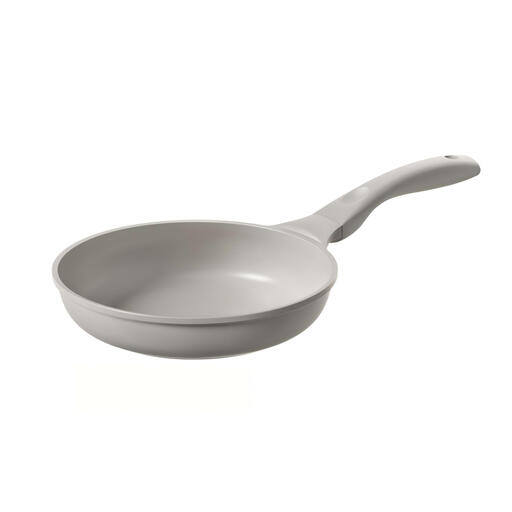
Why it suits this type of buyer: According to the product description, this 24 cm ceramic pan is suitable for induction, gas and electric hobs, making it a compact option for everyday cooking.
The product details explicitly state that the ceramic coating is PTFE-, PFOA- and PFAS-free, and that the pan is suitable for several hob types.
Ceramic coating, ergonomic handle and, according to the product details, dishwasher-safe.
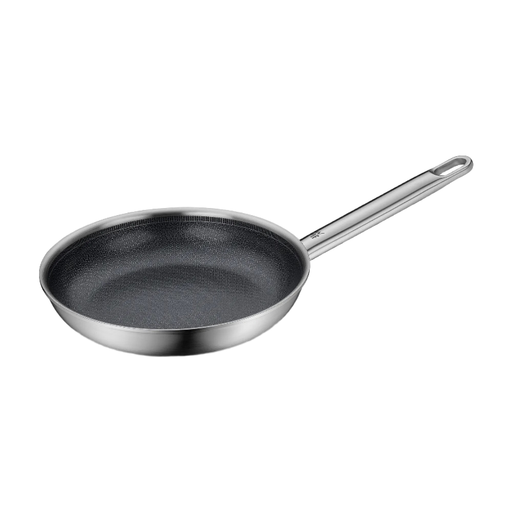
Why it suits this type of buyer: Its multi-layer construction, combining Cromargan stainless steel with an aluminium core, is designed to deliver even heat distribution and versatile performance.
The protective mesh sits above the PermaDur coating. Even so, avoid abrasive sponges and unnecessary overheating.
Suitable for all common hob types, including induction; dishwasher-safe and fitted with a stainless steel handle.
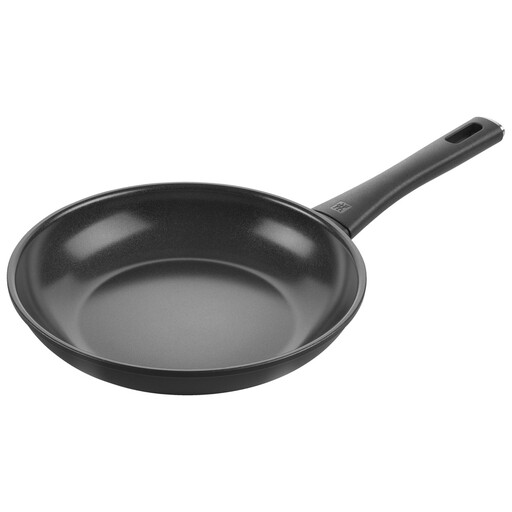
Why it suits this type of buyer: This pan combines a forged aluminium body with a CeraForce ceramic coating that, according to the product details, is PTFE- and PFOA-free.
The material details name the coating specifically. To help protect it, low to medium heat and soft kitchen utensils are recommended.
Induction-compatible base, aluminium core and stated oven use up to 250 °C.
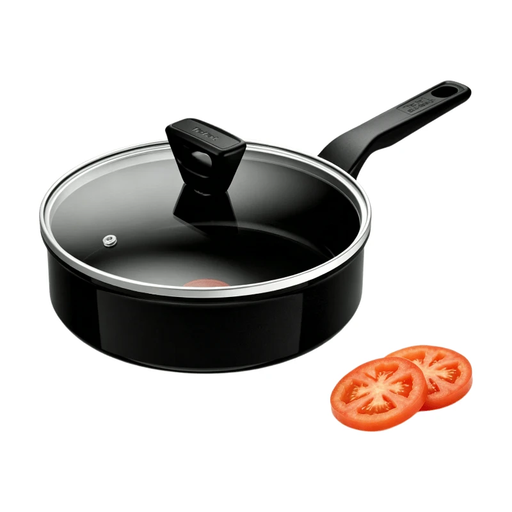
Why it suits this type of buyer: Its deeper shape, stated 3.24-litre capacity and glass lid make it suitable for braising and preparing sauces, too.
The Thermo-Spot indicator helps you judge when the pan is preheated. The lid helps contain splashes and lets you keep an eye on the cooking process.
Listed as suitable for induction, gas, ceramic, halogen and electric hobs; ceramic coating, glass lid and, according to the product details, dishwasher-safe.
We’ve put together a complete, regularly updated list of products that meet these strict selection criteria and the safety regulations in force in the EU.
Even a high-quality frying pan needs the right care. Don’t heat coated pans empty for extended periods, and use medium heat where possible. On induction, the temperature can rise particularly quickly, so gradual preheating is usually better than using the highest setting.
Follow the manufacturer’s cleaning instructions. A dishwasher-safe frying pan can be cleaned in the machine, but handwashing with a soft sponge is often gentler. If you stack several pans, place a protective layer between their bases.
This size is usually suitable for one or two people. You can generally cook two small pieces of meat, fish fillets, eggs or portions of vegetables without taking up much space. For larger households, a bigger pan may be a better choice.
Look for the explicit label “induction-compatible”. An aluminium body on its own isn’t enough. Models with a stainless steel or induction base are designed for induction hobs, provided the manufacturer confirms this.
There’s no set lifespan. It depends on the temperature, utensils, cleaning method and how often you use the pan. Metal utensils, heating the pan empty, sudden temperature changes and harsh cleaning products can damage the coating prematurely.