
Lieferung heute & morgen

Qualitätsgarantie

Willkommens-Angebote freischalten: KOSTENLOSE Lieferung | Bis zu 80 % RABATT | Kostenlose 30-Tage-JoyPlus-Testphase
App herunterladen
A 24 cm frying pan is a great fit for many British households. Its diameter is ideal for singles and couples, as well as smaller portions. However, some product claims can quickly lead to the wrong purchase. A coating may be advertised as particularly durable even though the pan is not suitable for high temperatures or use in the oven. Likewise, the description “suitable for all hob types” says nothing about the pan’s actual oven resistance or care requirements.
This buying guide explains which details matter before purchasing a 24 cm non-stick frying pan, a stainless steel pan or a cast-iron version.
A non-stick frying pan makes it easier to cook delicate foods. However, this does not automatically mean it is suitable for very high temperatures, searing or oven use. You should therefore check:
For PTFE-coated models, follow the usage temperature specified by the manufacturer. A scratch-resistant surface does not necessarily mean that it is unaffected by knives, wire wool or abrasive cleaning products.
A frying pan for all hob types should be explicitly approved for gas, electric, ceramic and induction hobs. With induction, the ferromagnetic pan base is crucial. The diameter of the base must also match the cooking zone. For example, a pan with a 24 cm rim diameter may have a significantly smaller contact base.
A dishwasher-safe frying pan may be placed in the dishwasher according to the product description, but harsh detergents, high temperatures and frequent wash cycles can put greater strain on handles, coatings and surfaces. With coated models, careful hand washing often helps to extend the product’s service life. For cast iron or carbon steel, the dishwasher is generally not suitable.
24 cm usually refers to the upper rim of the pan. The base diameter is more important for actual heat transfer. For example, a base of around 18 cm may be a good match for a corresponding induction zone. This size is practical for one person or two smaller portions; for larger quantities, a 28 cm pan may be more suitable.
You should also consider the height and capacity. A low rim makes it easier to turn food and evaporate liquid. A higher rim is more suitable for vegetable dishes, sauces or stews.
When considering coatings, read the exact coating description, permitted temperature and care instructions. Terms such as “durable” or “scratch-resistant” should not be the sole reason for choosing a product.
With an ovenproof frying pan, the pan body and handle must be considered together. For example, a metal handle may be suitable for a higher temperature than a plastic handle. The manufacturer’s specification is always decisive. A lid may also have a different temperature limit.
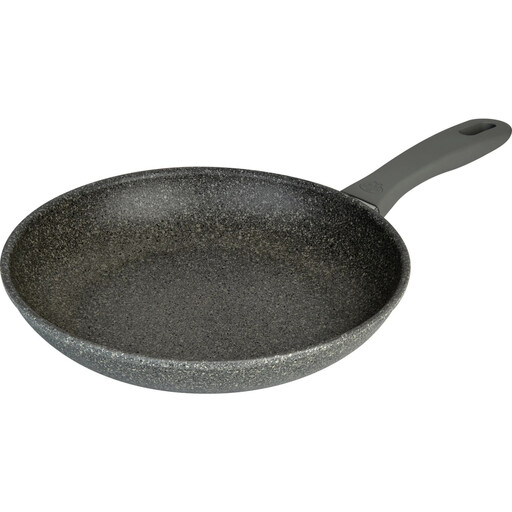
Why this product suits this profile: The aluminium construction with five-layer GRANITIUM Extreme coating is designed for everyday portions for one or two people. It is approved for gas, electric, ceramic and induction hobs.
Its oven suitability is specified as up to 160 °C. This makes it easier to plan around the actual limit than an imprecise marketing claim.
Dishwasher-safe, Thermopoint heat indicator and a stated weight of around 1.04 kg.
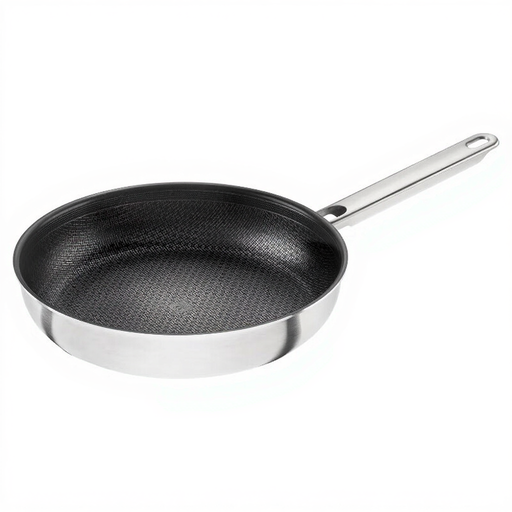
Why this product suits this profile: The three-layer construction of 18/10 stainless steel and an aluminium core supports even heat distribution. The Permaresist Ultra coating is designed for induction and other hob types.
The specifications state both induction compatibility and the specific oven limit of 200 °C. Nevertheless, cleaning the coating with a soft sponge is recommended.
2.11-litre capacity, stainless steel handle, wide pouring rim and dishwasher compatibility.
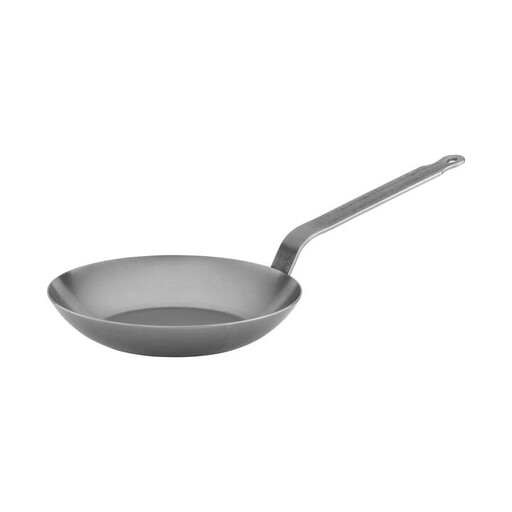
Why this product suits this profile: Carbon steel is suitable for high temperatures and is specified for gas, induction, ceramic hobs, oven use and open flames. This pan is aimed at users who are happy to maintain a patina.
The care requirements are clear: seasoning, drying immediately and oiling. If you are looking for a dishwasher-safe frying pan, you should choose a different material.
No chemical non-stick coating; a natural patina can develop through regular use.
Regardless of the material, a few basic rules will help:
If you are specifically looking for a 24 cm cast-iron pan, you can find more suitable models in the 24 cm cast-iron pan category.
We have put together a complete, regularly updated list of products that fully meet these strict selection criteria and the safety regulations applicable in the EU.
For singles and couples, a pan for 1 to 2 people is often a good choice. It can be used to prepare two smaller pieces of meat, fish fillets, egg dishes or portions of vegetables. In addition to the rim diameter, the usable base is an important factor.
Look for the explicit label induction-compatible or “suitable for induction”. The base diameter should also match the cooking zone. According to the product specifications, the coated models and the carbon steel pan mentioned in this guide are suitable for induction.
Its service life depends on the temperature, cleaning method, kitchen utensils and frequency of use. Avoid overheating, heating the pan while empty and abrasive cleaning products. For very high temperatures or frequent high-heat searing, carbon steel, stainless steel or cast iron may be suitable alternatives, provided their care requirements fit your household.