
Lieferung heute & morgen

Qualitätsgarantie

Willkommens-Angebote freischalten: KOSTENLOSE Lieferung | Bis zu 80 % RABATT | Kostenlose 30-Tage-JoyPlus-Testphase
App herunterladen
A 24 cm frying pan fits into many British kitchens and is practical for singles, couples and smaller portions. However, the compact size doesn't automatically make it a good purchase decision. What really matters is hob compatibility, coating, weight, cleaning and how you'll actually use it day to day.
As a Joybuy Product Recommendation Officer, I filter product specifications according to clear, verifiable criteria. The key point is this: if you only look at terms like "non-stick", "ceramic" or "suitable for all hob types", you can easily miss important limitations.
A pan for all hob types should be explicitly approved for gas, electric, ceramic and induction. For induction, you need a magnetic base that's large enough. The actual usable frying surface can be smaller than the 24 cm top diameter.
The size of the cooking zone also matters: with the Silit Belluna, the product information states that a hob ring of around 18 cm is optimal. A very large induction zone can therefore heat the edges more slowly than the centre.
A coated 24 cm frying pan isn't automatically suitable for high temperatures or the oven. PTFE coatings are often designed for low-fat frying and easy cleaning, but they shouldn't be overheated when empty. Ceramic coatings also have their own temperature and care guidelines.
Look for specific details like "oven-safe up to 70 °C, 160 °C or 230 °C". These values are not interchangeable. A plastic or Bakelite handle can further limit the maximum oven temperature.
A dishwasher-safe frying pan can be cleaned in the machine, but detergent, high temperatures and mechanical stress can wear down the coating more than gentle hand washing. "Dishwasher-safe" therefore describes a possible cleaning method, not necessarily the best care for the pan's entire lifespan.
A frying pan for 1 to 2 people at 24 cm offers enough space for, for example:
For several large steaks or family portions, a 28 cm pan is usually more practical. However, with small hobs and limited storage space, the 24 cm format has clear advantages.
A 24 cm non-stick pan with a PTFE coating can make it easier to release delicate foods and is often suitable for low-fat frying. Metal utensils and abrasive sponges should be avoided unless the manufacturer states otherwise.
A 24 cm ceramic pan uses a ceramic or mineral non-stick layer. Depending on the model, it can be PTFE- and PFOA-free. This should be clearly stated in the product data and not just assumed from the word "ceramic". Ceramic coatings also benefit from medium heat, suitable kitchen utensils and gentle cleaning.
A lightweight frying pan made from aluminium sits comfortably in your hand and usually heats up quickly. Multi-layer constructions made from stainless steel and aluminium can be heavier, but offer a robust build and even heat distribution.
Also check:
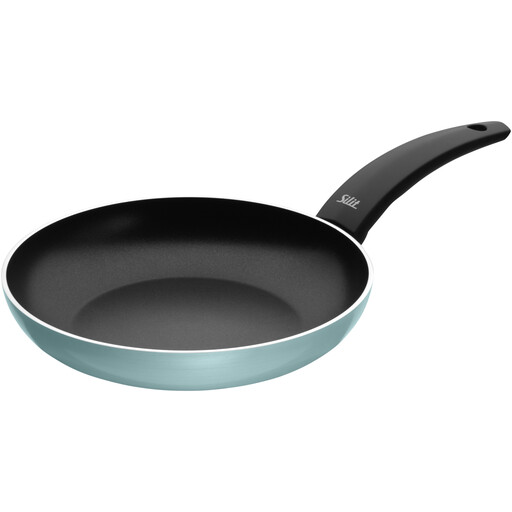
Why this product fits the profile: According to the product information, the aluminium construction is lightweight, heats up quickly and is suitable for small everyday portions. The pan is designed for gas, electric, ceramic and induction hobs.
The specifications list specific hob types, an optimal cooking zone size and a temperature range. However, oven use is only stated up to 70 °C – this prevents false expectations.
PTFE coating, low weight, even heat distribution and, according to the supplier, a five-year manufacturer's warranty.
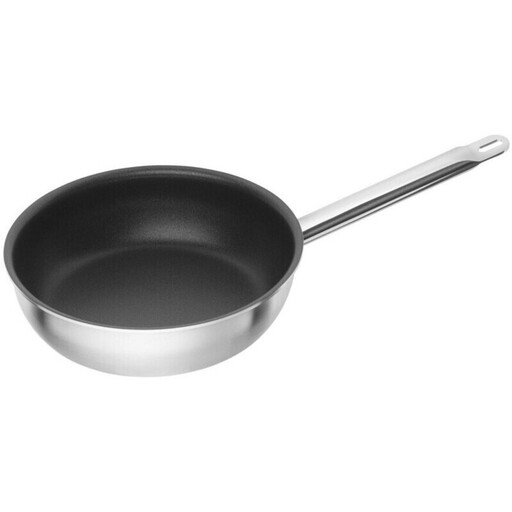
Why this product fits the profile: The multi-layer SIGMA-Clad construction with an aluminium core is designed for rapid heat absorption and even distribution. The 18/10 stainless steel body appeals to users who value a solid build.
The maximum oven temperature of 230 °C is clearly stated. The use of non-metallic kitchen utensils is also explicitly recommended.
Duraslide Ultra coating, induction suitability, wide pouring rim and dishwasher suitability according to the product description.
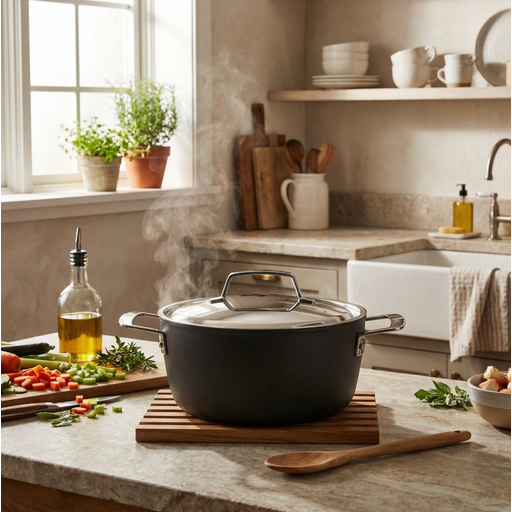
Why this product fits the profile: The set of pan and glass lid is ideal for users who plan to braise or keep food warm in a compact pan, as well as frying.
The specifications state the maximum temperature of 230 °C, suitability for all hob types and the recommendation for low to medium heat.
Titanium non-stick coating, glass lid, stainless steel handles, oven suitability and dishwasher suitability according to the supplier.
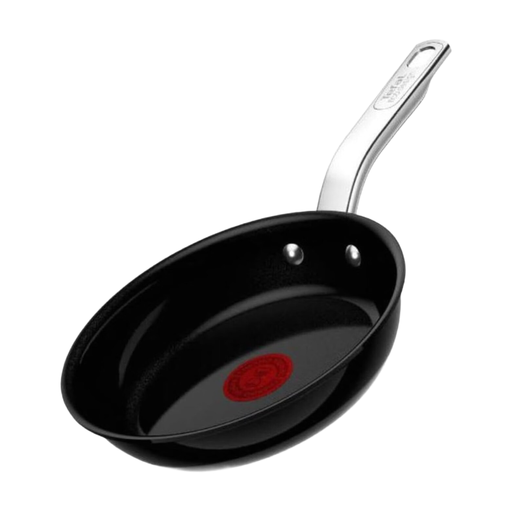
Why this product fits the profile: The ceramic coating and built-in temperature indicator are interesting for users who look for a PFAS-free coating specification and don't have an induction hob.
The limitation is clear: according to the product data, this model is not suitable for induction. This helps you avoid a wrong purchase if you have that type of hob.
Ceramic coating, Thermo-Signal indicator and suitability for gas, electric and smooth ceramic glass hobs.
Regardless of whether you choose a PTFE or 24 cm ceramic pan, how you treat it affects the coating:
A small amount of oil can be useful depending on the dish. Low-fat frying doesn't mean every recipe has to be cooked completely without fat.
We've put together a complete, regularly updated list of products that fully meet these strict selection criteria and the safety regulations in force in the EU.
This size is typically suitable for one to two people. Two smaller fillets, omelettes, vegetables or individual pan-fried dishes can be prepared easily. For family portions, a larger diameter is more practical.
No. Look for an explicit statement like "induction suitable" or "for all hob types". The Tefal Renew+, for example, is not designed for induction according to the product description, while models from Silit, Ballarini, WMF and Demeyere have the relevant specifications.
It's not possible to give a reliable general lifespan. It depends on heat, kitchen utensils, cleaning and frequency of use. Avoid overheating, metal cutlery and abrasive cleaning products. Even a stated warranty doesn't replace following the care instructions.