
Lieferung heute & morgen

Qualitätsgarantie

Willkommens-Angebote freischalten: KOSTENLOSE Lieferung | Bis zu 80 % RABATT | Kostenlose 30-Tage-JoyPlus-Testphase
App herunterladen
A 24 cm induction frying pan is a good fit for many homes. It’s often the right size for one or two portions, takes up little storage space and usually works efficiently on a compatible induction hob. But choosing the right pan involves more than just its diameter. The coating, base construction, handle material and maximum temperature all affect how well it suits your cooking habits.
An induction pan has a magnetic base. However, that doesn’t always mean it’s suitable for gas, ceramic or electric hobs too. If you want to use the pan on several types of hob, check that it’s explicitly listed as compatible with gas, electric, ceramic and induction hobs.
There may also be restrictions for halogen or infrared hobs. For some models, you’ll need to check the manufacturer’s specifications.
Descriptions such as “durable”, “mineral-reinforced” or “scratch-resistant” refer to specific design features, but they don’t replace careful use. Metal utensils, abrasive sponges, heating the pan empty for too long and sudden temperature changes can all put a coated frying pan under strain.
For a longer service life, wooden, silicone or nylon utensils are usually a more practical choice. And while a pan being dishwasher-safe is convenient, frequent intensive wash cycles may still affect the coating over time.
The measurement for a 24 cm non-stick pan usually refers to the top rim. The usable base can be considerably smaller. For induction, the base ring should match the cooking zone as closely as possible. A small base on a large zone can affect heat distribution, while an oversized pan may take longer to heat up.
Aluminium heats up relatively quickly and can make for a lightweight pan. Stainless steel is hard-wearing and is often combined with an aluminium core to help distribute heat more evenly. A coated stainless steel pan combines a metal outer construction with a cooking surface that’s easier to clean.
For a ceramic pan, check that the product is specifically described as having a ceramic non-stick coating, and find out what temperature limits apply. Likewise, check the specific product details to confirm whether a pan is free from PFAS, PFOA or PTFE rather than relying on marketing terms alone.
For a pan suitable for all hob types, check that the specifications explicitly confirm this for the particular model. Also check:
A plastic handle can significantly limit oven use. Stainless steel handles often allow for higher temperatures, but always follow the specific manufacturer’s guidance.
A dishwasher-safe frying pan is convenient to clean. Even so, many manufacturers recommend hand-washing coated surfaces with mild washing-up liquid and a soft sponge. Let the pan cool before cleaning it, and don’t put a hot pan straight into cold water.
Before buying an oven-safe frying pan, don’t rely on the words “oven-safe” alone. The maximum temperature may vary depending on the handle, lid and coating.
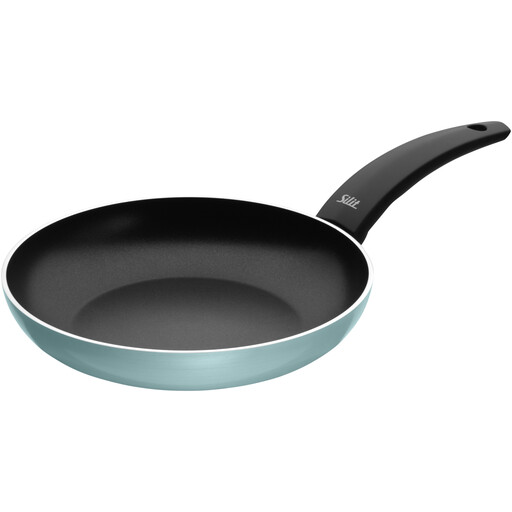
Why it suits this cooking profile: The aluminium construction is lightweight and, according to the product details, suitable for gas, electric, ceramic and induction hobs. This makes the pan a versatile choice for everyday cooking and smaller households.
The product details list all common hob types and specify an oven limit of 70 °C. This means you can take its limited oven use into account before buying.
Coated aluminium, 24 cm diameter, plastic handle and, according to the product details, a five-year manufacturer’s warranty.
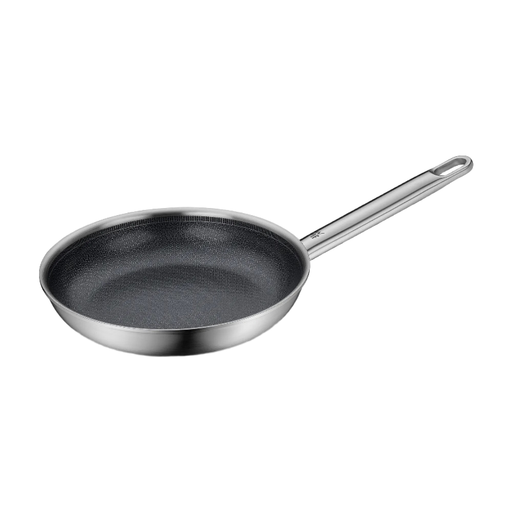
Why it suits this cooking profile: The combination of Cromargan stainless steel, an aluminium core and a PermaDur coating is designed for households looking for a durable construction and versatility across different hob types.
According to the product description, the honeycomb structure helps protect the coating from some mechanical wear. Suitable utensils and moderate heat are still advisable, though.
Suitable for induction and all common hob types, dishwasher-safe and, according to the product details, oven-safe up to 230 °C.
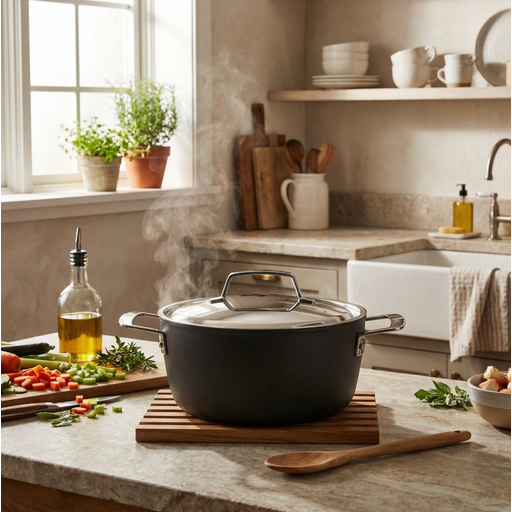
Why it suits this cooking profile: If you want to braise or cook with a lid as well as fry, this pan comes with a lid and has a stated capacity of 4.3 litres.
The maximum temperature is stated as 230 °C. If you use the pan in the oven, make sure you follow the product guidance for the lid.
Aluminium body, titanium non-stick coating, glass lid and suitable for induction, gas, electric and ceramic hobs.
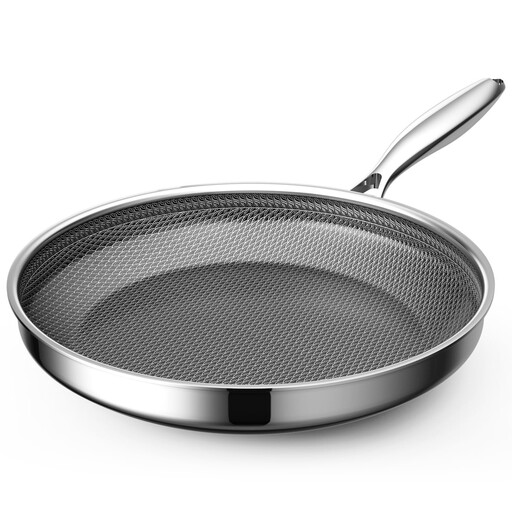
Why it suits this cooking profile: Its three-layer construction, with a stainless steel inner surface, aluminium core and ceramic honeycomb coating, will appeal to buyers who want to compare specific material details.
The product description clearly lists the material layers and states that the pan is free from PFAS, PFOA and PTFE. This makes it easier to understand the type of coating before you buy.
Suitable for induction and other hob types, dishwasher-safe and, according to the product details, oven-safe up to 260 °C.
We’ve put together a complete, regularly updated list of products that meet these strict selection criteria and fully comply with the safety regulations in force in the EU.
A 24 cm pan is often a good size for one or two portions. However, the actual base diameter matters, as the induction zone needs to detect the magnetic base and heat it as evenly as possible.
There’s no single answer, as it depends on the temperature, utensils, cleaning method and how often you use the pan. Gentle heating, hand-washing and soft kitchen utensils can help reduce wear on the coating.
No. The ceramic coating alone doesn’t determine whether a pan is oven-safe. The handle, lid and pan body each have their own temperature limits. Check the maximum temperature for the specific model before using it in the oven.