
Lieferung heute & morgen

Qualitätsgarantie

Willkommens-Angebote freischalten: KOSTENLOSE Lieferung | Bis zu 80 % RABATT | Kostenlose 30-Tage-JoyPlus-Testphase
App herunterladen
A 24 cm induction frying pan is a good fit for many households: its diameter is typically suited to one or two portions, omelettes, vegetables, fish or smaller cuts of meat. But choosing a pan is about more than colour and price. What matters is whether it works with your hob, as well as its coating, temperature limits and day-to-day care.
An induction-compatible pan may be suitable for gas, electric, ceramic and induction hobs without being approved for oven use. The handle often sets the temperature limit. For example, a plastic or Bakelite handle may be rated for a much lower temperature than a stainless steel one.
So check for two separate details:
According to the product details, the Silit Belluna is suitable for gas, electric, ceramic and induction hobs. It is heat-resistant up to 260 °C, but its stated oven-safe temperature is only 70 °C. A pan with a stainless steel handle, on the other hand, may be suitable for higher oven temperatures.
A non-stick frying pan makes it easier to turn delicate foods and can help you cook with less fat. However, the coating’s condition depends on temperature, utensils and cleaning. Metal turners, knives, wire wool and abrasive cleaning products can damage the surface.
So even a surface advertised as a scratch-resistant frying pan should not be deliberately scraped with metal utensils. It’s best to use wooden, silicone or heat-resistant plastic utensils. Always follow the manufacturer’s specific care instructions.
The 24 cm measurement usually refers to the top rim. The induction base may be smaller. For several models, for example, the base measures around 18 cm across. This affects how much of the pan heats directly and whether it matches the size of your cooking zone.
Before buying, compare the base diameter with the shape of your induction cooking zone. A pan that’s too large for a small cooking zone may not heat evenly.
A 24 cm coated aluminium frying pan is usually lightweight and heats up quickly. PTFE coatings, such as those used on the Silit Belluna and certain stainless steel pans, are designed to be easy to clean and suitable for cooking with little fat. Avoid overheating the pan, especially by heating it empty for a long time.
Depending on the model, a 24 cm ceramic pan may be free from PTFE. The Ballarini pan is described as having a mineral CeraForce ceramic coating that is free from PTFE and PFOA. Ceramic surfaces are often sensitive to high heat, metal utensils and sudden changes in temperature. Let the pan cool completely before cleaning it.
An uncoated carbon steel pan, such as the BALLARINI Carbon Steel version, needs seasoning and regular care. It can withstand high temperatures, but it’s not the right choice if you’re looking for an easy-care non-stick pan.
An aluminium frying pan is often lighter than a multi-layer stainless steel pan. Aluminium conducts heat quickly. For induction use, however, it needs a suitable magnetic base, usually made from stainless steel.
According to the product description, multi-layer models such as the WMF Profi Resist combine an aluminium core with a Cromargan stainless steel body. This can help distribute heat evenly, but usually makes the pan heavier. So consider whether you’ll want to lift and turn the pan with one hand regularly.
A plastic handle is often more comfortable to hold while cooking on the hob, but it can limit whether the pan is oven-safe. A stainless steel handle can withstand higher temperatures, but gets hot, so use an oven glove when moving the pan.
For cleaning:
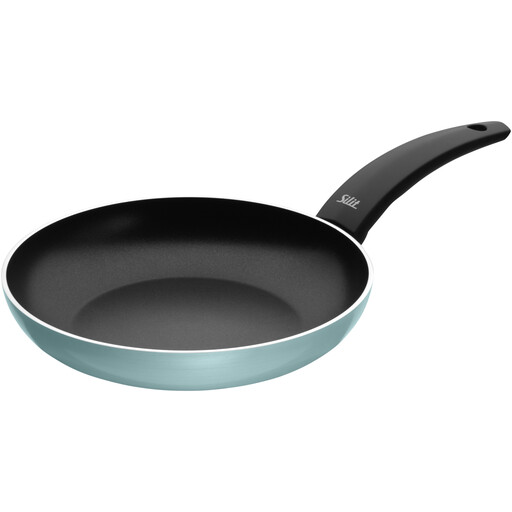
Why it suits this profile: This lightweight aluminium frying pan is designed for use on various hob types, including induction, and is ideal for everyday dishes cooked with little fat.
Hob compatibility and temperature limits are clearly stated. The plastic handle also makes clear that oven use is limited to 70 °C.
Coated aluminium, Bakelite handle, quick to heat and, according to the product details, a five-year manufacturer’s warranty.
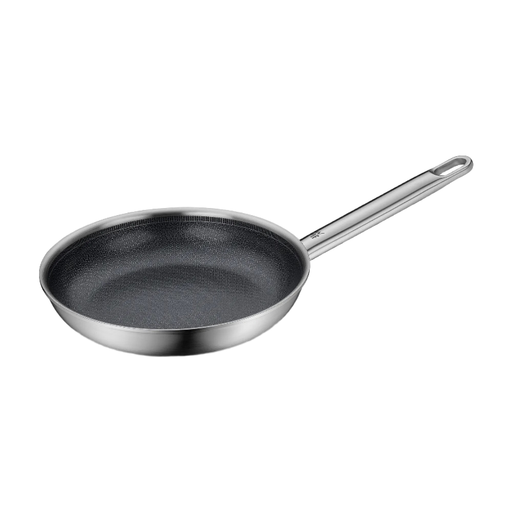
Why it suits this profile: Its stainless steel body with an aluminium core and ergonomic stainless steel handle make it a good choice if you value the pan’s construction and want to move it from hob to oven.
A protective mesh over the PermaDur coating is listed as a design feature. Even so, avoid metal utensils and scouring products.
Suitable for gas, electric, ceramic and induction hobs; according to the product details, its stainless steel handle and aluminium core are designed for oven use.
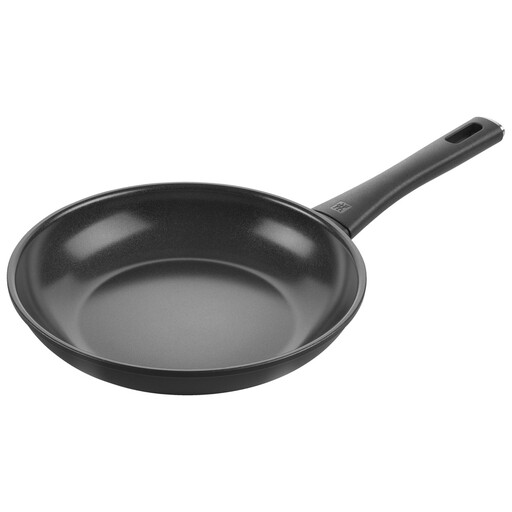
Why it suits this profile: Its CeraForce ceramic coating, free from PTFE and PFOA, and stated oven-safe temperature of up to 250 °C make it a good fit for versatile cooking.
The product information includes specific temperature and care instructions. Low to medium heat and hand-washing are recommended to protect the coating.
Forged aluminium body, fast and even heat distribution, stainless steel handle, and suitable for gas, induction, ceramic and halogen hobs, as well as oven use.
We’ve put together a complete, regularly updated list of products that meet these strict selection criteria and fully comply with the safety regulations in force in the EU.
The lifespan of a coated pan depends largely on how you use it. Match the cooking zone to the pan’s base and don’t leave the pan empty on the heat for a long time. With induction, a low or medium setting is often enough, as the base heats up quickly.
For cooking with less fat, a small amount of oil or fat is enough for many foods. That doesn’t mean you need to cook without any fat at all. With delicate ingredients such as eggs, fish or pancakes, a thin coating of fat can help prevent food from sticking.
A lightweight frying pan is handy for everyday use. For frequent high-heat searing or oven use, a heavier stainless steel or carbon steel pan may be a better choice. Carbon steel needs seasoning, drying and occasional oiling, and isn’t dishwasher-safe.
No. It needs a magnetic induction base. Look for the induction symbol or an explicit statement confirming which hob types it’s compatible with. A ceramic coating alone doesn’t tell you whether a pan is suitable for induction. For example, according to its product description, the Tefal C43604 Renew+ is suitable for gas, electric and ceramic hobs, but not induction.
There’s no reliable way to give a fixed lifespan for all models. It depends on heat, cleaning, utensils and how often you use the pan. Avoid overheating it, and don’t use metal utensils or abrasive sponges. Visible chips, deep scratches or a decline in performance are reasons to replace the pan.
A pan with an intact non-stick or ceramic coating can make it easier to cook with less fat. For delicate foods, use low to medium heat and suitable utensils. Also check that the coating, handle and cleaning requirements fit your everyday cooking routine.