
Lieferung heute & morgen

Qualitätsgarantie

Willkommens-Angebote freischalten: KOSTENLOSE Lieferung | Bis zu 80 % RABATT | Kostenlose 30-Tage-JoyPlus-Testphase
App herunterladen
Finding the right charging cable can be complex. With the introduction of devices that demand ever-higher charging power—from high-performance laptops to modern smartphones like the iPhone 15—choosing the right cable has become crucial. A 240W USB-C to USB-C cable is the most powerful option available today, based on the USB Power Delivery (PD) 3.1 standard.
This guide will help you understand the technical specifications and make an informed decision. We'll outline objective criteria for selection and present a curated list of cables suitable for various use cases.
Before you make a decision, there are a few technical aspects to consider. These will help you find a cable that is compatible not only with your current devices but also with future ones.
The "240W" rating refers to the maximum power a cable can transfer. This is made possible by the PD 3.1 (Power Delivery) standard, which supports up to 48 volts at 5 amps. To achieve this power, all three components—the device (e.g., a laptop), the power adapter, and the cable—must support this standard. A 240W USB-C to USB-C cable is backward compatible, meaning it can also safely and efficiently charge devices with lower power requirements (e.g., 100W or 60W). This makes such a USB-C fast charging cable a future-proof choice.
A common misconception is that high charging power automatically means high data transfer speeds. Many high-performance charging cables, including some 240W models, only support standard USB 2.0 speeds of 480 Mbps by default. This speed is sufficient for syncing music or smaller files. However, if you regularly transfer large files like 4K videos, you should look for a dedicated USB-C data cable that supports standards like USB 3.2 (up to 20 Gbps) or Thunderbolt 4 (up to 40 Gbps).
A cable's durability largely depends on the materials used. Models with a braided nylon jacket are generally more resistant to wear, kinks, and fraying than those with a simple plastic coating. Reinforced connector housings made of aluminium alloy also contribute to stability and protect the sensitive electronics inside, such as the E-Marker chip required for power regulation.
Here is a selection of cables that meet different requirements for performance, functionality, and design.
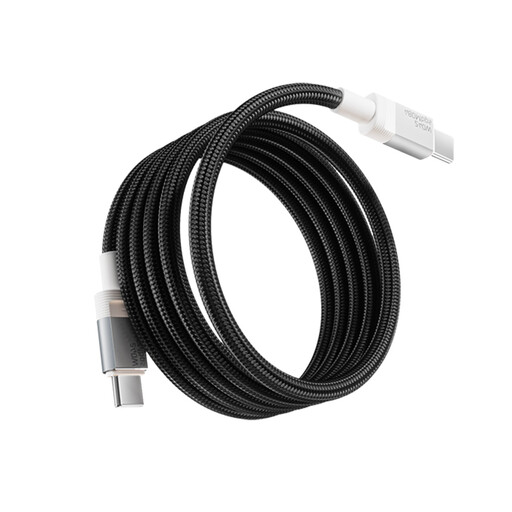
Why it stands out This cable is designed for users who want to leverage the maximum charging power of the PD 3.1 standard. Supporting up to 240W, it is ideal for demanding devices like gaming laptops or mobile workstations. The construction, featuring an aluminium alloy and a 48-strand braided nylon jacket, promises high durability. According to the manufacturer, an integrated E-Marker Pro chip ensures intelligent adjustment of the charging current to protect the battery.
Advantages:
Who it's for: Power users and tech enthusiasts looking for a single, high-performance USB-C cable for their laptop, tablet, and smartphone, who prioritise maximum charging speed and durability.
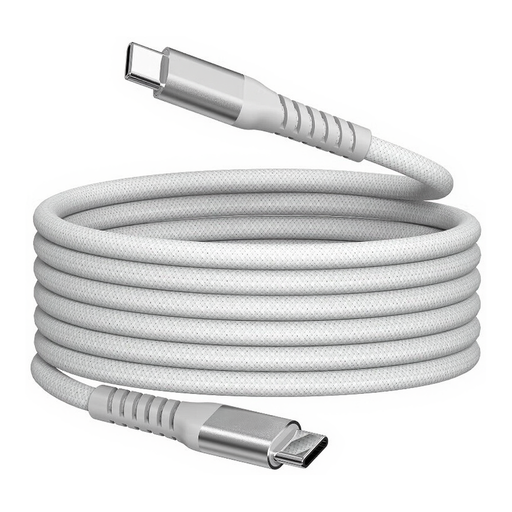
Why it stands out The Verbatim cable focuses on convenience and organisation. Its standout feature is the innovative magnetic USB-C cable design, which allows it to coil itself neatly for clean storage. With 60W of charging power, it is perfectly sufficient for most smartphones (including iPhone 15 charging cable requirements), tablets, and many ultrabooks. The durable nylon jacket ensures a long lifespan.
Advantages:
Who it's for: Users who are often on the go or value a tidy workspace. Ideal for anyone needing a practical and reliable charging solution for their everyday devices.
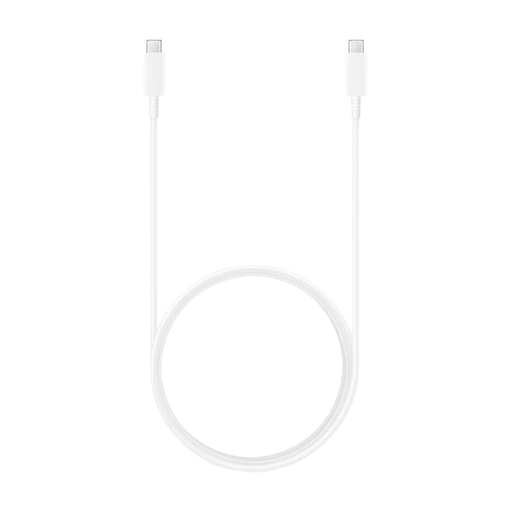
Why it stands out This cable from Samsung offers reliable performance and a generous length of 1.8 metres, providing greater flexibility. According to the manufacturer, it supports Power Delivery up to 100W and Super Fast Charging up to 45W, making it a versatile Samsung USB-C charging cable and a great option for many laptops and tablets. The design is simple, functional, and built for durability in daily use.
Advantages:
Who it's for: Users who need a longer cable for more convenience and prefer proven brand quality for their devices, especially those within the Samsung ecosystem.
The selection presented here covers common use cases. However, if you are looking for different lengths, colours, or specific features, you can find more alternatives in our broader product category.
Explore our full range of USB-C Charging Cables and find the right solution for your needs.
Whether you need a 240W cable depends on your devices. For most smartphones, tablets, and standard laptops, a 60W or 100W cable is sufficient. A 240W cable is primarily relevant for very high-performance laptops (e.g., mobile workstations or gaming notebooks) that support the USB PD 3.1 standard. However, since it is fully backward compatible, it represents a future-proof investment.
The main difference lies in the construction and the internal electronics. A 240W USB-C to USB-C cable is specifically designed for the higher voltages (up to 48V) of the PD 3.1 standard and includes an E-Marker chip certified for a 5A current. This chip communicates with the power adapter and the device to ensure safe and efficient power transfer. Standard USB-C cables are often only specified for 60W (20V/3A) or 100W (20V/5A).
Yes, it is completely safe. The USB Power Delivery protocol is designed so that the charger, cable, and device communicate with each other to negotiate the maximum required and permissible power. A 240W cable will only deliver 25W to a smartphone that needs 25W. There is no risk of damaging the device.