
Lieferung heute & morgen

Qualitätsgarantie

Willkommens-Angebote freischalten: KOSTENLOSE Lieferung | Bis zu 80 % RABATT | Kostenlose 30-Tage-JoyPlus-Testphase
App herunterladen
A 24 cm frying pan is a practical choice for many UK households. It is suitable for one or two portions, omelettes, vegetables, fish fillets or smaller cuts of meat. At the same time, there is plenty of choice. Terms such as “non-stick”, “ceramic” or “suitable for all hob types” may sound clear, but on their own they reveal little about how practical a pan will be for everyday use.
If you are looking to buy a compact frying pan, you should avoid three common purchasing misconceptions:
An induction frying pan with a suitable ferromagnetic base is required for an induction hob. An aluminium body alone is not sufficient. In multi-layer models, aluminium is often combined with stainless steel so that the pan responds quickly while also being suitable for use on induction hobs.
Look for specific information about:
The diameter of the contact surface is also important. For example, the Silit Belluna is listed with a hob ring of approximately 18 cm. This shows that the term “24 cm” primarily describes the pan’s upper diameter, not necessarily the size of the heated base.
A coated frying pan or non-stick frying pan is practical for delicate foods and low-fat cooking. Eggs, pancakes, fish and vegetables can usually be removed more easily at low to medium heat than from an uncoated stainless steel pan.
Distinguish between:
Manufacturer information about PTFE, PFOA or PFAS should not be interpreted too broadly. What matters is which substances are explicitly mentioned for the specific model.
Aluminium is considered lightweight and transfers heat quickly. An aluminium frying pan can therefore be convenient for short cooking times. Stainless steel models with an aluminium core are usually heavier, but offer a multi-layer construction.
Practical tips:
A dishwasher-safe frying pan can reduce cleaning time. However, for coated surfaces, several of the models mentioned here still recommend hand washing to help protect the coating for as long as possible.
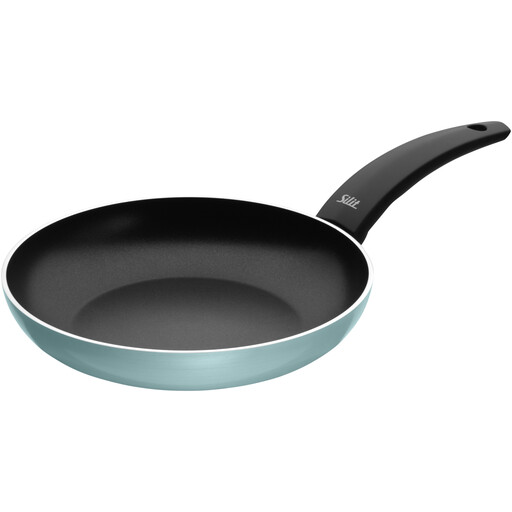
Why this product suits this profile: Its lightweight aluminium construction, Bakelite handle and suitability for gas, electric, ceramic and induction hobs make it a straightforward choice for everyday cooking.
The specifications list the exact hob types, a PTFE non-stick coating and limits for heat and oven use. This makes the phrase “suitable for all hobs” easier to assess.
Coated aluminium, rapid heat-up, 24 cm format and a five-year manufacturer’s guarantee according to the product details.
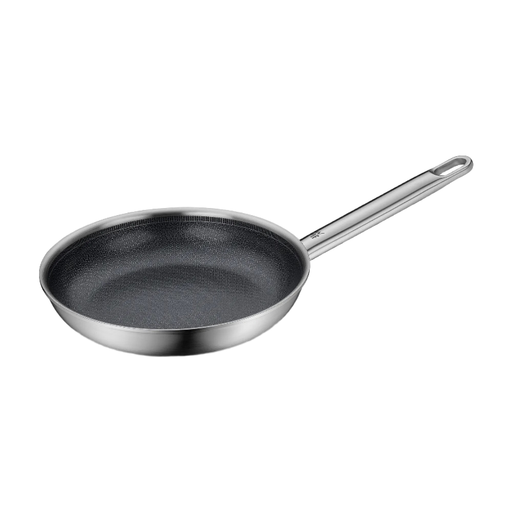
Why this product suits this profile: The combination of Cromargan stainless steel, an aluminium core and PermaDur coating is aimed at households that value quality construction and versatile hob compatibility.
The multi-layer construction is described in detail. The product information also covers induction compatibility, oven use and avoiding abrasive cleaning products.
Stainless steel body with aluminium core, PermaDur coating, wide pouring rim and suitability for induction, gas, electric and ceramic hobs.
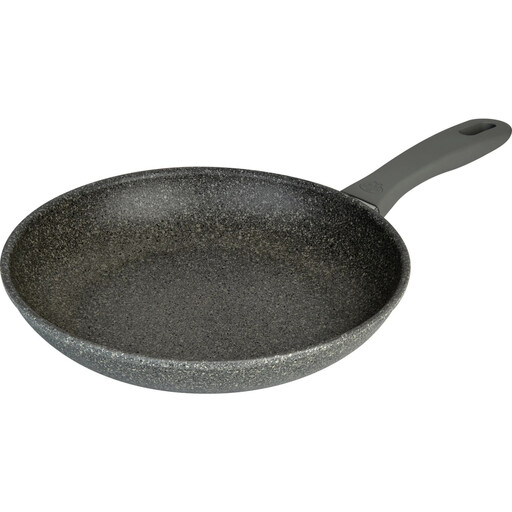
Why this product suits this profile: According to the product description, the compact format is designed for one or two people. A Thermopoint on the handle indicates the temperature range specified by the manufacturer.
The specifications state the type of coating, the maximum oven temperature of 160 °C and the recommendation to avoid metal utensils.
Forged aluminium, five-layer Granitium Extreme coating, induction compatibility and dishwasher suitability according to the supplier.
We have put together a complete, regularly updated list of products that fully meet these strict selection criteria and the safety regulations applicable in the EU.
The lifespan of a 24 cm non-stick frying pan depends not only on its coating, but also on how it is treated every day. Use a suitable hob zone and avoid heating the pan for longer than necessary. With coated models, a medium heat setting is often sufficient.
After frying, you should:
If you notice visible cracks, flaking or heavily scratched surfaces, stop using the pan. The relevant manufacturer’s instructions take priority, particularly regarding oven temperature, dishwasher use and kitchen utensils.
This size is generally suitable for one or two portions. Two smaller pieces of meat, an omelette or a side dish can be prepared in it without taking up much space. For several people or larger quantities, a 28 cm pan is often more practical.
Look for explicit confirmation of induction compatibility and a suitable magnetic base. According to the available product information, models such as the Silit Belluna, WMF Profi Resist and BALLARINI Murano are suitable for induction hobs.
There is no standard lifespan that applies to every pan. It is affected by temperature, cleaning method, the kitchen utensils used and how frequently the pan is used. Low to medium heat, hand washing and soft utensils can help protect the coating. The manufacturer’s guarantee applies to the conditions specified and should be checked before purchase.