
Lieferung heute & morgen

Qualitätsgarantie

Willkommens-Angebote freischalten: KOSTENLOSE Lieferung | Bis zu 80 % RABATT | Kostenlose 30-Tage-JoyPlus-Testphase
App herunterladen
The search for the perfect 24V kids' electric car can quickly become overwhelming. Amidst the flashing lights and exaggerated performance claims lie hidden pitfalls that can bring the fun to a screeching halt. Many parents invest in a model that struggles on uneven ground after just a short time or has inadequate safety features. Before you make a decision, it's crucial to understand the key features that ensure a durable and safe driving experience.
This guide focuses on the objective criteria that truly matter. We'll highlight the most common purchasing mistakes and show you what to look for in the technical specifications to make an informed choice.
The disappointment is immense when an expensive gift fails to meet expectations. Three problems are particularly common:
To avoid these mistakes, you should focus on three core technical areas. These are the primary determinants of performance, safety, and ride comfort.
The voltage (V) of the battery is a key indicator of performance capability.
A good ride-on car with a remote control gives parents complete control. Look for a 2.4 GHz remote control, as it ensures an interference-free connection and allows you to adjust the speed, correct the direction, or instantly stop the vehicle with an emergency stop function at any time.
Equally important is soft-start technology. It ensures the vehicle accelerates slowly and smoothly rather than abruptly. This not only enhances safety but also improves comfort for the child, who can gradually get used to the motion. An adjustable seatbelt completes the safety package.
The type of wheels has a major impact on driving noise and grip. Simple hard plastic wheels are noisy and offer little traction on smooth surfaces. A better alternative is wheels with a central rubber strip or solid rubber tyres (often called EVA tyres). They are quieter and provide significantly better grip. Suspension, at least on the front wheels, absorbs bumps and ensures a more stable and comfortable ride, especially on uneven terrain.
Based on these objective criteria, we have identified a few models that are well-suited for different requirement profiles.
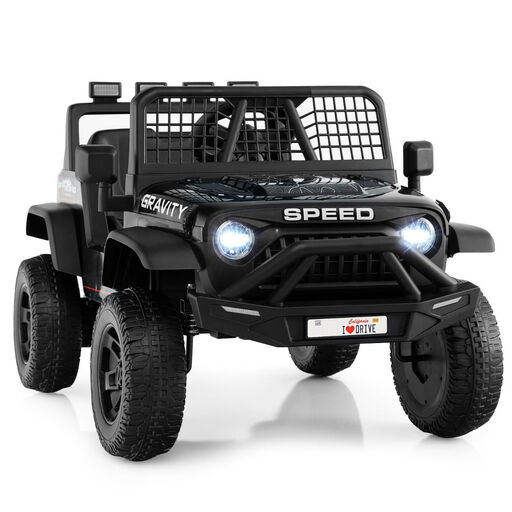
Why It's a Great Fit: Ideal for parents seeking a powerful and safe all-around vehicle. Suitable for children aged 3 and up who want to drive in the yard and on lawns without sacrificing performance.
The 24V system with dual 35W motors delivers reliable power for various surfaces, avoiding the weakness of many 12V models. The soft-start technology and parental remote with emergency stop provide essential safety.
Features front-wheel suspension for greater stability. Integrated entertainment functions like music, radio, and a USB port add to the fun.
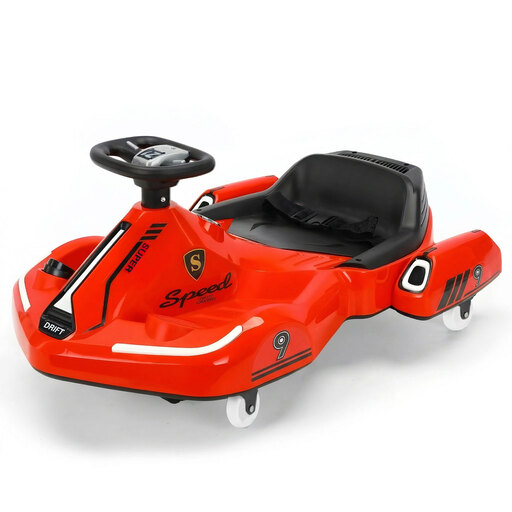
Why It's a Great Fit: For kids looking for a change from the classic ride-on toy car. This vehicle combines movement with fun and promotes coordination with its 360-degree spin function.
This model is based on a different concept. Instead of off-road capability, the focus is on the fun of movement. It's designed for flat surfaces and reliably serves that purpose without making false performance claims.
Promotes motor skills through steering wheel control. The 360-degree spins offer a unique driving experience. LED lights and a music function provide extra entertainment.
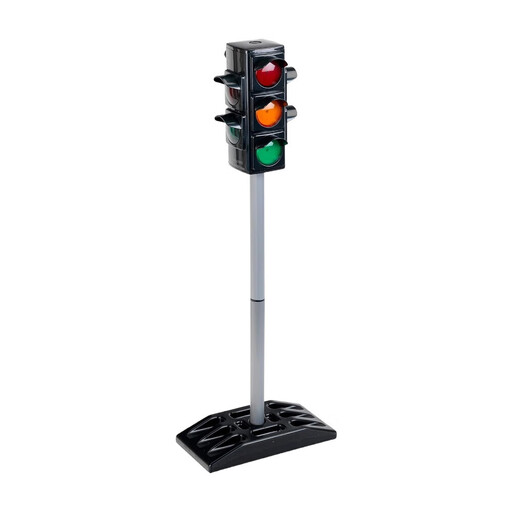
Why This Accessory Fits: An ideal addition to any kids' electric car. It helps children learn traffic rules in a playful way and prepares them for real-world road behaviour.
This product focuses on learning rather than performance. It complements the driving experience by creating an educational framework and prioritising safety through rule-learning.
Realistic light cycles with manual or automatic switching. The stable base can be filled with water or sand. At 72.5 cm tall, the traffic light is a highly visible size for children.
We have compiled a complete, up-to-date list of products that meet these strict selection criteria and relevant safety standards.
Most 24V models are designed as an electric car for kids aged 3 and up. However, more important than age are the child's individual abilities and the manufacturer's specified maximum weight and height limits. Adult supervision is always required during use to ensure safety.
Battery life varies depending on the model, the child's weight, and the driving surface. On average, you can expect a runtime of 1 to 2 hours. A full recharge typically takes between 8 and 12 hours. It is important to follow the manufacturer's charging instructions precisely to maximise the battery's lifespan.
Yes, this is where 24V kids' electric cars truly shine. Models with dual motors and good suspension are specifically designed to deliver consistent performance on uneven surfaces like grass or firm gravel. In contrast, many 12V vehicles often struggle on such terrain.