
Lieferung heute & morgen

Qualitätsgarantie

Willkommens-Angebote freischalten: KOSTENLOSE Lieferung | Bis zu 80 % RABATT | Kostenlose 30-Tage-JoyPlus-Testphase
App herunterladen
Choosing a kids' electric car can be an exciting prospect, whether it's a special gift for children aged 3 and up or the new star of your backyard fleet. However, the market is flooded with models whose performance claims and feature lists often confuse more than they clarify. Before you make a decision, it's crucial to understand the common pitfalls that can lead to disappointment. As your Joybuy Product Recommendation Officer, I'm here to help you identify the essential features that truly matter.
Many well-intentioned purchases end with a vehicle that sits unused in a corner after a short time. This is often due to two common problems that are rarely mentioned in product descriptions.
kids' car with 2 motors is often the more reliable configuration here, as the power is distributed to both rear wheels.To make an informed decision, focus on three technical aspects that significantly determine the fun and safety of the ride.
Compared to 12V models, a 24V kids' electric car with a remote control generally offers more consistent power output and a higher top speed. This is particularly advantageous on uneven surfaces like lawns or gravel paths. However, the crucial factor is the combination of voltage and motor strength. Look for models with two drive motors (e.g., 2 x 35W). This configuration provides better grip and more even power distribution, noticeably improving the driving experience.
A ride-on toy with parental remote control is an indispensable safety feature, especially for children under four. Modern systems use 2.4 GHz radio technology, which ensures a stable and interference-free connection. Unlike older infrared systems, you can control the vehicle precisely without having to aim directly at it. A critical function is the emergency brake button, which allows parents to stop the vehicle instantly at any time, regardless of whether the child is pressing the gas pedal.
A robust electric ride-on car should be made from high-quality PP plastic (polypropylene), which is both flexible and shatter-resistant. Pay attention to the specified maximum weight capacity—a value around electric car for kids 30 kg is a good indicator of a sturdy construction that can accommodate growing children. Additional features like a kids' car with music and LED headlights significantly increase the play value. An integrated MP3 player or USB port allows for playing their own favourite songs, turning every drive into a small adventure.
Here are a few recommendations tailored to different needs and age groups.
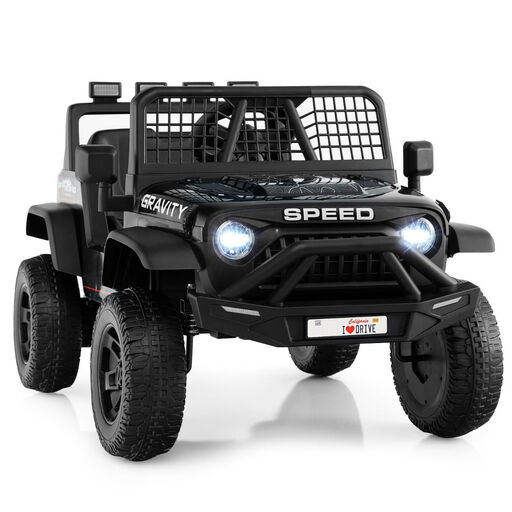
Why This Fits Their Persona: This model is designed for parents who refuse to compromise on safety and functionality. It combines the power of a 24V system with comprehensive control options.
It features soft-start technology that prevents jerky acceleration. The 2.4 GHz remote with an emergency brake function gives parents full control, bypassing the issues of interference-prone systems.
Two 35W motors deliver true 24V performance, even on grass. The 30 kg maximum weight capacity and safety belt provide a solid foundation for children aged 3 and up.
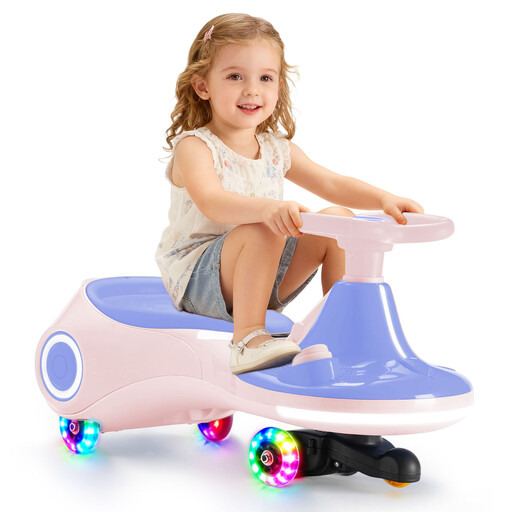
Why This Fits Their Persona: For families looking for an alternative to the classic electric car. This Wiggle Car combines motorised movement with physical activity and is ideal for use on flat surfaces like patios or in large rooms.
The concept is simpler and focuses on fun through movement. It avoids the complex performance demands of an off-road vehicle and concentrates on a safe driving experience on flat ground.
The 3-in-1 function (swing, pedal, electric drive) offers varied fun. The high weight capacity (up to approx. 72 kg) ensures a long service life.
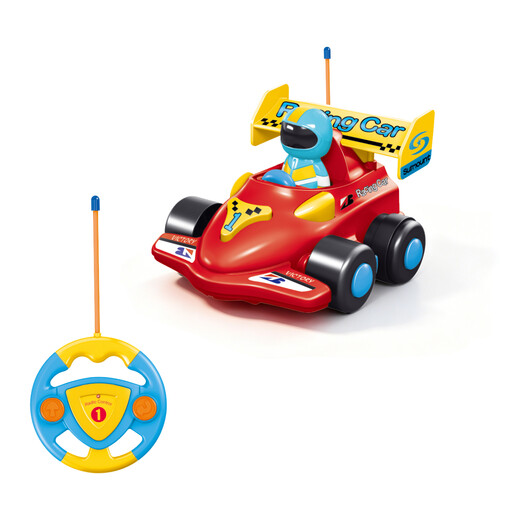
Why This Fits Their Persona: This toy is a great choice for toddlers who are still too young for a large ride-on car. It playfully introduces them to the concept of remote control and promotes hand-eye coordination.
It is specifically designed for the motor skills of toddlers. The simple controls and robust construction avoid the frustration and potential dangers of more complex models.
The controls are reduced to the basics (forward, turn). The chunky, durable design can withstand rough handling, which is typical for this age group.
We have compiled a complete, up-to-date list of products that fully meet these strict selection criteria and UK safety regulations.
The battery life depends heavily on factors like the child's weight, the surface texture, and driving style. On average, you can expect a runtime of 45 to 90 minutes per full charge. The charging time is typically 8 to 12 hours. It is advisable to charge the vehicle overnight.
Most models are delivered partially assembled. Assembly is usually limited to attaching the wheels, steering wheel, seat, and connecting the battery. The included instructions will guide you through the necessary steps. Plan for about 30 to 60 minutes for this. Assembly should be performed by an adult.
Most manufacturers recommend a minimum age of 3 years. This is a good guideline, as children of this age generally have the motor skills and understanding to operate the vehicle safely. An electric car for kids aged 3 and up with a 24V system is often a bit faster and more powerful, which is why parental supervision and the use of the remote control are particularly important in the initial phase. Always consider your child's individual development.