
Lieferung heute & morgen

Qualitätsgarantie

Willkommens-Angebote freischalten: KOSTENLOSE Lieferung | Bis zu 80 % RABATT | Kostenlose 30-Tage-JoyPlus-Testphase
App herunterladen
A 26-inch mountain bike is an established and versatile option for both young riders and adults. The 26-inch wheel size, once the standard in the MTB world, offers specific handling characteristics that make it particularly suitable for certain applications and rider types. This article analyses the key technical criteria for selecting such a bike and presents a curated selection of models designed for functionality and excellent value.
Choosing the right mountain bike depends on an analysis of its core components. The frame material, braking system, drivetrain, and suspension are what primarily define the bike's intended use and handling.
The 26-inch wheel size (corresponding to a rim diameter of approx. 559 mm) is known for its high agility and manoeuvrability. Smaller wheels accelerate faster and allow for more precise steering on narrow trails. This makes them a great choice for more technically demanding, winding routes. Additionally, 26-inch bikes are often a good fit for shorter riders and serve as an excellent youth bike for transitioning to an adult model.
The frame material directly impacts the bike's weight, stability, and price.
The braking system is a safety-critical component. In entry-level mountain bikes, two systems are particularly common:
The number of gears (e.g., 18 or 21) determines the gear range. A wider range of gears allows for finer adjustments, making it easier to tackle steep climbs and reach high speeds on flat terrain.
A hardtail MTB features a suspension fork at the front and a rigid rear end. The suspension fork absorbs impacts from the front wheel, increasing comfort and control on uneven trails.
The following models have been selected based on their technical specifications and intended use. They are aimed at budget-conscious beginners, commuters, and recreational riders.
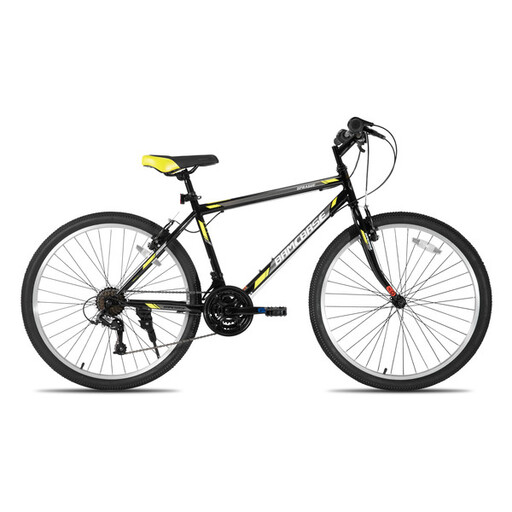
Why we recommend this product: The Bamcbase Sprague combines a robust steel frame with a 21-speed drivetrain and low-maintenance V-brakes. This configuration provides a functional and cost-effective solution for daily use and light touring.
Pros:
Who it's for: This 26-inch MTB is designed for budget-conscious beginners, students, and commuters looking for a reliable bike for getting to school or work, as well as for occasional rides on paved paths.

Why we recommend this product: The Hiland H200 Plus features a lightweight aluminium frame combined with mechanical disc brakes and a suspension fork. It delivers higher performance in wet conditions and greater comfort on trails.
Pros:
Who it's for: This model is aimed at adult mountain bikers, both men and women, who appreciate a lightweight bike with the added security of disc brakes for everyday and recreational use.

Why we recommend this product: The Hiland Ridge combines the robustness of a steel frame with the stopping power of dual disc brakes and the comfort of a suspension fork. It is designed as a durable all-round bike for various conditions.
Pros:
Who it's for: Riders looking for an exceptionally robust hardtail MTB with the dependable braking performance of disc brakes. It's suitable for the daily commute as well as for tours on forest and country paths.
The 26-inch models presented here cover specific needs for beginners and everyday riders. If you are looking for bikes with different wheel sizes, alternative components, or for more specialised applications, you can find a wider selection in our Adult Bikes category.
1. What rider height is a 26-inch mountain bike suitable for? A 26-inch mountain bike is typically suitable for individuals with a height between approximately 150 cm and 175 cm. However, the exact fit also depends on the specific frame geometry and the rider's personal inseam. Some manufacturers provide specific recommendations, such as for heights from 5'0" to 5'8" (approx. 152 cm to 173 cm).
2. What is the difference between a hardtail and a full-suspension MTB? A hardtail MTB, like the models presented here, has suspension only at the front wheel (a suspension fork). A "full-suspension" or "fully" mountain bike also features a rear shock absorber. Hardtails are generally lighter, lower-maintenance, and more affordable. They are very well-suited for beginners, tours on forest trails, and everyday use.
3. Are disc brakes necessary on an entry-level mountain bike? Disc brakes are not strictly necessary, but they do offer advantages. For use in predominantly dry conditions and for city riding, well-adjusted V-brakes are often sufficient and have the benefit of simple maintenance. However, anyone who frequently rides in the wet or on hilly terrain will benefit from the more consistent and often superior braking power of mechanical disc brakes.