
Lieferung heute & morgen

Qualitätsgarantie

Willkommens-Angebote freischalten: KOSTENLOSE Lieferung | Bis zu 80 % RABATT | Kostenlose 30-Tage-JoyPlus-Testphase
App herunterladen
A 26 cm grill pan is a practical size for many households: it is suitable for one or two steaks, fish fillets, poultry or a portion of vegetables, without taking up too much storage space. However, models vary considerably in terms of material, grill ridges, weight, cleaning and hob compatibility.
Anyone who focuses only on distinctive looks or terms such as “non-stick” may overlook important details. The following buying criteria will help you avoid making the wrong purchase and choose a grill pan that suits your hob and cooking style.
Not every grill pan is automatically a grill pan for induction. Some models are approved only for gas hobs, while others must not be used in the oven. The maximum oven temperature may also be limited.
You should therefore check the following details in the product description before buying:
A pan that the manufacturer states is suitable only for gas must not automatically be used on an induction hob.
A non-stick grill pan can make it easier to remove food. However, coatings are sensitive to overheating, metal utensils and abrasive cleaning products. With some aluminium models, the oven temperature is expressly limited.
An enamelled grill pan generally does not require traditional seasoning. However, enamel can be damaged by sudden changes in temperature, metal utensils or steel wool. An uncoated cast-iron grill pan, on the other hand, requires regular oiling and care.
Pronounced ridges create visible grill marks and partly drain fat and liquid away from the food. However, high ridges also have disadvantages: the actual contact area is smaller, and delicate foods such as fish can stick or break more easily.
The key factor is therefore the combination of ridge height, ridge spacing, pan base and usable cooking surface. A square grill pan can make good use of the space on the hob, while a round version fits more easily into smaller sinks or cupboards.
A cast-iron grill pan retains heat for a long time and is ideal for searing. However, many 26 cm models weigh approximately 2.7 to 2.9 kg. An additional handle is useful if you regularly move or pour from the pan.
Enamelled cast iron combines the material’s heat retention with a coated surface. According to Le Creuset’s manufacturer information, the Signature models mentioned do not require traditional seasoning. Nevertheless, the interior should be treated with suitable utensils and gentle cleaning products.
Aluminium usually heats up more quickly and is lighter. A PTFE or other non-stick coating makes cleaning easier, but requires controlled temperatures. Stainless steel is uncoated and robust, but can cause food to stick if it is not preheated correctly.
For a grill pan suitable for the hob and oven, not only the pan body but also the handle and coating must be suitable. Check the following:
With cast-iron models, the handles become very hot during cooking. Oven gloves are therefore advisable, regardless of the material.
An enamelled or coated pan should be cleaned after cooling with warm water, mild washing-up liquid and a soft sponge. A hot pan should not be placed in cold water, as thermal shock can damage the surface.
With uncoated carbon steel or cast iron, drying and applying a thin film of oil are part of regular care. A dishwasher-safe grill pan is more convenient, but according to the manufacturer’s instructions, hand washing may help protect the surface in the long term.
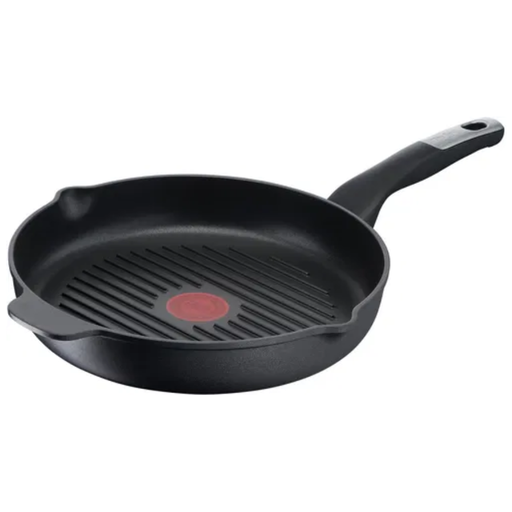
Why this product suits this profile: This aluminium grill pan has a coated grilling surface, is suitable for induction and is relatively easy to handle for everyday use.
The manufacturer’s information expressly states that it is suitable for induction, gas, electric and ceramic hobs, as well as specifying an oven limit of 175 °C.
26 cm diameter, coated grill structure and a care instruction from the manufacturer stating that it is dishwasher-safe.
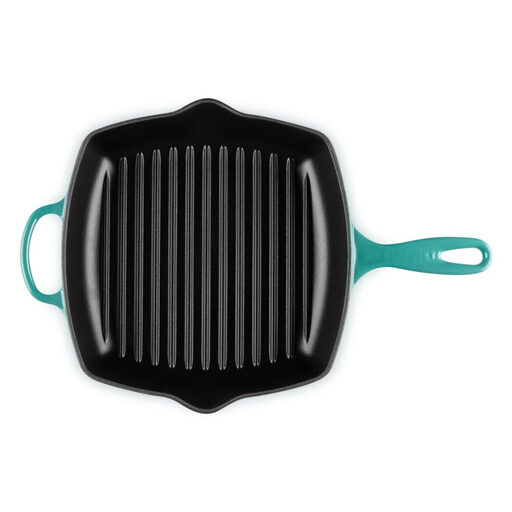
Why this product suits this profile: This square enamelled cast-iron pan is designed for households that prioritise heat retention, oven use and durable construction.
The specifications list gas, induction, ceramic, halogen, oven and BBQ as suitable heat sources. The interior is enamelled and, according to the manufacturer’s information, does not require traditional seasoning.
26 cm cooking surface, raised ridges, pouring spouts and a weight of approximately 2.9 kg.
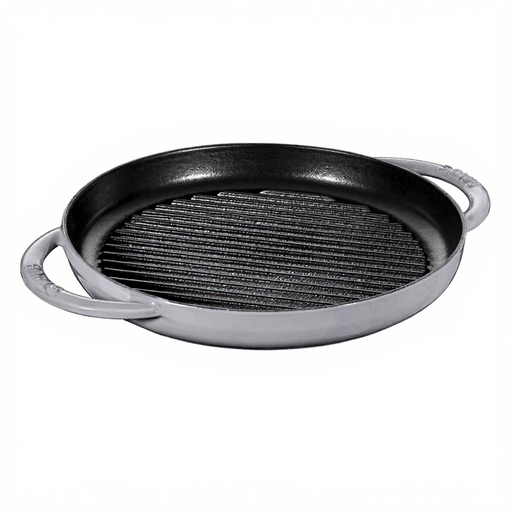
Why this product suits this profile: Two handles make it easier to lift a heavy cast-iron pan safely. This model is designed for induction, gas and oven use.
The round shape and double handles are clearly specified. The manufacturer’s information also states that it can be used in the oven and on all common hob types.
Enamelled cast iron, 26 cm diameter, grill ridges and a stated weight of approximately 2.7 kg.
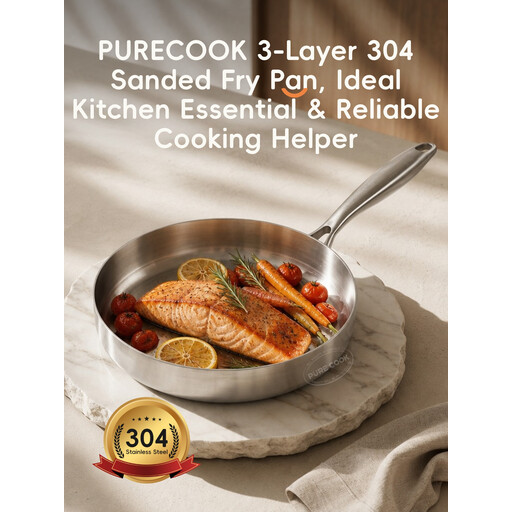
Why this product suits this profile: The three-layer stainless-steel construction is aimed at users who prefer an uncoated pan for steaks, vegetables and different types of hob.
The technical specifications state 304 stainless steel, three layers, induction compatibility and oven suitability. This makes the material and hob requirements clearer than they are in incomplete product descriptions.
304 stainless steel, three-layer construction, 26 cm diameter and dishwasher-safe according to the manufacturer’s information.
We have put together a complete, regularly updated list of products that fully meet these strict selection criteria and the safety regulations applicable in the EU.
For visible grill marks, the pan should first be preheated slowly. According to the manufacturer’s information, cast-iron models may require around five to eight minutes over medium heat. The food is then placed in the pan and moved as little as possible.
A grill pan cannot completely replace an outdoor grill. However, it creates a ridged cooking surface on the hob or in the oven, making it suitable for steaks, fish, poultry, vegetables and sandwiches.
Yes, a grill pan for steak can create distinctive grill marks. For an even result, the steak should be dry and should not be moved constantly during the initial cooking stage. However, the ridges do not replace temperature control or resting time after cooking.
Models are suitable if induction is explicitly stated in the manufacturer’s information. Enamelled cast iron, such as that used in certain Le Creuset and Staub models, as well as selected aluminium and stainless-steel pans, may be suitable for induction. The statement “suitable for all hob types” should always be checked in the technical details.
Its lifespan depends on the material, use and care. With gentle handling, enamelled cast iron is designed for long-term use, but it remains heavy and vulnerable to impact and thermal damage. Coated models should not be overheated when empty and should only be used with suitable utensils. Uncoated stainless steel can be used for a long time if cleaned correctly, but requires the right preheating and oiling technique when cooking.