
Lieferung heute & morgen

Qualitätsgarantie

Willkommens-Angebote freischalten: KOSTENLOSE Lieferung | Bis zu 80 % RABATT | Kostenlose 30-Tage-JoyPlus-Testphase
App herunterladen
A 28 cm ceramic-coated sauté pan with lid is a practical addition to the classic saucepan for many UK households. Its deep design is ideal for sauces, vegetable stir-fries, braised dishes and one-pan recipes. At the same time, the diameter provides plenty of room for searing.
However, many shoppers are faced with similar descriptions and unclear product claims. For example, a “ceramic pan” is not automatically made entirely from ceramic. It is often an aluminium or stainless-steel body with a ceramic coating. Terms such as “healthy”, “particularly durable” or “suitable for all hob types” should also be checked against specific product data.
“Ceramic-coated” initially describes only the surface. For your buying decision, it is important to know what material the pan body is made from and which substances the manufacturer states have not been intentionally added to the coating.
If you are specifically looking for a PFAS-free pan or PTFE-free pan, look for clear labelling. Claims such as “without intentionally added PFOA” do not automatically mean that the coating is completely PFAS-free. The manufacturer’s specific information and product documentation are what matter.
An induction sauté pan must have a magnetic base. Compatibility is generally less problematic with gas, electric and ceramic hobs. However, additional restrictions may apply to halogen or infrared hobs.
Oven use is also often described ambiguously. The permitted temperature, the handle material and whether the lid may be used separately are all important factors.
A dishwasher-safe pan may often be placed in the dishwasher, but harsh detergents and high temperatures can put more strain on the surface than gentle hand washing. To help extend its lifespan, you should generally:
An even non-stick surface is important when cooking with little oil. A ceramic coating can make cleaning easier and help food release from the pan. However, the result also depends on the temperature, amount of fat and care.
Aluminium distributes heat comparatively quickly. Multi-layer stainless steel with an aluminium core can also provide even heat distribution, but is often heavier. With hybrid surfaces, shoppers should check whether the textured surface is suitable for delicate foods such as eggs or pancakes.
The terms PFAS-free, PTFE-free and PFOA-free should not automatically be interpreted as a general judgement of quality. They describe the exclusion of certain substances according to the supplier’s information. For the products below, the relevant details are listed in the respective product information.
28 cm generally refers to the diameter at the top. The usable base may be considerably smaller. For example, a Naturepan sauté pan is listed with a base diameter of 21.2 cm and a body height of 7.5 cm.
A 28 cm sauté pan with high sides offers more capacity than a shallow frying pan. This is useful for:
For smaller households, a 24 cm pan may take up less space. If you regularly cook for several people, however, you can benefit from the extra capacity of a 28 cm sauté pan.
A glass lid lets you monitor the cooking process without constantly allowing heat to escape. The handle should be securely attached and suitable for the stated hob and oven use.
Temperature specifications must always be considered separately for the pan and lid. With some models, the pan can be used in the oven up to 260 °C, while the glass lid has a lower limit. Always follow the manufacturer’s instructions before use, and always wear oven gloves when removing the pan from the oven.
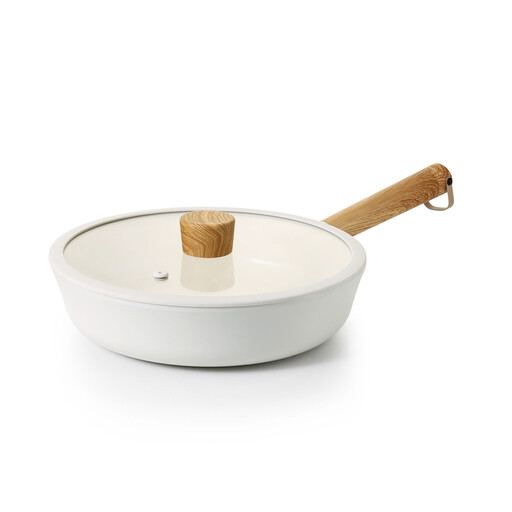
Why this product suits this profile: This deep ceramic pan with lid is designed for everyday frying, sautéing and pan dishes and, according to the product information, is compatible with induction, gas, electric, ceramic and halogen hobs.
The product description lists the coating components and points to a magnetic stainless-steel base, as well as recommending hand washing.
28 cm diameter, glass lid and compatibility with several hob types; hand washing is recommended to help protect the surface.
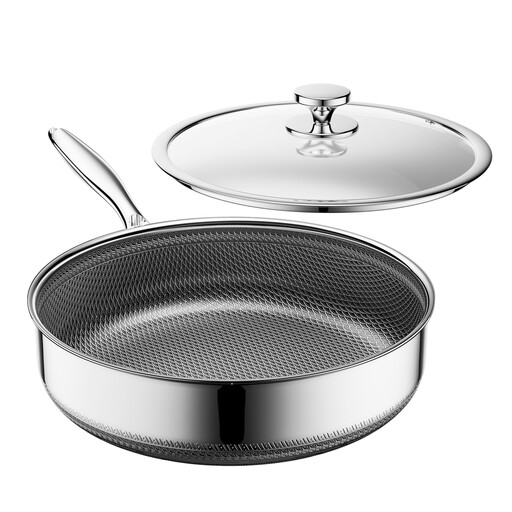
Why this product suits this profile: The combination of stainless steel, an aluminium core and ceramic coating is aimed at users who value textured materials and versatile cooking options.
The specifications state separate temperature limits for the pan and lid, as well as suitability for gas, electric, ceramic, halogen and induction hobs.
According to the product description, PFAS-, PTFE- and PFOA-free; the pan is oven-safe up to 260 °C and the lid up to 148 °C.
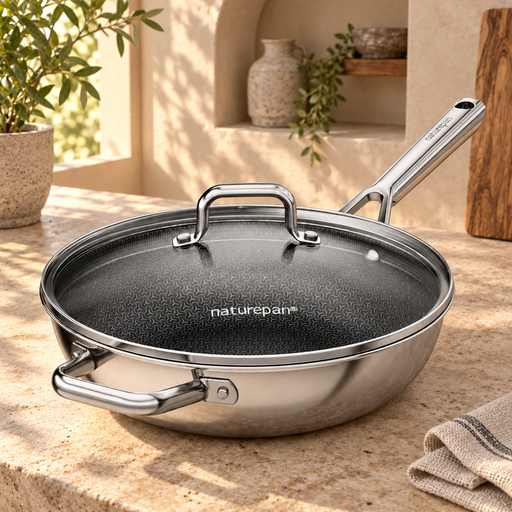
Why this product suits this profile: The hybrid, hexagonally textured surface is an interesting option for users looking for a pan for frying and braising, with a stainless-steel body and aluminium core.
The material construction, coating type, height of 7.8 cm and recommended use at low to medium heat are all clearly specified.
Multi-layer stainless-steel body with aluminium core, lid included and, according to the supplier, suitable for induction, gas, electric and ceramic hobs.
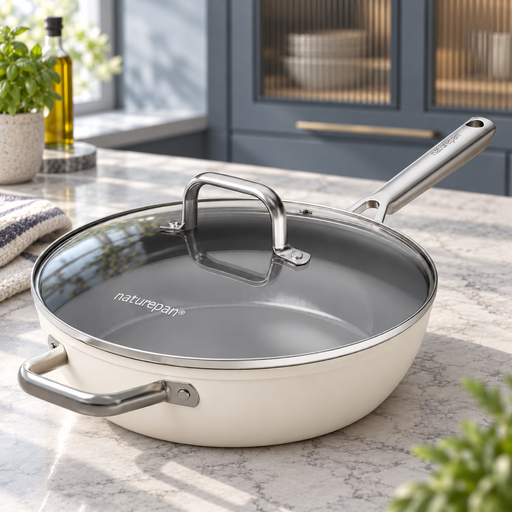
Why this product suits this profile: The aluminium body with ceramic coating, high sides and matching lid is suitable for everyday dishes made with little oil, followed by easy cleaning in the dishwasher.
The product data lists the compatible hob types, an oven limit of up to 230 °C without the lid, and the restriction that the pan is not suitable for microwave use.
28 cm diameter, 7.5 cm-high sides, lid included and, according to the product information, dishwasher-safe.
We have put together a complete, regularly updated list of products that fully meet these strict selection criteria and the safety regulations applicable in the EU.
Before using the pan for the first time, clean it with warm water and mild washing-up liquid, then dry it. When cooking, low to medium heat is usually sufficient. A ceramic non-stick coating is sensitive to prolonged heating while empty and sudden changes in temperature.
After cooking, allow the pan to cool naturally rather than immediately rinsing it with cold water. Even if a model is labelled dishwasher-safe, hand washing with a soft sponge can help protect the coating. If you notice visible flaking or damage, stop using the pan.
That depends on the construction of the base. A magnetic stainless-steel base or an explicitly stated induction symbol are important indicators. With combination hobs, compare the relevant product information with your own hob.
It is not possible to give a reliable general lifespan. It depends on heat, cleaning, frequency of use and the utensils used. Low to medium temperatures, avoiding metal utensils and gentle cleaning can help extend its service life.
These terms refer to specific groups of substances and, for the products mentioned, are based on the respective supplier information. They do not replace a complete check of the material, instructions for use and product compliance. For everyday use, you should also take account of temperature limits, damage and care instructions.