
Lieferung heute & morgen

Qualitätsgarantie

Willkommens-Angebote freischalten: KOSTENLOSE Lieferung | Bis zu 80 % RABATT | Kostenlose 30-Tage-JoyPlus-Testphase
App herunterladen
A 28 cm frying pan suits many British households: the diameter offers plenty of space for several portions, yet it remains more manageable than larger models. Even so, making the right choice doesn't automatically lead to the perfect purchase. What really matters are the material, hob compatibility, coating, temperature limits and the level of care required.
A pan may be suitable for gas, electric and ceramic hobs, but not for induction. Some models also lack a clear statement about compatibility with halogen or infrared hobs. If you use an induction hob, you should specifically look for an induction-compatible frying pan. A general claim like “suitable for all hob types” should always be cross-checked against the technical product specifications.
A non-stick frying pan makes it easier to cook with less fat and is often ideal for delicate foods such as fish, eggs or pancakes. However, coated models generally should not be used on a high heat setting for long periods or heated when empty. Metal turners, abrasive cleaners and steel wool can also damage the surface.
A higher number of coating layers is therefore not a free pass for every use. Also pay attention to the stated maximum temperature and the care instructions.
A round 28 cm frying pan does not always have a 28 cm, completely flat cooking surface. With a sauté pan, higher sides can increase capacity, while sloped sides make tossing and pouring easier. A rectangular 28 cm grill pan uses its surface area differently from a round model.
For family meals, you should therefore also consider the rim height, base area, weight and volume.
Aluminium heats up relatively quickly and is often used in coated pans. A coated 28 cm frying pan is usually lighter than an uncoated stainless steel model, but requires gentler handling.
A 28 cm stainless steel pan is available uncoated or with an additional surface. Stainless steel without a non-stick layer can withstand high temperatures well, but requires a bit more attention when preheating and with the amount of fat used. In multi-layer pans made of stainless steel and aluminium, heat conduction is supported by an aluminium core.
What matters in practice:
With a non-stick surface, kitchen tools made of wood, silicone or plastic are recommended. A ceramic coating may be suitable for low-fat cooking according to product claims, but it should also not be heated empty or on a high temperature for extended periods.
If you regularly sear food, reduce sauces or use metal utensils, you might consider an uncoated stainless steel pan or a designated multi-layer construction. The term “scratch-resistant” should not be equated with immunity to every kind of misuse.
A pan for all hob types should explicitly mention gas, electric, ceramic and induction. You should also check whether the handle is oven-safe. Some pans cannot go in the oven at all, while others are only suitable up to a certain temperature or without the lid.
A pan with a lid is useful for stews, sauces, rice dishes and keeping food warm. The lid can effectively increase the pan's capacity, but it usually adds weight and requires more storage space. Before buying, also check the handle height and your cupboard dimensions.
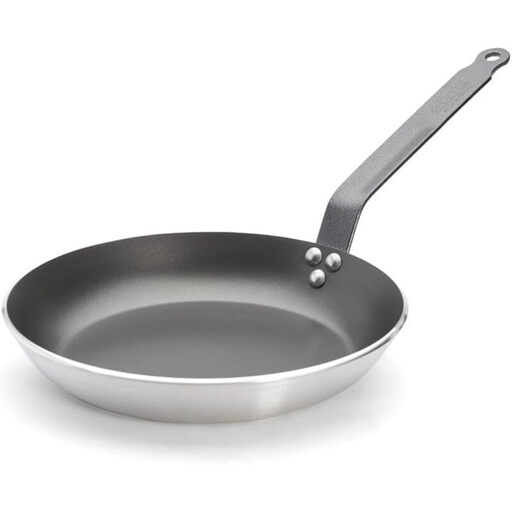
Why this product fits the profile: The aluminium pan with a five-layer non-stick coating is designed for gentle frying, sautéing and reheating. The sloped Lyonnaise sides make it easier for food to slide out.
The product data clearly states the compatible hob types: gas, electric, ceramic and halogen, but not induction. A maximum temperature of 180 °C and hand washing are also specified.
Aluminium construction with a 28 cm diameter, approximately 1.03 kg weight and a coating for easy food release.
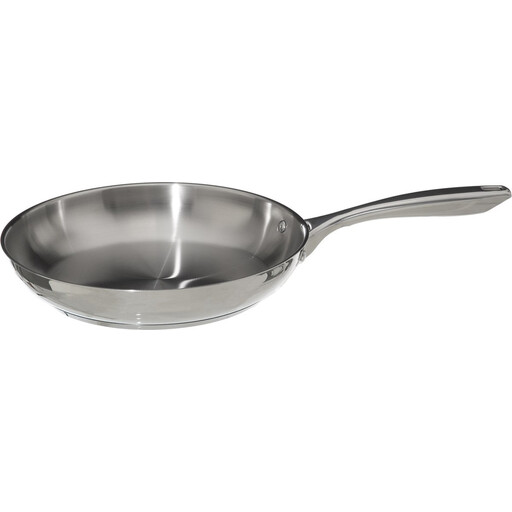
Why this product fits the profile: The stainless steel body with an aluminium induction disc is designed for various hob types and offers a 2.2-litre capacity for everyday use.
The specifications explicitly mention gas, induction, ceramic and electric hobs. The pan is also stated as dishwasher-safe according to the product data.
28 cm diameter, 8.5 cm height, stainless steel handle and a stated weight of 1.03 kg.
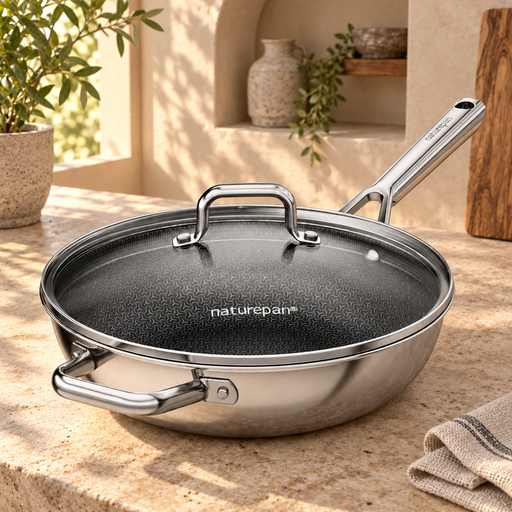
Why this product fits the profile: The deeper shape with a 7.8 cm body height and matching lid is ideal for sauces, stews and dishes that need to be cooked covered.
The specifications mention induction, gas, electric and ceramic hobs. Oven use is stated as up to 230 °C without the lid; low to medium heat and soft kitchen tools are recommended for the coating.
Multi-layer stainless steel body with aluminium core, hybrid ceramic coating, lid and stated dishwasher suitability.
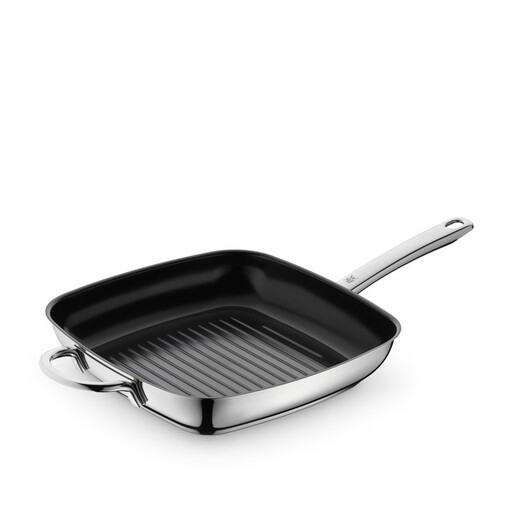
Why this product fits the profile: The square grilling surface is designed for grill marks on meat, fish and vegetables, offering a different use from a classic round frying pan.
The product data explicitly mentions gas, induction, electric and ceramic hobs. The temperature limits for hob and oven are also stated separately.
Cromargan stainless steel, square dimensions of 28 × 28 cm, ceramic coating and oven use up to 260 °C according to product specifications.
We have put together a complete, regularly updated list of products that fully meet these strict selection criteria and the safety regulations in force in the EU.
The lifespan depends more on use and cleaning than on advertising claims. Follow these basic rules:
A dishwasher-safe pan can go in the machine if the product specifications explicitly allow it. However, hand washing can still be advisable if you want to preserve the coating for as long as possible.
Depending on the dish, this size is usually enough for around two to four portions. What matters is the usable base area, the rim height and the type of food. For pancakes or steaks, the flat cooking surface counts; for sauces and stews, the volume is also important.
An induction-compatible frying pan needs a magnetic or induction-capable base. The manufacturer's specification should explicitly mention induction. A pure aluminium pan without a suitable base will not work reliably on induction hobs.
It is not possible to give a reliable general lifespan. Gentle heating, suitable utensils and hand washing can help preserve the coating in everyday use. If the surface becomes rough, visibly peels or the base warps, the pan should be replaced regardless of its age.