
Lieferung heute & morgen

Qualitätsgarantie

Willkommens-Angebote freischalten: KOSTENLOSE Lieferung | Bis zu 80 % RABATT | Kostenlose 30-Tage-JoyPlus-Testphase
App herunterladen
A 28 cm frying pan with lid is a practical choice for many UK households. Its diameter gives you plenty of room to cook several portions, while remaining easier to handle than a large serving pan. Whether you’re frying, sautéing, braising or making one-pot dishes, diameter isn’t the only thing that matters. The material, sides, coating and hob compatibility all affect how practical a pan will be in everyday use.
The claim pan suitable for all hobs should be backed up by specific details. For induction, you need a magnetic stainless steel base or a dedicated induction plate. For gas, electric and ceramic hobs, a flat base that sits evenly on the hob and is the right size also matters. If the product mentions halogen or infrared hobs, check the manufacturer’s product description if you’re unsure.
A coated frying pan or non-stick pan makes it easier to release food and can reduce the effort needed to clean up. However, how long the coating lasts depends on how you use the pan. Metal utensils, abrasive sponges, prolonged heating while empty and very high temperatures can damage the surface. Similar care is needed with a ceramic pan, even though its coating is made differently.
The 28 cm measurement usually refers to the top rim. With a 28 cm deep pan, the actual base may be smaller. For induction, the base diameter should match the cooking zone. High sides are useful for braising and making sauces, but can make it harder to turn flatter foods. So check the side height, base measurement and capacity too.
Aluminium heats up relatively quickly. A stainless steel or magnetic induction base can make a pan compatible with more hob types. In a stainless steel pan with an aluminium core, the heat spreads across several layers of material. These models are often robust, but delicate foods need careful temperature control and may require a little more fat.
Cast iron retains heat for a long time and is well suited to searing and slow braising. Bear in mind that it can be heavy: a 28 cm cast-iron pot may weigh several kilograms.
Wooden, silicone or nylon utensils are a gentle choice for a ceramic pan or an aluminium or stainless steel pan with a ceramic coating. Some product descriptions specify coatings that are free from PTFE, PFAS or PFOA. Treat these as claims made by the manufacturer or seller, and don’t assume they imply any medical benefit.
A glass lid lets you keep an eye on your food without lifting the lid repeatedly. A steam vent can help release steam. The stated maximum oven temperature is important too: plastic handles and lids may have different temperature limits from the body of the pan. For oven-safe models, the product details may specify that the lid needs to be removed.
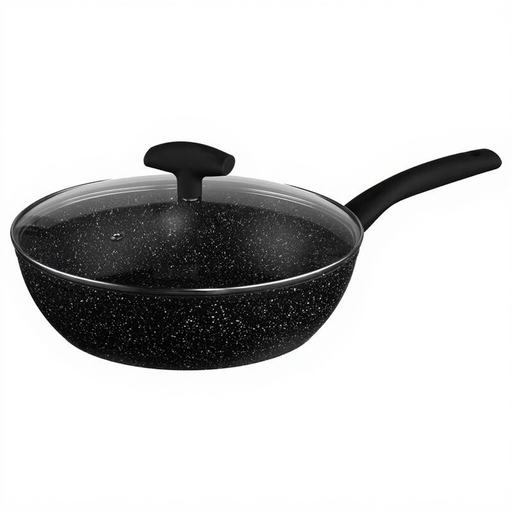
Why this product suits this type of cook: This aluminium pan has a non-stick coating, a glass lid and an integrated stainless steel induction base, making it suitable for a wide range of everyday cooking.
Its compatibility with induction is clearly specified by the stainless steel induction base. Hand-washing is recommended to help protect the coating.
According to the product details: 28 cm diameter, glass lid, soft-touch handles and suitability for all common hob types.
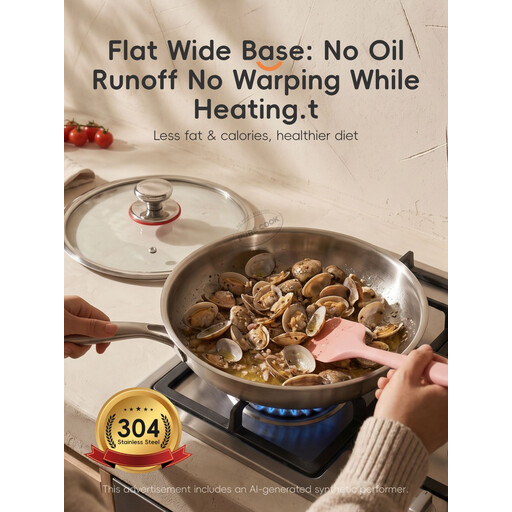
Why this product suits this type of cook: Its three-ply stainless steel and aluminium construction is designed for households looking for uncoated cookware with a lid.
The surface doesn’t rely on a traditional non-stick coating, so there’s no need to choose special plastic or wooden utensils to protect one.
According to the product details: 304 stainless steel, aluminium core, glass lid, dishwasher-safe design and compatibility with gas, induction, ceramic and halogen hobs.
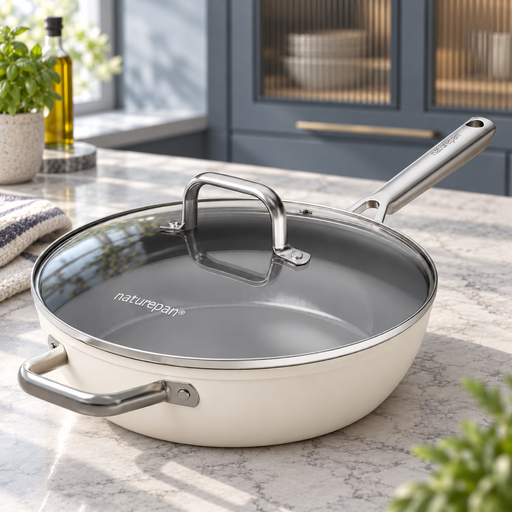
Why this product suits this type of cook: With 7.5 cm-high sides, it’s well suited to sauces, braised dishes and larger portions, while retaining the character of a 28 cm sauté pan.
The product details specify the dimensions, compatible hob types and an oven limit of up to 230 °C without the lid. This makes it easier to check whether it suits your kitchen.
Ceramic-coated aluminium, glass lid, 28 cm diameter and, according to the product details, suitability for induction, gas, electric and ceramic hobs.
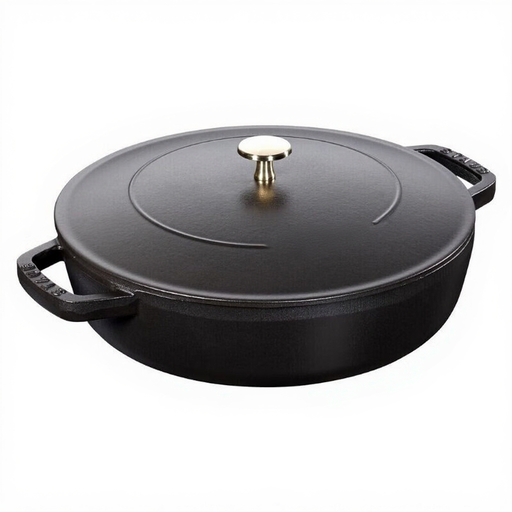
Why this product suits this type of cook: This enamelled cast-iron pot is made for braised dishes, stews and slow-cooking larger quantities.
Its weight of 5.4 kg is clearly stated, so you can decide in advance whether lifting and washing it regularly will be practical for you.
According to the product details: 3.7 litre capacity, lid, suitability for all hob types, and oven and grill use up to 260 °C.
We’ve put together a complete, regularly updated list of products that meet these strict selection criteria and fully comply with the safety regulations in force in the EU.
That depends on the construction of the base. Look for an explicit statement that it’s suitable for induction, as well as a magnetic stainless steel base. A standard aluminium body without a magnetic base generally won’t work on an induction hob.
A deep braising pan with lid can work well with either type of surface, provided the sides are high enough and the lid fits. Coated models make it easier to release delicate foods. Stainless steel is good for searing and for use with metal utensils, but it needs controlled preheating and the right amount of fat.
There’s no reliable one-size-fits-all answer. The coating’s lifespan depends on the temperature, how often you use the pan, the utensils you choose and how you clean it. Avoiding high heat while the pan is empty, abrasive sponges and metal tools helps reduce common causes of wear. If you notice visible damage, follow the manufacturer’s advice and stop using the pan if recommended.