
Lieferung heute & morgen

Qualitätsgarantie

Willkommens-Angebote freischalten: KOSTENLOSE Lieferung | Bis zu 80 % RABATT | Kostenlose 30-Tage-JoyPlus-Testphase
App herunterladen
A 28 cm frying pan is a good fit for many UK households: its diameter provides enough space for several portions while generally remaining easier to handle than a very large pan. Whether you are frying, sautéing, braising or preparing wok dishes, size is not the only factor that matters. The material, base construction, coating, lid and care requirements all determine whether the pan suits your hob and cooking habits.
The wording pan for all hob types should always be checked against the technical specifications. Induction requires a magnetic base. With gas hobs, heat-resistant handles and a stable base are also important. Ceramic hobs and electric hotplates require a base that sits as flat as possible.
Look for explicit confirmation that the pan is suitable for induction, gas, electric and ceramic hobs. With multi-layer stainless steel pans, the base construction is particularly important, as stainless steel alone does not automatically mean that a pan is induction-compatible.
A coated frying pan can make it easier to release delicate foods. However, coatings are often sensitive to metal turners, abrasive cleaners and excessive heat. Even a model described as a dishwasher-safe pan may lose its surface quality more quickly with regular machine washing if the manufacturer recommends hand washing.
A ceramic-coated pan follows similar basic rules: use low to medium temperatures, soft cleaning tools and avoid sudden changes from very hot to cold.
A pan with a lid is practical for braising, making sauces and keeping food warm. A good fit, a heat-resistant handle and – for glass lids – clear information about the material are all important. A lid can also reduce splashing when frying, but it does not replace careful temperature control.
28 cm usually refers to the upper rim of the pan. The actual usable base area may be smaller, particularly with tall or heavily curved sides. For two to four portions, a 28 cm frying pan is often a practical compromise. If you regularly prepare large quantities or very bulky ingredients, you should also consider a wok pan with higher sides.
An uncoated stainless steel pan is suitable for shoppers who want to avoid a coated interior. For delicate ingredients such as eggs or pancakes, however, a non-stick pan may be easier to use.
Before buying, check whether the pan is dishwasher-safe and whether the lid needs to be cleaned separately. With coated models, wooden, plastic or silicone utensils are the gentler choice. With stainless steel, stubborn residue can be loosened by soaking; steel wool and abrasive cleaners can nevertheless damage the surface.
For oven use, the stated maximum temperature is decisive. A plastic or Bakelite handle may restrict use in the oven, even if the pan body itself is heat-resistant.
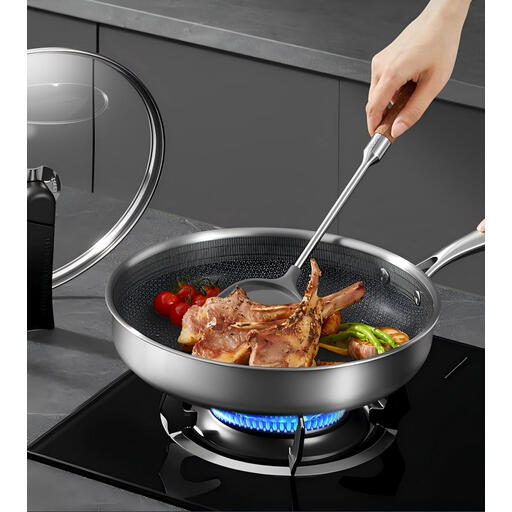
Why this product suits the profile: This 28 cm frying pan is made from 304 stainless steel, comes with a glass lid and is stated to be suitable for all hobs.
Hob compatibility is stated explicitly. The lid is included in the product specification, so there is no need to select one separately.
304 stainless steel construction, 28 cm format and glass lid; suitable for various hob types.
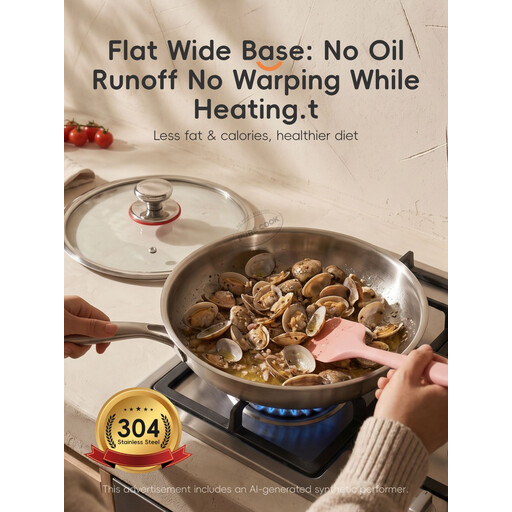
Why this product suits the profile: The three-layer construction of stainless steel and aluminium is appealing to households looking for a sturdy pan body and even heat distribution.
The specifications clearly state the construction, lid, hob types and dishwasher suitability instead of making only general claims about durability.
Tri-Ply construction, 304 stainless steel, glass lid and suitability for gas, induction, ceramic and halogen hobs.

Why this product suits the profile: The wide surface, lower sides and supplied glass lid support sautéing, frying and braising.
The material, diameter and lid are clearly specified. This makes it easy to check whether the pan suits your intended braising and sautéing tasks.
Cast aluminium, 28 cm diameter, wide base and transparent lid for keeping an eye on your food.
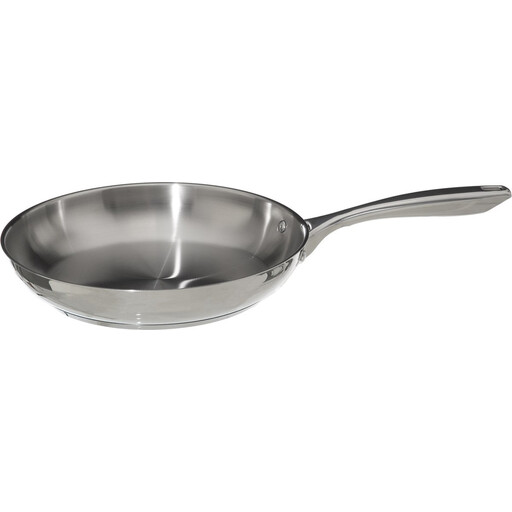
Why this product suits the profile: According to the product specifications, this uncoated stainless steel pan is suitable for all common hob types and is dishwasher-safe.
The information on cleaning, hob compatibility and material is specific. There is no coating that requires particularly gentle handling.
28 cm diameter, stainless steel body, suitable for gas, induction, ceramic and electric hobs, plus stated dishwasher suitability.
We have put together a complete, regularly updated list of products that fully meet these strict selection criteria and the safety regulations applicable in the EU.
Not automatically. A magnetic base that sits flat on the hob is essential. The product description should explicitly state that the pan is induction-compatible. With an induction frying pan, it is also worth checking the base diameter so that the pan sits as neatly as possible on the cooking zone.
A coated frying pan is generally easier to use when cooking delicate ingredients. A stainless steel pan has no coated interior and, with the right care, can be used for many types of cooking. The best choice depends on your cooking technique, cleaning routine and preferred approach to using kitchen utensils.
There is no reliable one-size-fits-all answer. Its lifespan depends on the material, base construction, temperature, cleaning method and use of suitable utensils. Coated pans should not be heated strongly while empty. Stainless steel models can be replaced if they show visible warping, have an unstable handle or a damaged base. For every pan, the manufacturer’s instructions on temperature, oven use and cleaning are decisive.