
Lieferung heute & morgen

Qualitätsgarantie

Willkommens-Angebote freischalten: KOSTENLOSE Lieferung | Bis zu 80 % RABATT | Kostenlose 30-Tage-JoyPlus-Testphase
App herunterladen
A 28 cm frying pan provides plenty of space for several portions, vegetable stir-fries, fish or meat. At the same time, it will usually fit a large cooking zone measuring around 21 to 22 cm in diameter. This size is therefore practical for many UK households – provided the material, base construction and care requirements suit the way you cook.
However, eye-catching coating names or unclear information about hob compatibility can quickly lead to the wrong choice. The key considerations are not just the diameter and a claim such as “non-stick”, but also the technical details, intended use and cleaning requirements.
The stated size generally refers to the upper diameter. The actual heated base may be considerably smaller. For example, the Naturepan pan with a 28 cm diameter has a base diameter of 19.4 cm. According to the product details, the ZWILLING Pro has a base measuring approximately 22 cm.
For induction, ceramic and electric hobs, the pan base should match the cooking zone as closely as possible. A base that is too small will not use the heating area efficiently, while a rim that extends considerably beyond the zone can affect heat distribution.
An induction frying pan 28 cm needs a magnetic base that sits flat on the hob. Stainless steel alone is not enough to indicate induction compatibility. The Résilience stainless steel frying pan specifically lists gas, induction, ceramic and electric hobs. The Naturepan hybrid pans and several WMF models are also suitable for these hob types according to the product details.
With infrared or halogen hobs, however, some models require additional confirmation from the manufacturer. This information should be included in the technical specifications before you buy.
A dishwasher-safe frying pan can be cleaned in the dishwasher, but detergents, high temperatures and frequent wash cycles can put greater strain on coated surfaces. This is why hand washing with a soft sponge is recommended for the Naturepan, ZWILLING and WMF models despite their dishwasher suitability.
An uncoated 28 cm stainless steel frying pan is generally less delicate to care for. Even so, abrasive cleaners, wire wool and sudden temperature changes should be avoided to reduce discolouration and unnecessary stress on the surface.
A coated frying pan makes it easier to release delicate foods such as fish, pancakes and egg dishes. It should mainly be used over low to medium heat. Wooden, silicone or nylon turners are gentler on the surface than sharp-edged metal utensils.
A stainless steel frying pan is uncoated and therefore less prone to scratches. However, food can stick more readily if the pan is not preheated correctly and used with enough fat. With stainless steel, the so-called hot-pan, cold-oil method is a common technique: heat the pan first, then add the oil and control the temperature.
Multi-layered designs often combine stainless steel with an aluminium core. Aluminium conducts heat efficiently, while stainless steel provides stability and a durable surface. Examples include the Naturepan pans and the three-layer PURECOOK models.
The maximum temperature and oven-use specifications remain important, however. A pan may be oven-safe while the handle or lid has its own limitations.
A large frying pan with a height of around 5 to 6 cm is suitable for traditional frying and sautéing. A deeper version is more practical for stews, sauces or larger quantities. The Naturepan Deep Sauté Pan with a 28 cm diameter has a body height of 7.8 cm and is available with a matching lid.
A frying pan with lid is practical when food needs to continue cooking after browning or when liquid needs to reduce. For turning food and quick frying, a model without a lid is usually lighter and offers a clearer view.
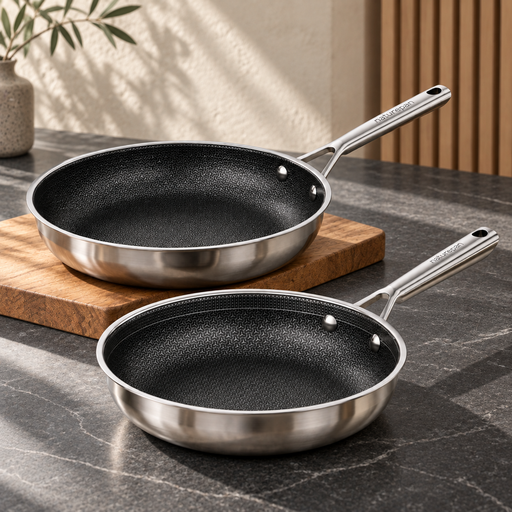
Why this product suits this profile: With 24 and 28 cm pans, the set covers two of the most commonly used frying pan sizes and is suitable for induction, gas, electric and ceramic hobs according to the product details.
The technical specifications state the 19.4 cm base diameter and provide clear care instructions. This makes it easier to compare the pan with your own hob.
Multi-layered stainless steel body with aluminium core, textured hybrid surface and two sizes included.
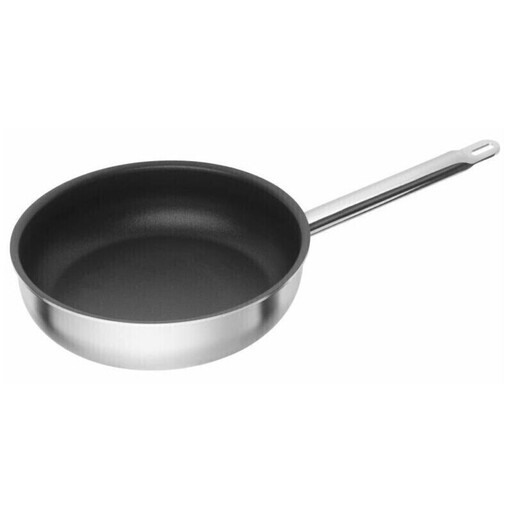
Why this product suits this profile: The three-layer SIGMA-Clad construction with aluminium core is designed to distribute heat evenly. The pan is suitable for induction, gas, ceramic and other specified hob types.
The product description specifies the coating type, PFOA-free construction, base size and clear limitations regarding heat, metal utensils and oven use.
28 cm diameter, approximately 22 cm base, PTFE coating and oven suitability up to 230 °C according to the supplier’s information.
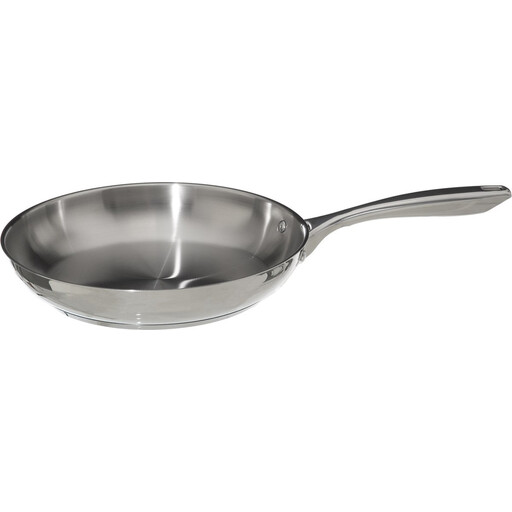
Why this product suits this profile: The uncoated stainless steel frying pan is designed for everyday frying on gas, induction, ceramic and electric hobs and can be cleaned in the dishwasher according to the product details.
There is no delicate non-stick coating requiring particularly careful maintenance throughout its service life. The description also states that the surface is scratch-resistant.
Stainless steel body and handle, 2.2 l capacity, weight of 1.03 kg and a stated two-year warranty period.
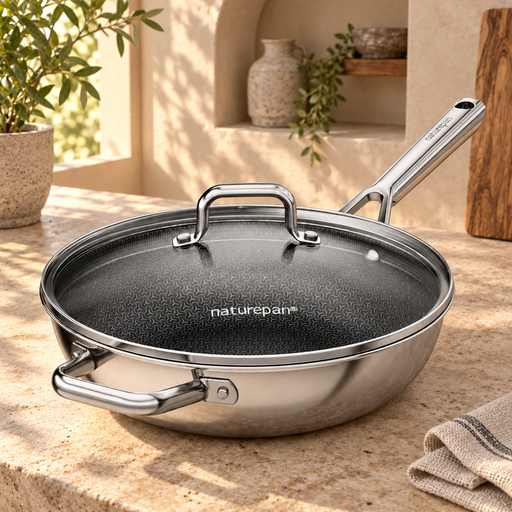
Why this product suits this profile: The deeper shape and included lid are ideal for sauces, stews and dishes that need to continue cooking covered after browning.
The lid is explicitly included in the delivery contents. The specifications also state a maximum oven temperature of 230 °C with the lid removed.
7.8 cm body height, hybrid ceramic surface, multi-layered stainless steel body and suitability for induction, gas, electric and ceramic hobs.
We have put together a complete, regularly updated list of products that fully meet these strict selection criteria and the safety regulations applicable in the EU.
This does not depend solely on the upper diameter. A magnetic base and sufficient base diameter are the decisive factors. When choosing a pan, compare the manufacturer’s information on induction compatibility and the base surface with the size of the cooking zone.
It is not possible to give a reliable general service-life figure. It depends on the heat, utensils, cleaning method and frequency of use. Low to medium temperatures, hand washing and soft kitchen utensils can help protect the coating. Visible damage or peeling areas are a reason to stop using the pan.
For delicate foods, a coated pan is often more straightforward, as food can be released more easily at the correct temperature. Stainless steel requires more practice when it comes to preheating and the amount of fat used, but it is uncoated and less dependent on protecting a non-stick surface. The right choice therefore depends on your cooking technique, cleaning routine and favourite dishes.